
Crime
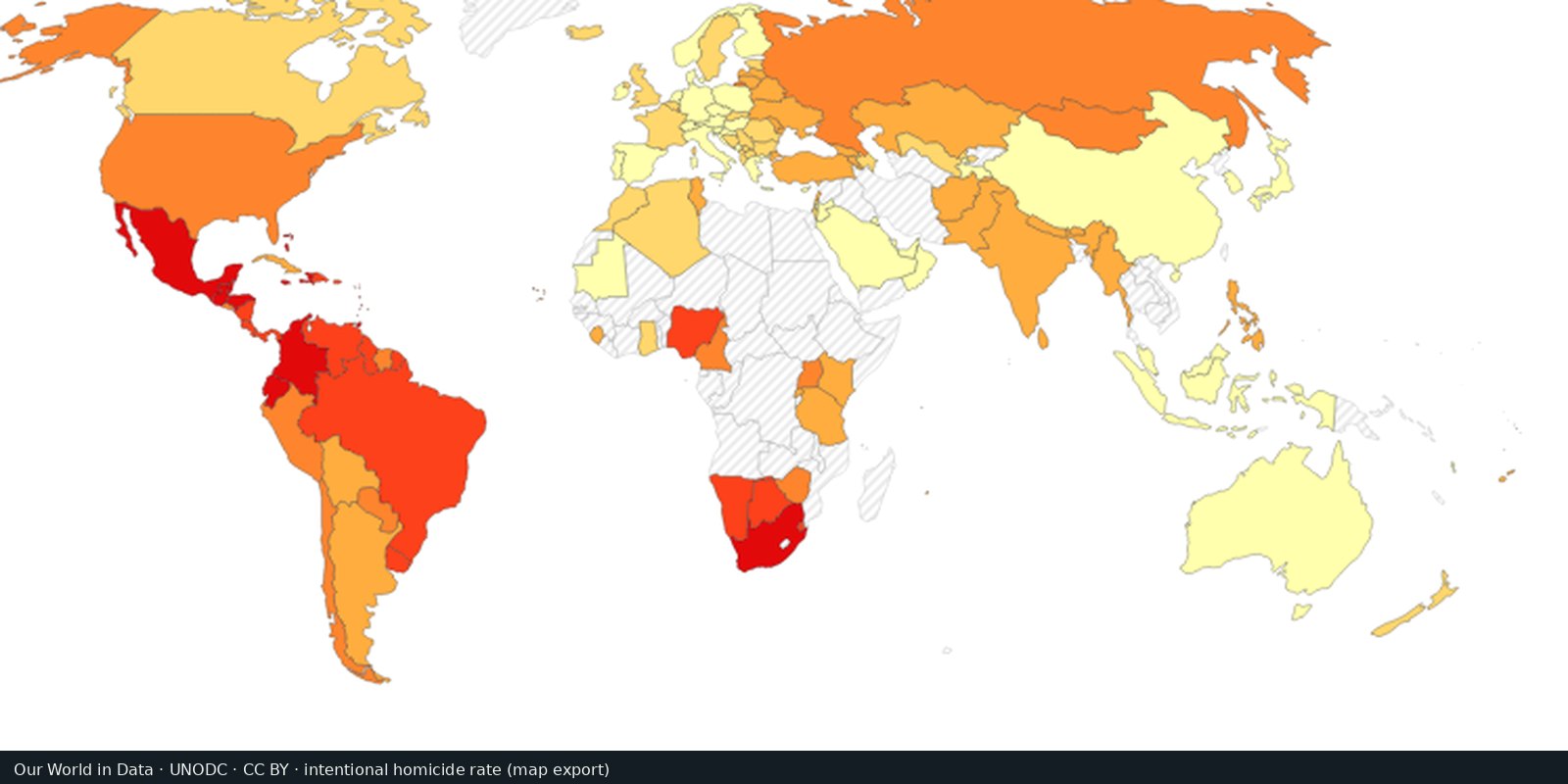
Intentional homicide rates
Comparable rates of intentional homicide from the UN Office on Drugs and Crime, one measure of violent crime.
Read the card →Risk scores from 0 to 10 for how exposed each country is to money laundering and related financial crime, and how well it can counter them, from the Basel Institute on Governance.
Major money-laundering jurisdictions named by the US State Department, 2024
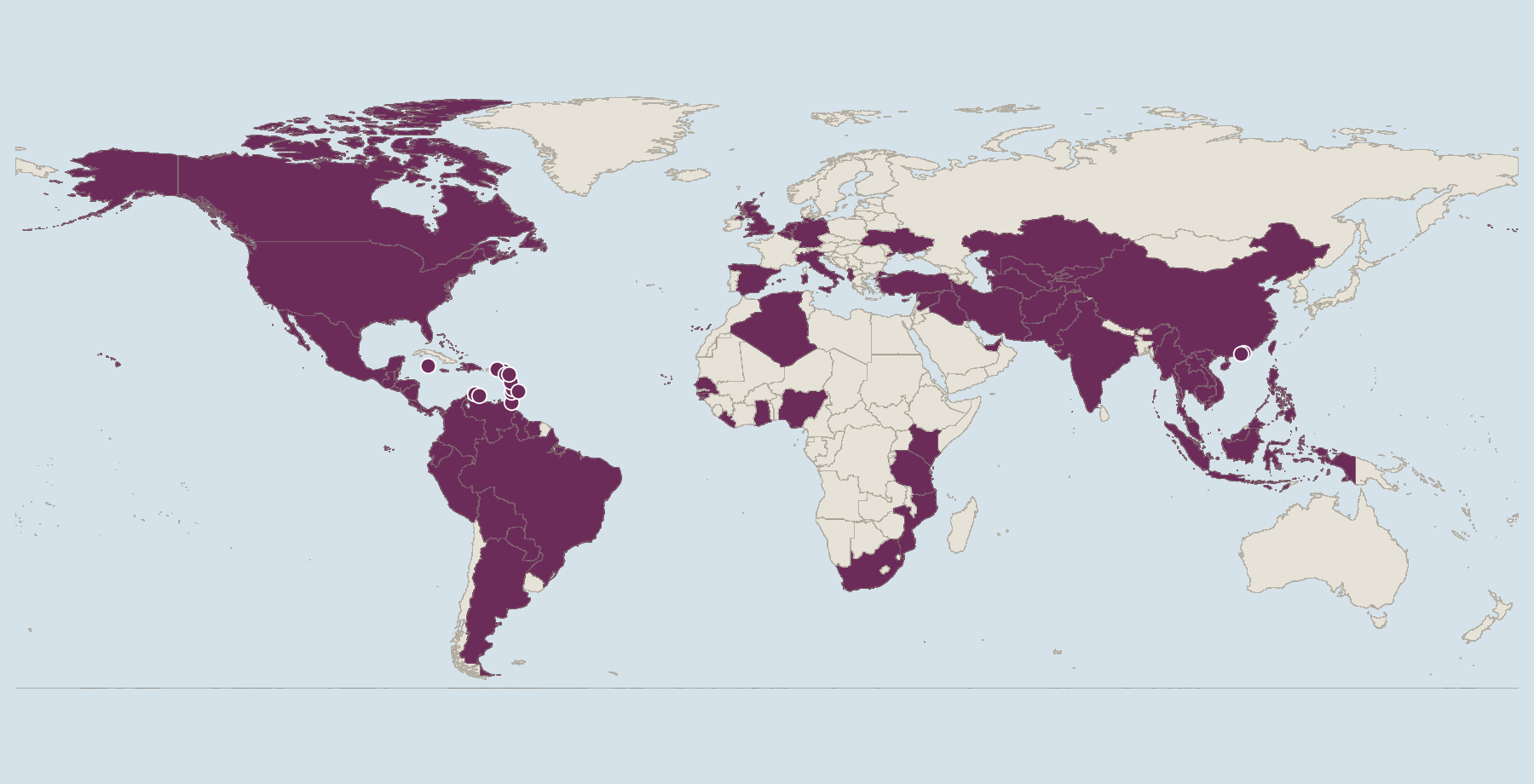
US State Department list for 2024. Small territories are drawn as dots.
The 81 jurisdictions named by the US State Department as major money-laundering jurisdictions for 2024. This map shows that US State Department list, not scores from the Basel Anti-Money Laundering Index.
Map: Fix Planet, drawn from the US Department of State, International Narcotics Control Strategy Report 2025, Volume 2: Money Laundering (public domain).
The Basel AML Index (AML stands for anti-money laundering) is an independent ranking maintained since 2012 by the International Centre for Asset Recovery at the Basel Institute on Governance. Its 14th Public Edition, published in December 2025, scores 177 countries and jurisdictions on a scale from 0 to 10, where 10 means the highest risk. The score combines 17 indicators from publicly accessible sources in five domains: the quality of rules against money laundering and the financing of terrorism and of weapons of mass destruction; corruption and fraud; financial transparency and standards; public transparency and accountability; and legal and political risks.
The Basel Institute links money laundering to crimes such as corruption, fraud, environmental crime and drug trafficking. In 2025, Myanmar (8.18), Haiti (8.12) and the Democratic Republic of the Congo (7.63) have the highest risk scores, and Finland (3.03), Iceland (3.04) and San Marino (3.08) the lowest. The global average edged down from 5.30 to 5.28; more than half of jurisdictions improved their scores while 43% worsened.
A higher score means greater assessed vulnerability and weaker capacity to counter money laundering. The score is a composite risk assessment built from other organisations’ data, with the largest weight (35%) on evaluations by the Financial Action Task Force (FATF), the intergovernmental body that sets global standards in this field. Only jurisdictions with enough data are ranked. The preview map shows the 81 jurisdictions that the US State Department named as major money-laundering jurisdictions for 2024; its report is one of the public sources behind the Index.
Data collection for the 2025 edition closed on 10 November 2025. Russia is excluded from the Public Edition following the suspension of its membership of the FATF. A separate Expert Edition, updated quarterly, covers 203 jurisdictions with scores for each indicator. The US list marks countries whose financial institutions handle significant amounts of proceeds from international drug trafficking, and it carries no sanctions.
Map: Fix Planet, drawn from the US Department of State, International Narcotics Control Strategy Report 2025, Volume 2: Money Laundering (public domain).
Open source map → Comparable rates of intentional homicide from the UN Office on Drugs and Crime, one measure of violent crime.
Read the card →
Country scores for criminal markets, criminal actors, and resilience: an expert-assessment heatmap of organized crime.
Read the card →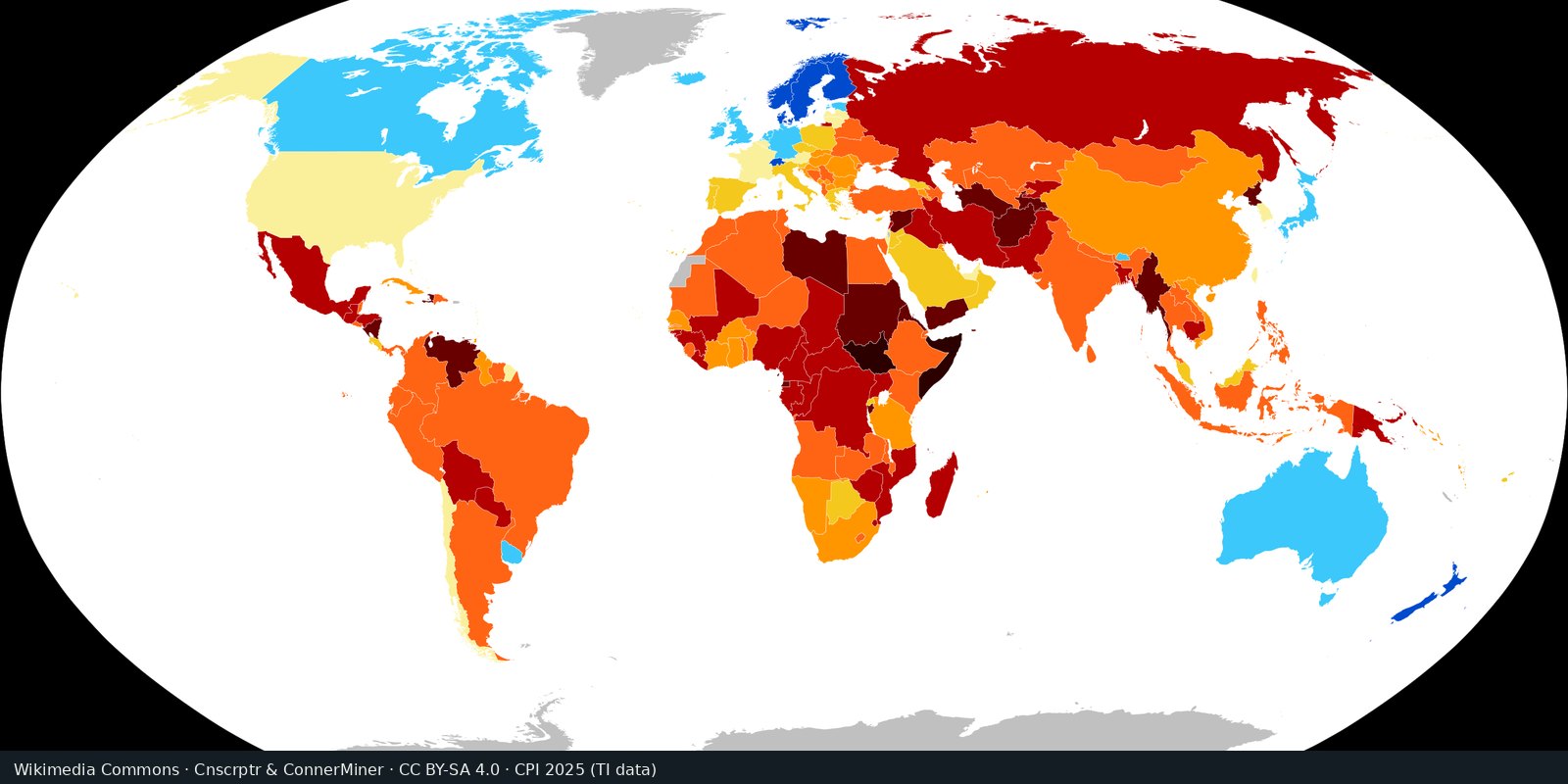
Perceived public-sector corruption on a scale from 0 to 100, from expert and business surveys: a measure of governance risk.
Read the card →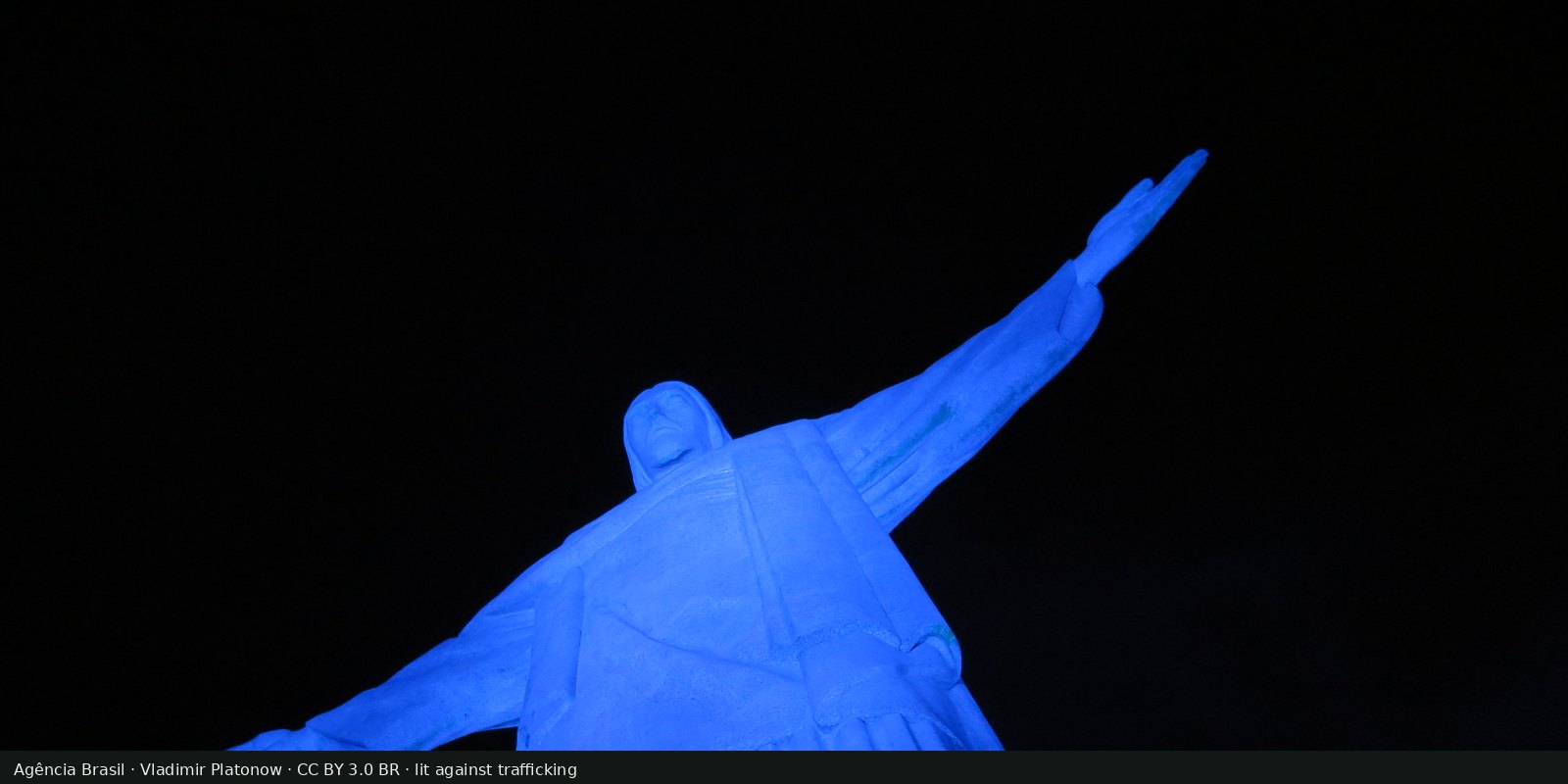
Detected victims of trafficking in persons, and the patterns in the UN Office on Drugs and Crime Global Report on Trafficking in Persons: exploitation and coercion.
Read the card →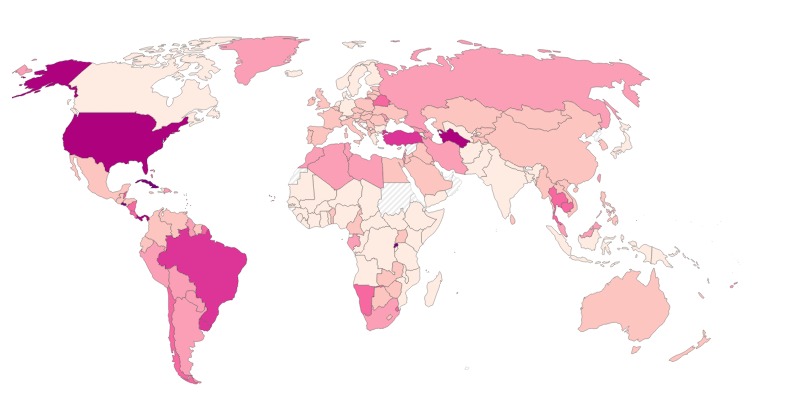
How many people each country holds in prison for every 100,000 residents, counting pre-trial detainees, from the World Prison Brief database.
Read the card →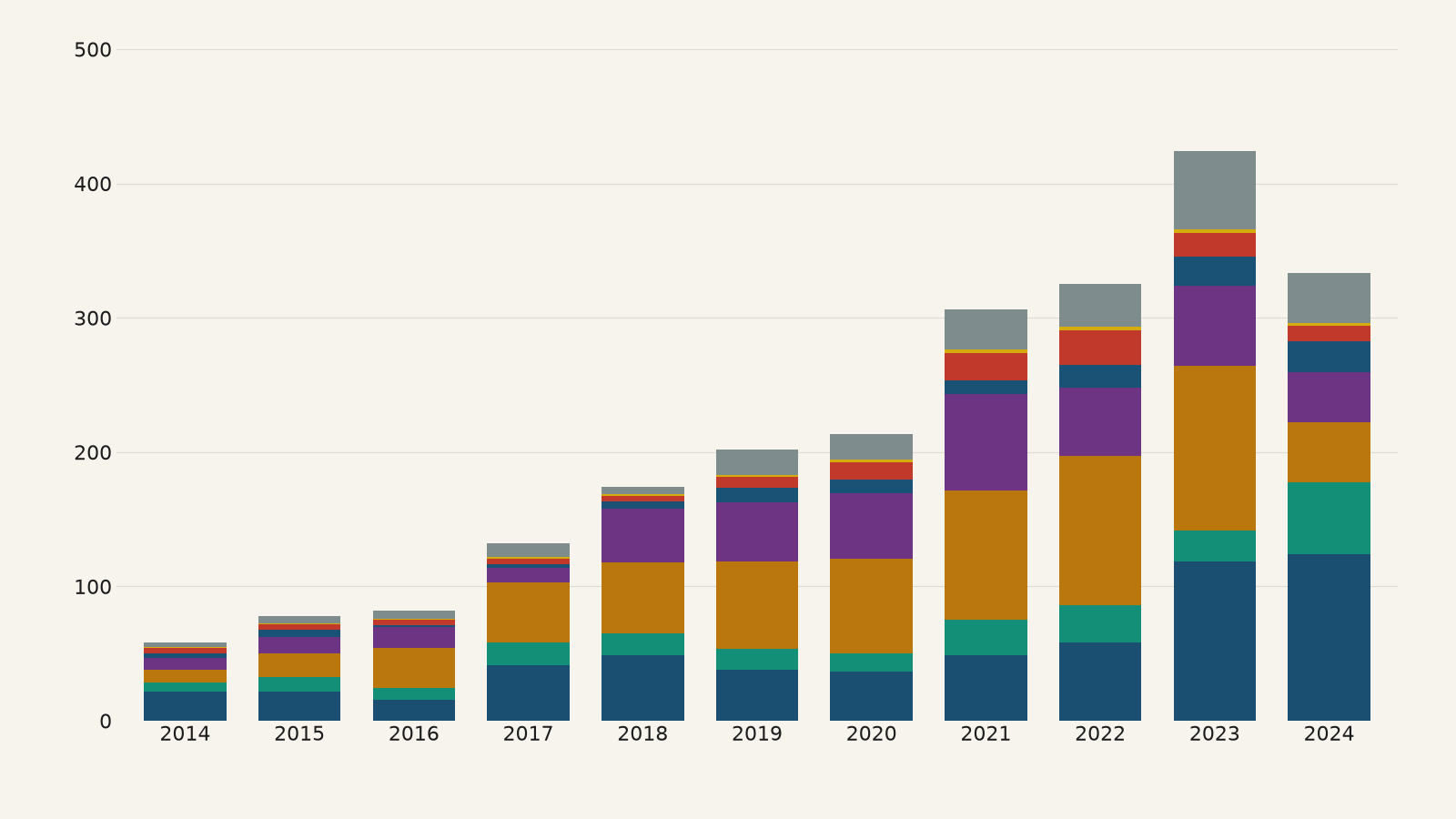
The main routes of cocaine, heroin and methamphetamine trafficking between world regions, mapped by the UN Office on Drugs and Crime from drug seizures reported for 2021 to 2024.
Read the card →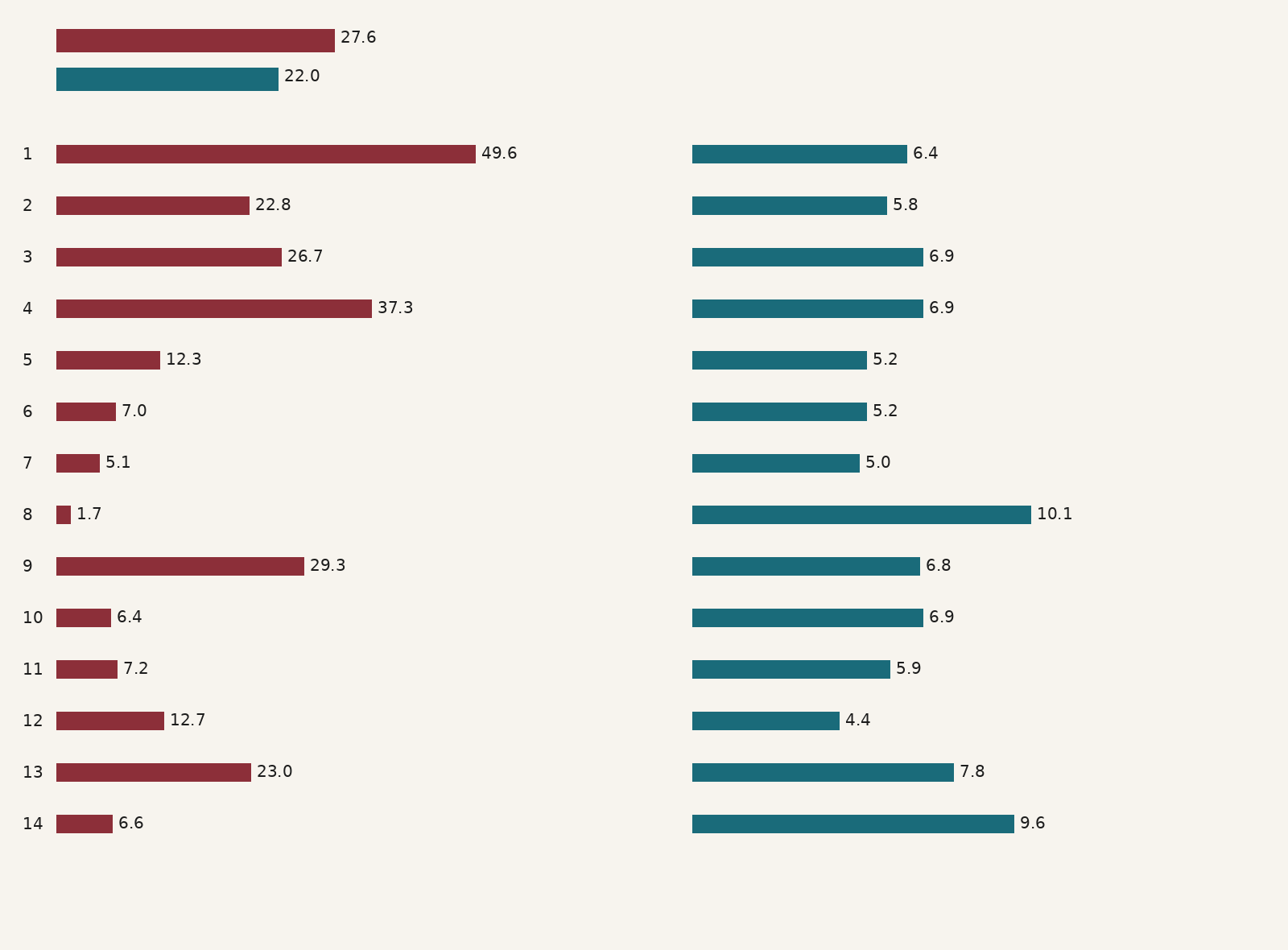
Estimated prevalence of modern slavery, meaning forced labour and forced marriage, in 160 countries, from Walk Free's Global Slavery Index, built on global estimates of about 50 million people in modern slavery in 2021.
Read the card →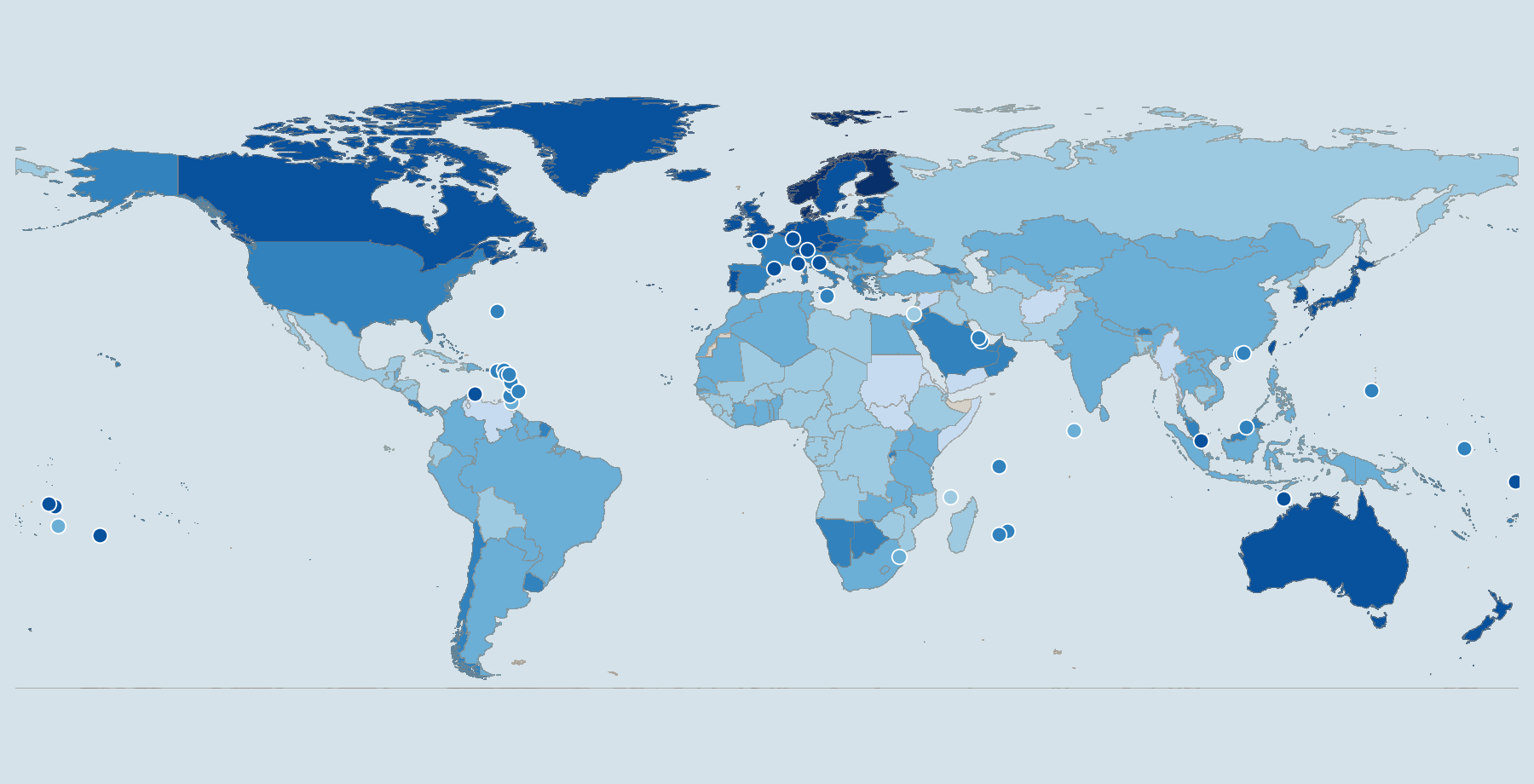
How people and legal experts in 143 countries experience limits on government power, corruption, open government, fundamental rights, order and security, regulation, and civil and criminal justice, scored from 0 to 1 by the World Justice Project.
Read the card →