
Crime
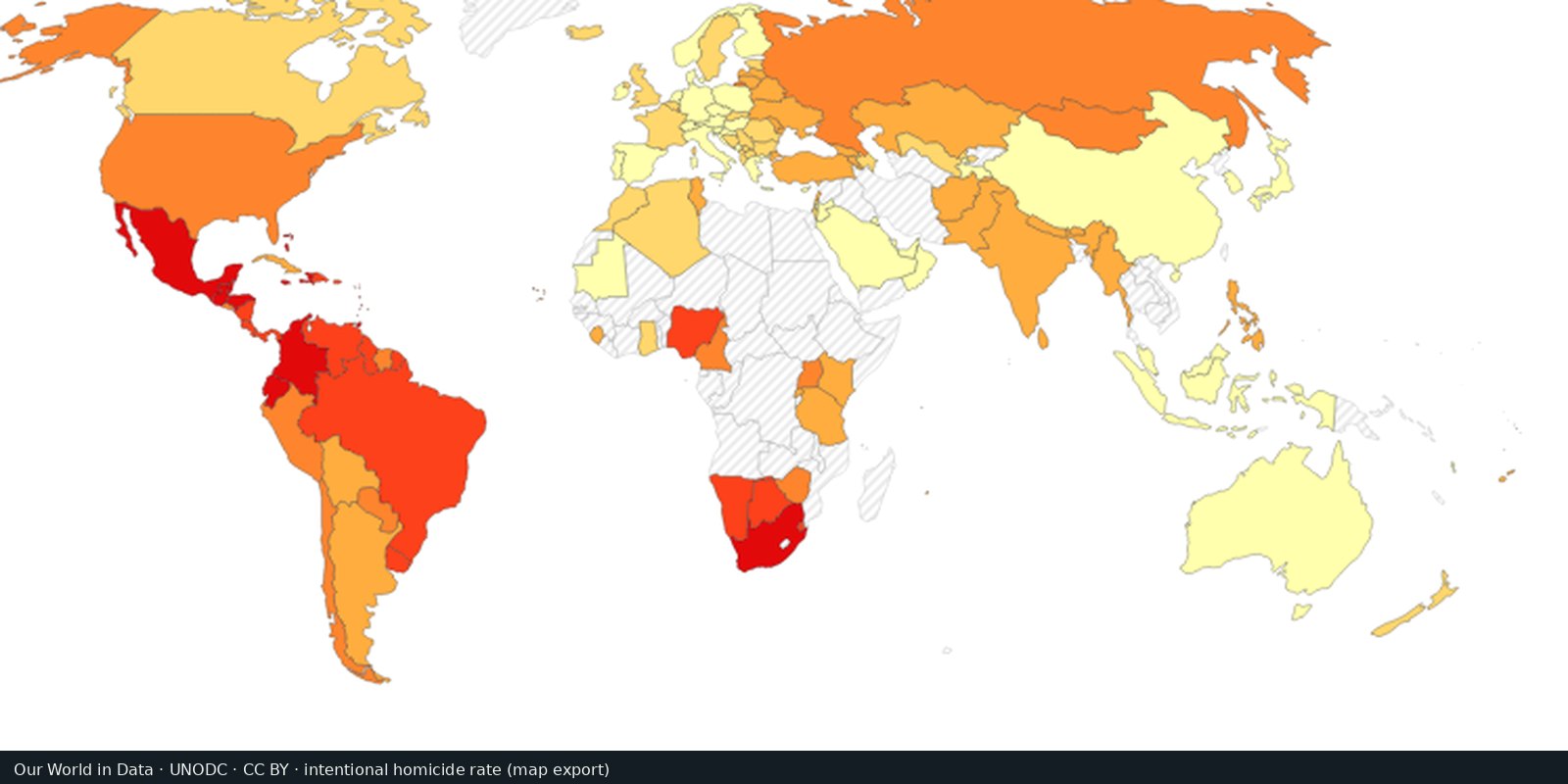
Intentional homicide rates
Comparable rates of intentional homicide from the UN Office on Drugs and Crime, one measure of violent crime.
Read the card →How people and legal experts in 143 countries experience limits on government power, corruption, open government, fundamental rights, order and security, regulation, and civil and criminal justice, scored from 0 to 1 by the World Justice Project.
World Bank Worldwide Governance Indicators: Rule of Law, 2025
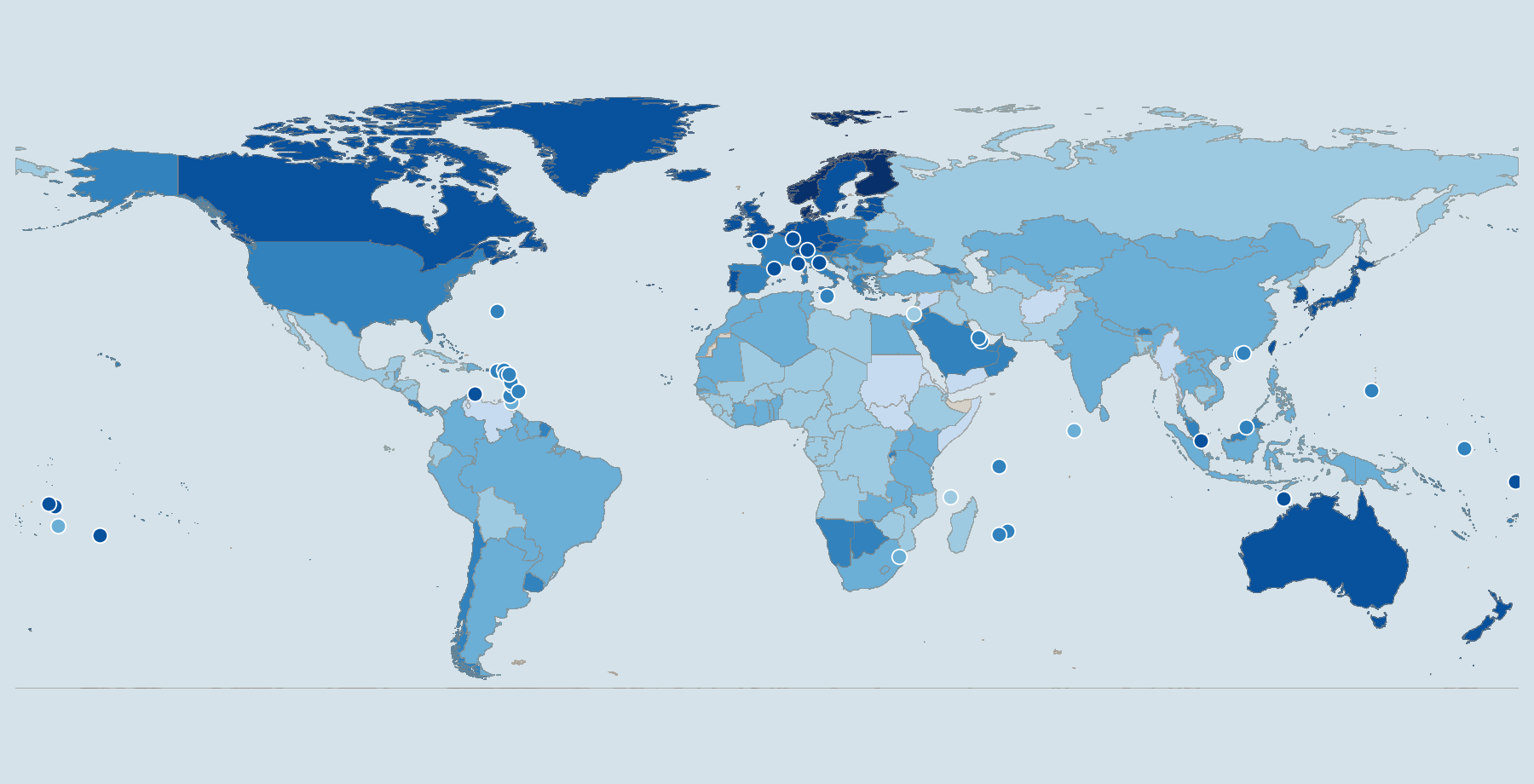
World Bank governance score, 0 to 100
Rule-of-law score from 0 to 100 in the World Bank's Worldwide Governance Indicators, 2025, for 215 economies.
Map: Fix Planet, drawn from World Bank, Worldwide Governance Indicators, 2026 update (CC BY 4.0).
The World Justice Project (WJP), a non-profit organisation, has published the Rule of Law Index every year since 2009. The 2025 edition covers 143 countries and jurisdictions, home to 95% of the world’s population, and draws on more than 215,000 household surveys and 4,100 surveys of legal practitioners and experts. Countries are scored from 0 to 1, where 1 means the strongest adherence to the rule of law, on eight factors: constraints on government powers, absence of corruption, open government, fundamental rights, order and security, regulatory enforcement, civil justice and criminal justice.
The Index measures how the rule of law is experienced in daily life, from safety and the courts to checks on officials. In 2025, the rule of law declined in 68% of countries, up from 57% the year before, making it the eighth year in a row with more declines than improvements. Denmark, Norway, Finland, Sweden and New Zealand rank highest; Venezuela, Afghanistan, Cambodia, Haiti and Nicaragua rank lowest. Qatar joined the Index for the first time.
Each score summarises survey answers from ordinary people and legal experts in that country. A decline means a country's score fell from 2024 to 2025; countries that declined lost 1.07% of their score on average, while those that improved gained 0.52%. Factor scores and country profiles are on the WJP Index website. The preview map uses a separate open dataset, the World Bank's Worldwide Governance Indicators: a rule-of-law score from 0 to 100 for 215 economies in 2025, built from 35 cross-country sources of household surveys, firm surveys and expert assessments.
Some indicators have data for only part of the 143 countries. The World Bank score on the preview map reflects perceptions of contract enforcement, property rights, the police, the courts and the likelihood of crime and violence, and it has its own scale and ranking.
Map: Fix Planet, drawn from World Bank, Worldwide Governance Indicators, 2026 update (CC BY 4.0).
Open source map → Comparable rates of intentional homicide from the UN Office on Drugs and Crime, one measure of violent crime.
Read the card →
Country scores for criminal markets, criminal actors, and resilience: an expert-assessment heatmap of organized crime.
Read the card →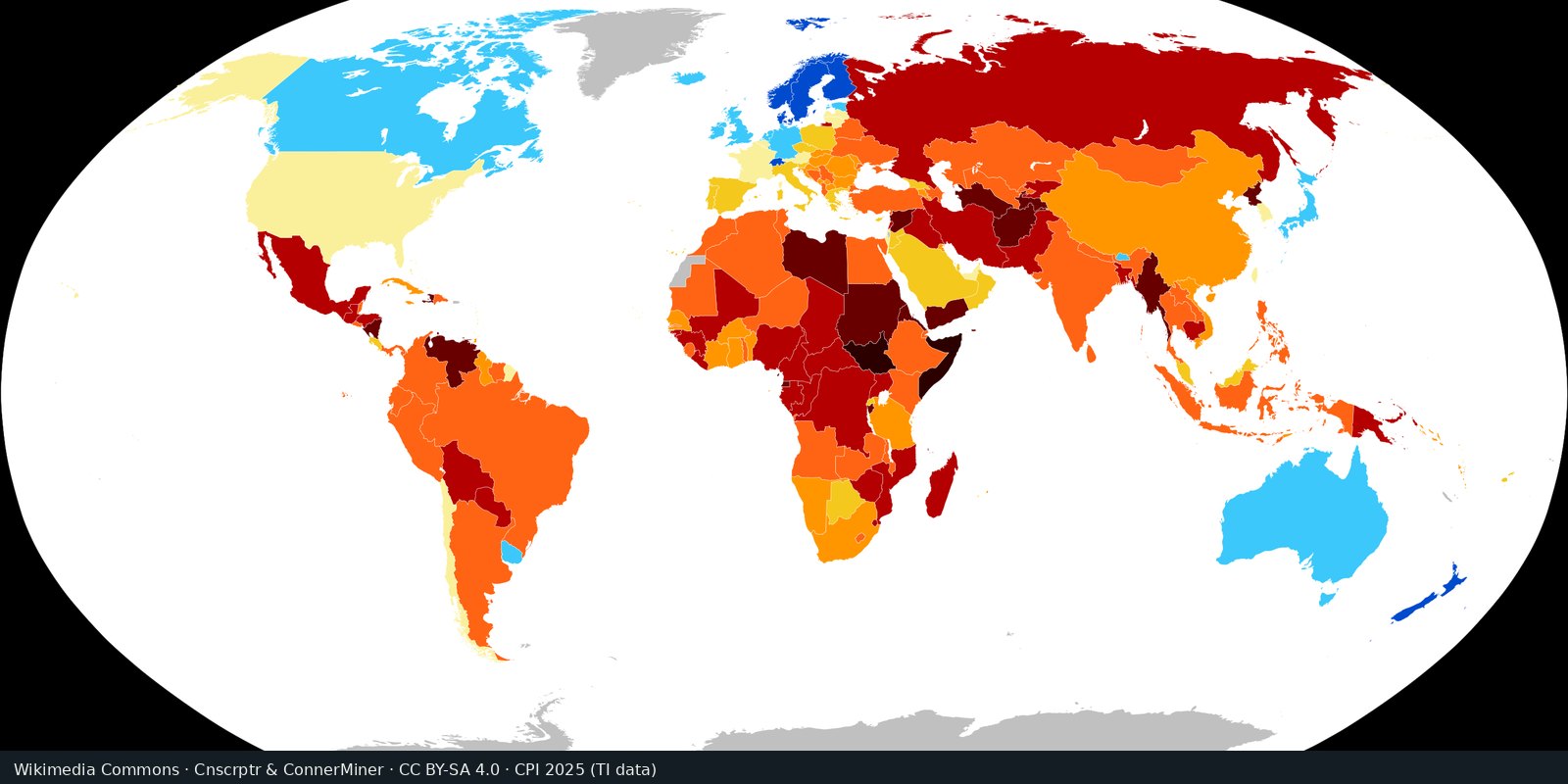
Perceived public-sector corruption on a scale from 0 to 100, from expert and business surveys: a measure of governance risk.
Read the card →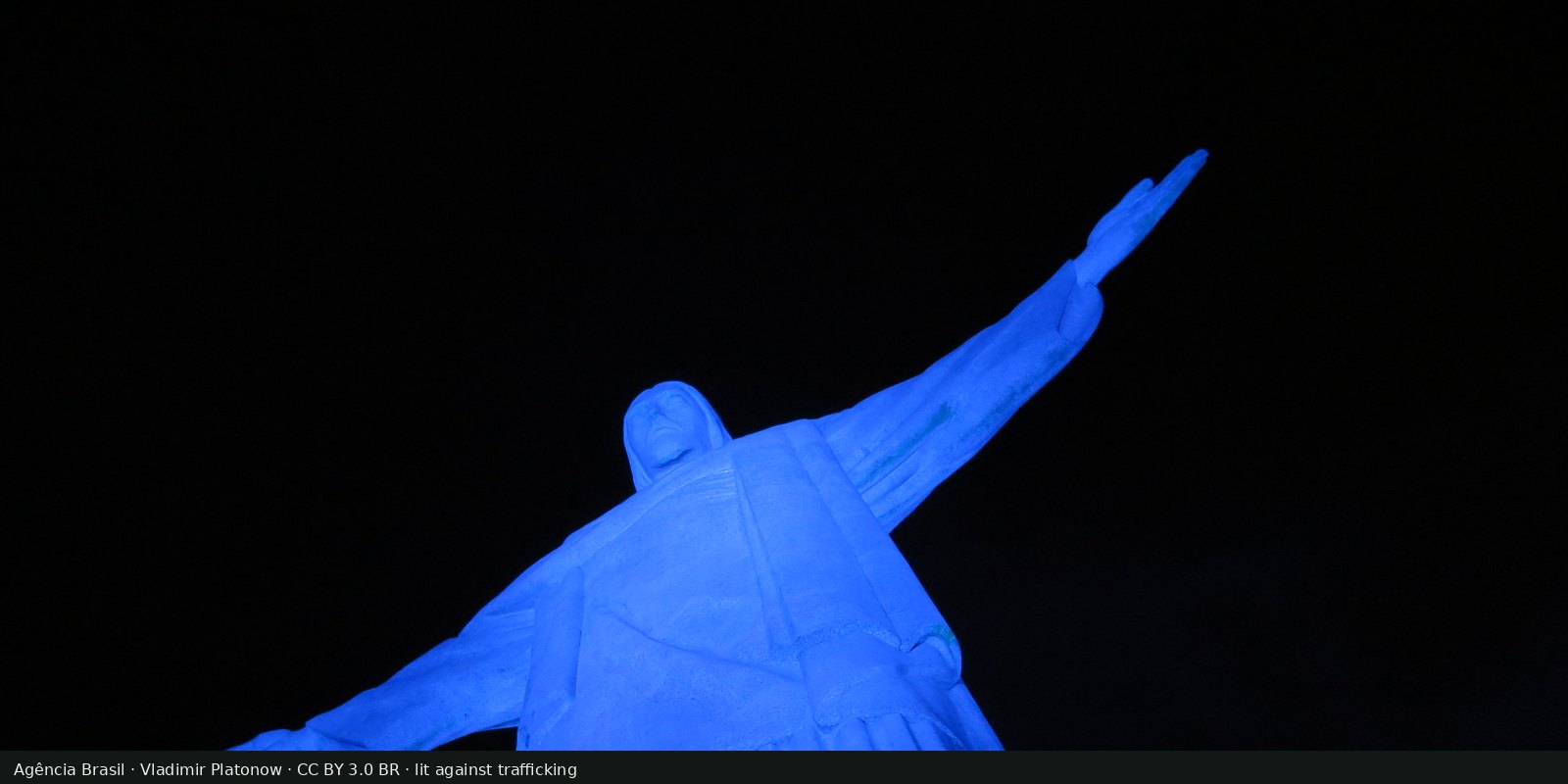
Detected victims of trafficking in persons, and the patterns in the UN Office on Drugs and Crime Global Report on Trafficking in Persons: exploitation and coercion.
Read the card →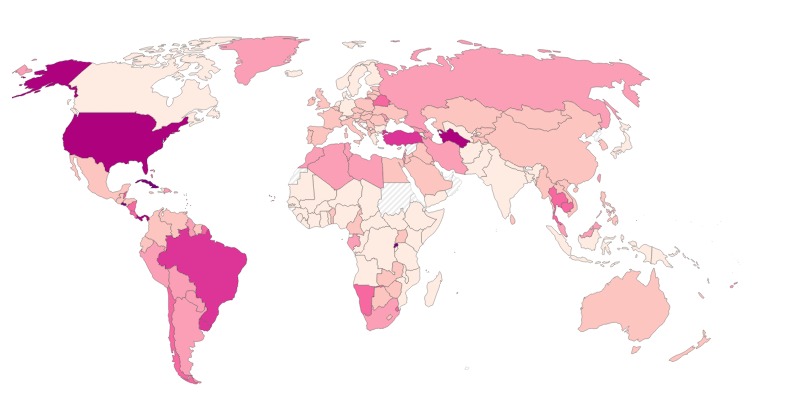
How many people each country holds in prison for every 100,000 residents, counting pre-trial detainees, from the World Prison Brief database.
Read the card →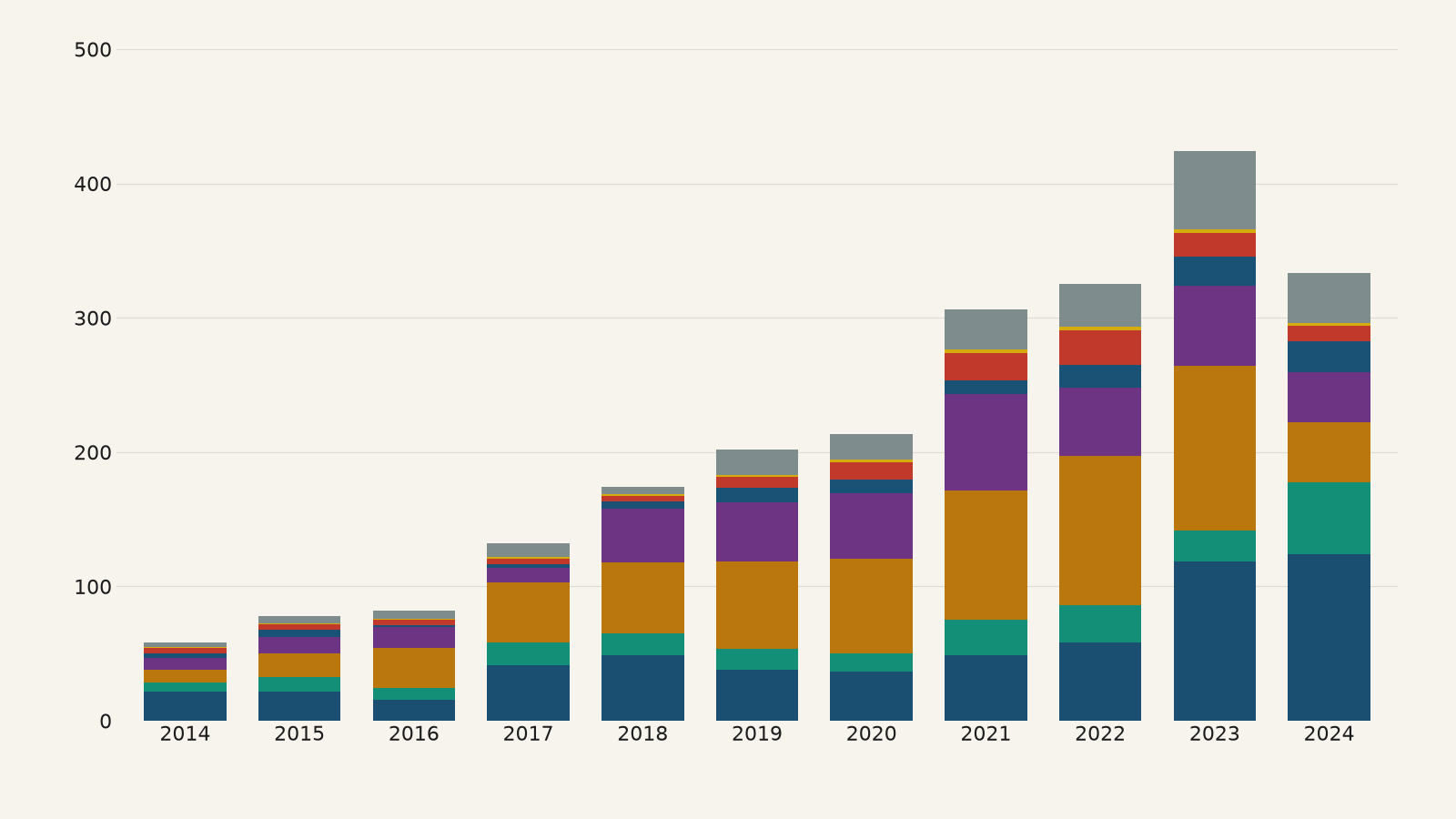
The main routes of cocaine, heroin and methamphetamine trafficking between world regions, mapped by the UN Office on Drugs and Crime from drug seizures reported for 2021 to 2024.
Read the card →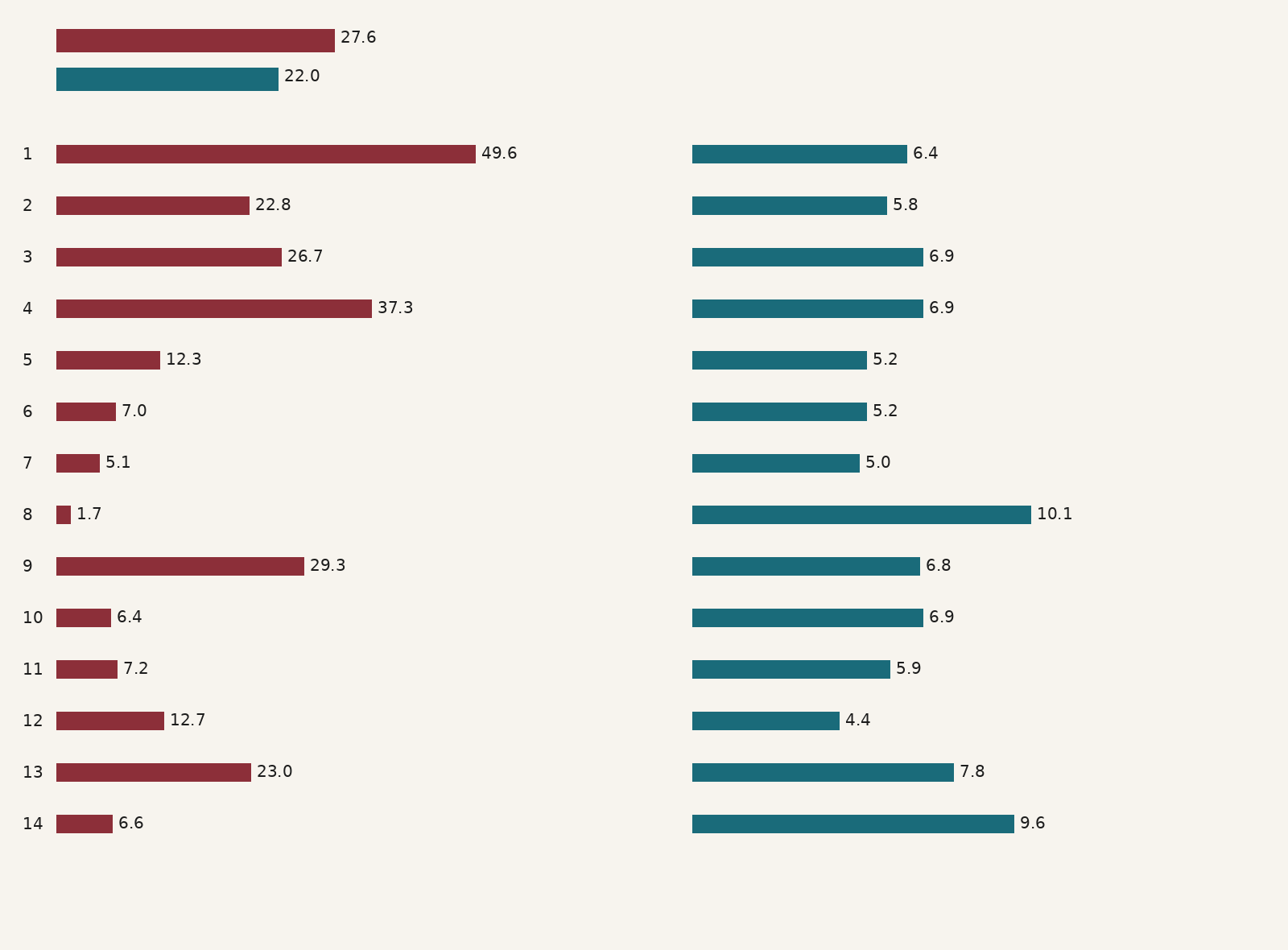
Estimated prevalence of modern slavery, meaning forced labour and forced marriage, in 160 countries, from Walk Free's Global Slavery Index, built on global estimates of about 50 million people in modern slavery in 2021.
Read the card →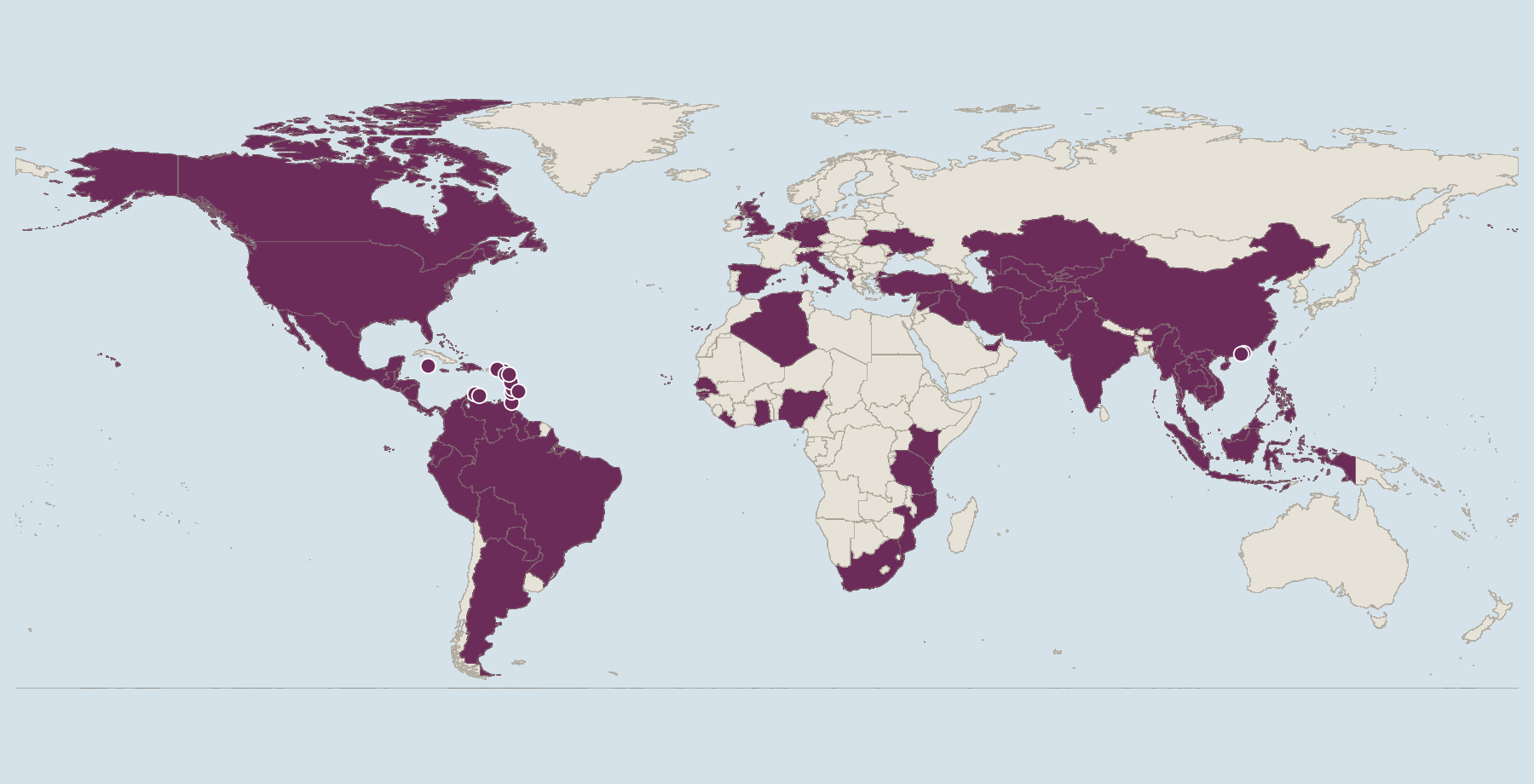
Risk scores from 0 to 10 for how exposed each country is to money laundering and related financial crime, and how well it can counter them, from the Basel Institute on Governance.
Read the card →