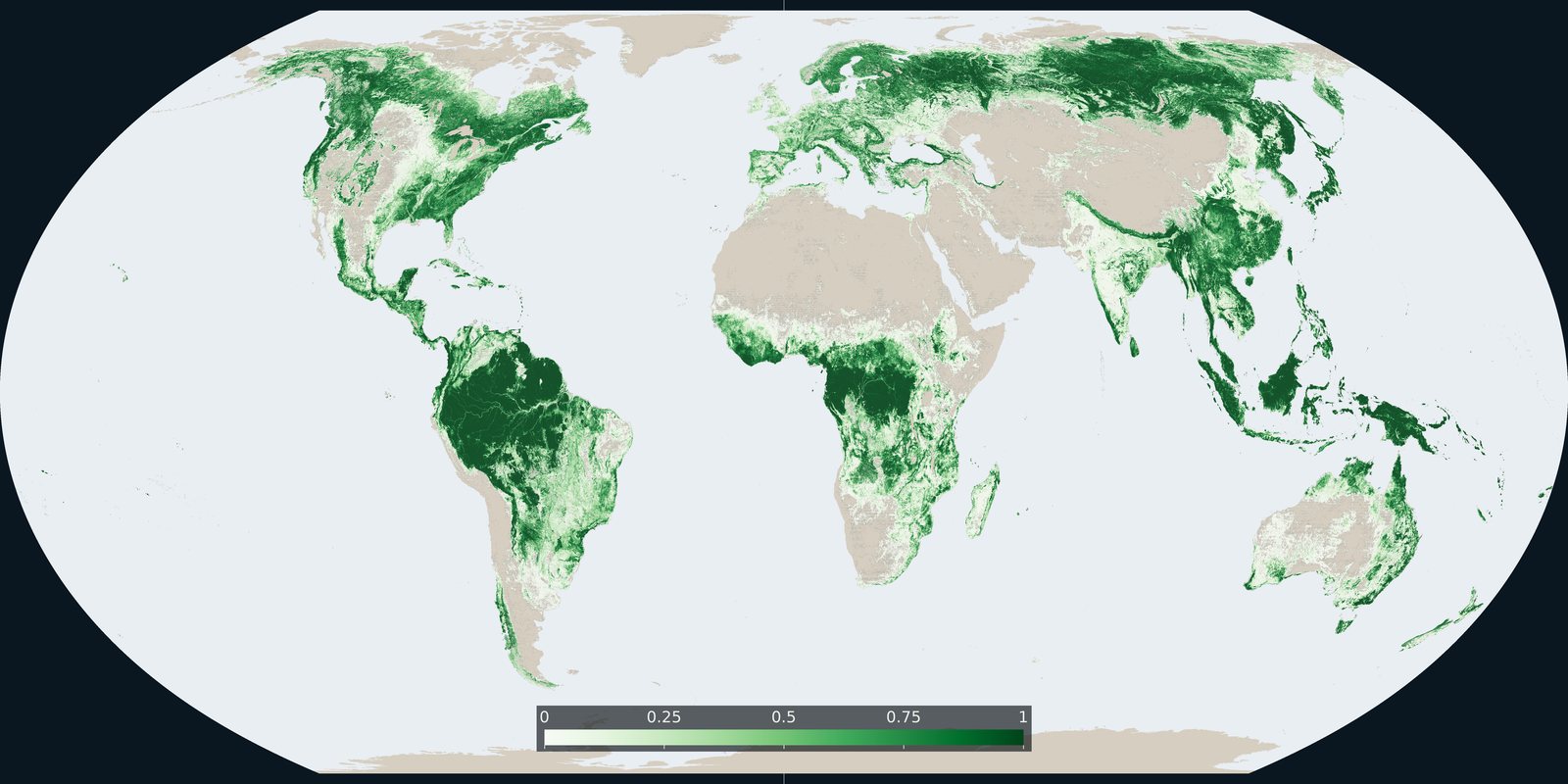
Published figures, each with a named source and year. The Food and Agriculture Organization of the United Nations reports forest as land use. The University of Maryland laboratory and Global Forest Watch map canopy at about 30 metres. Intact forest landscapes are a mapped class of large forest patches. A 2015 paper in Nature estimates the number of trees. Each figure keeps the definition used by its publisher.
Each figure is copied from the cited publication, with that publication year. Forest area, canopy, and tree counts come from their own publishers.
4.14 billion hectares
4.14 billion hectares, about 0.50 hectares per person. Nearly half of that forest is tropical. The figure is a land-use total from national reports.
Food and Agriculture Organization of the United Nations, Global Forest Resources Assessment 2025
32 percent of land
32 percent of the world land is reported as forest in 2025. It is the same land-use total as the 4.14 billion hectares.
Food and Agriculture Organization of the United Nations, Global Forest Resources Assessment 2025
1.18 billion hectares
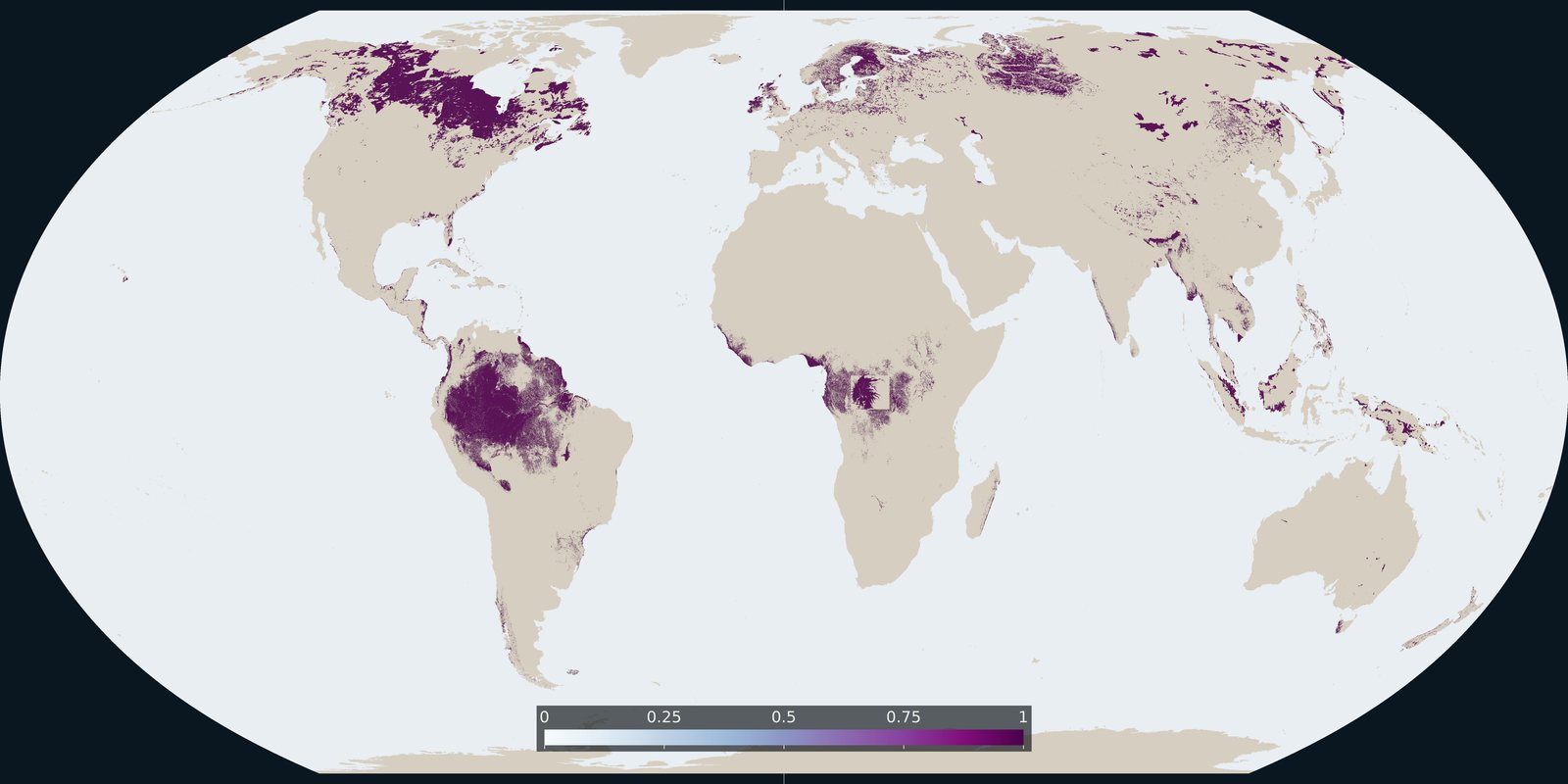
At least 1.18 billion hectares, 29 percent of reported forest. The area is down 110 million hectares since 1990. Recent primary loss is 1.61 million hectares a year from 2015 to 2025, less than half the rate of 2000 to 2015. The total includes boreal primary forest as well as rainforest.
Global Forest Resources Assessment 2025, primary forests
312 million hectares
312 million hectares, 8 percent of forest in 2025. The area is up 120 million hectares since 1990, and the rate of increase slowed in the last decade. The figure covers plantations and planted stands.
Food and Agriculture Organization of the United Nations, Global Forest Resources Assessment 2025
714 gigatonnes of carbon
714 gigatonnes of carbon across all pools (172 tonnes per hectare): soil 46 percent, living biomass 44 percent, litter and dead wood 10 percent.
Food and Agriculture Organization of the United Nations, Global Forest Resources Assessment 2025
489 million hectares
489 million hectares cleared from 1990 to 2025. The figure is the gross loss of forest land use. The rate slowed, and clearing continues.
Food and Agriculture Organization of the United Nations, news release on the 2025 forest assessment
4.12 million hectares a year
4.12 million hectares a year from 2015 to 2025, down from 10.7 million hectares a year from 1990 to 2000. Net change is deforestation minus expansion from regrowth, planting, and other gain.
Food and Agriculture Organization of the United Nations, news release on the 2025 forest assessment
10.9 million hectares a year
10.9 million hectares a year from 2015 to 2025, down from 17.6 million hectares a year from 1990 to 2000. Expansion also slowed, to 6.78 million hectares a year in the latest decade. Deforestation is the conversion of forest to other land use.
Food and Agriculture Organization of the United Nations, news release on the 2025 forest assessment
6.7 million hectares
6.7 million hectares of humid tropical primary forest in a fire-driven record year, about 18 football pitches a minute.
World Resources Institute, Global Forest Review, forest loss in 2024
4.3 million hectares
4.3 million hectares, 36 percent below 2024 and still about 46 percent above a decade earlier. The World Resources Institute describes this as 11 football fields a minute. Brazil cut non-fire primary loss by 41 percent from 2024. Global tree cover loss was about 25.5 million hectares, and fires accounted for 42 percent.
World Resources Institute, Global Forest Review, tropical forest loss in 2025
~3.04 trillion trees
A 2015 paper in Nature estimates about 3.04 trillion trees. The figure is a modelled stem count from ground plots and remote sensing.
Nature, Mapping tree density at a global scale (2015)
~46 percent
The same 2015 paper estimates about 46 percent fewer trees than at the start of human civilization.
Nature, Mapping tree density at a global scale (2015)
1,086 million hectares
Intact forest landscapes
1,086 million hectares remaining in 2025, 8.4 percent of ice-free land. The patches are about 50,000 hectares or larger and lack an industrial footprint.
Intact forest landscapes mapping team, 2025
Boreal forest, tropical forest, and planted forest
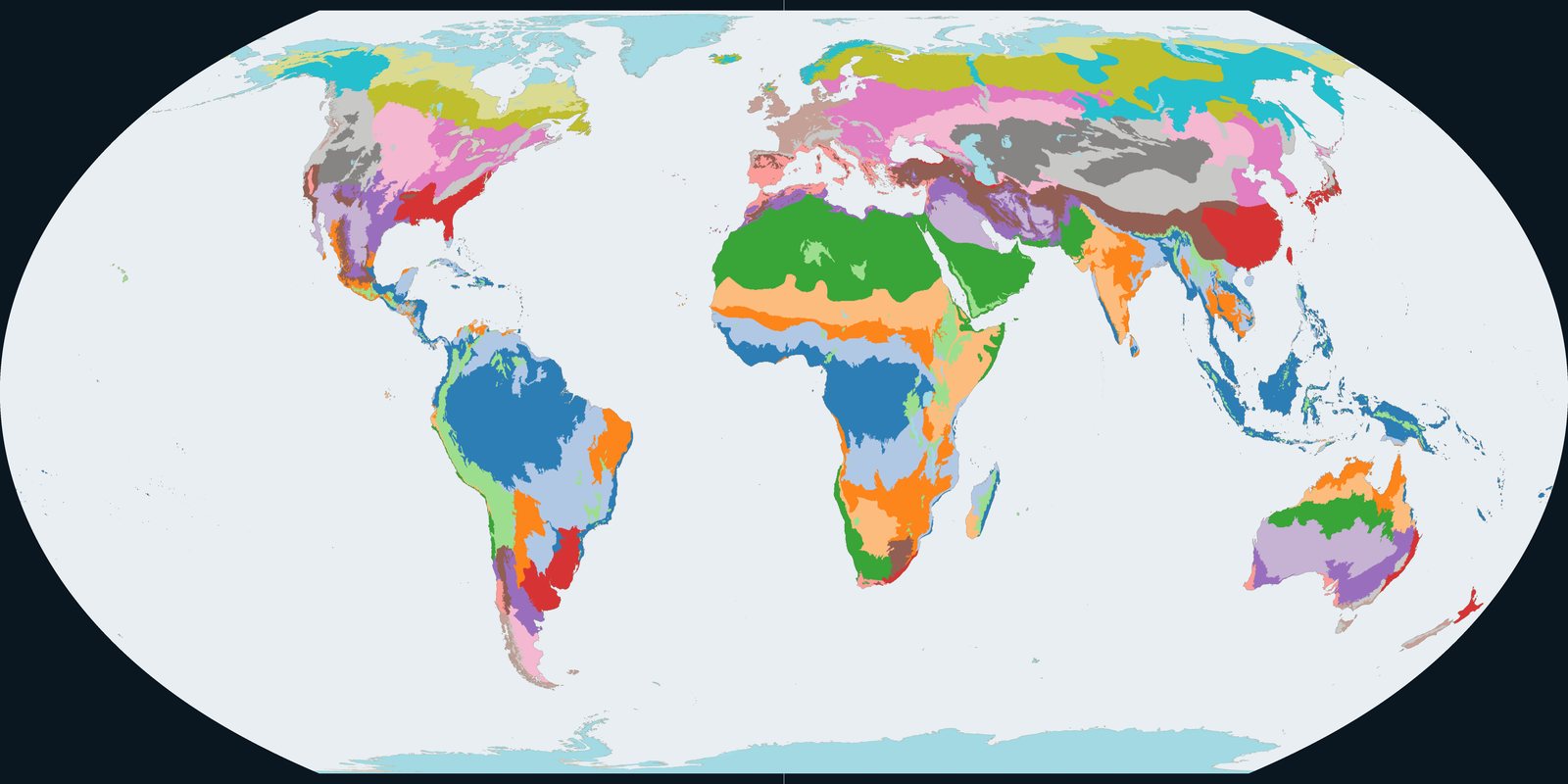
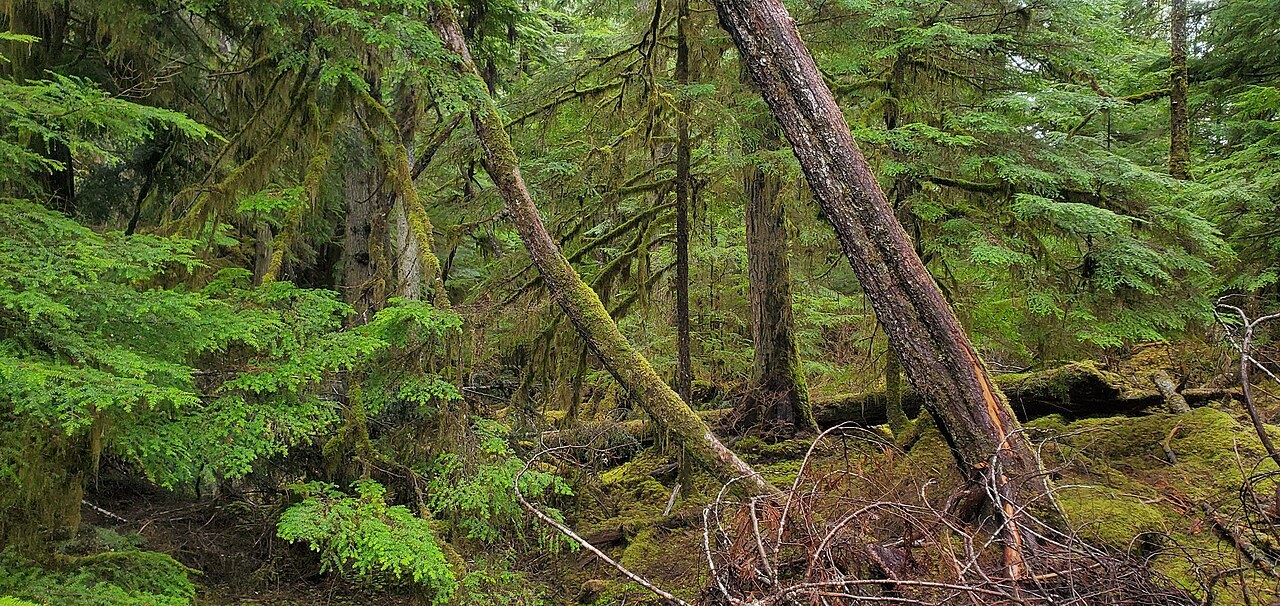
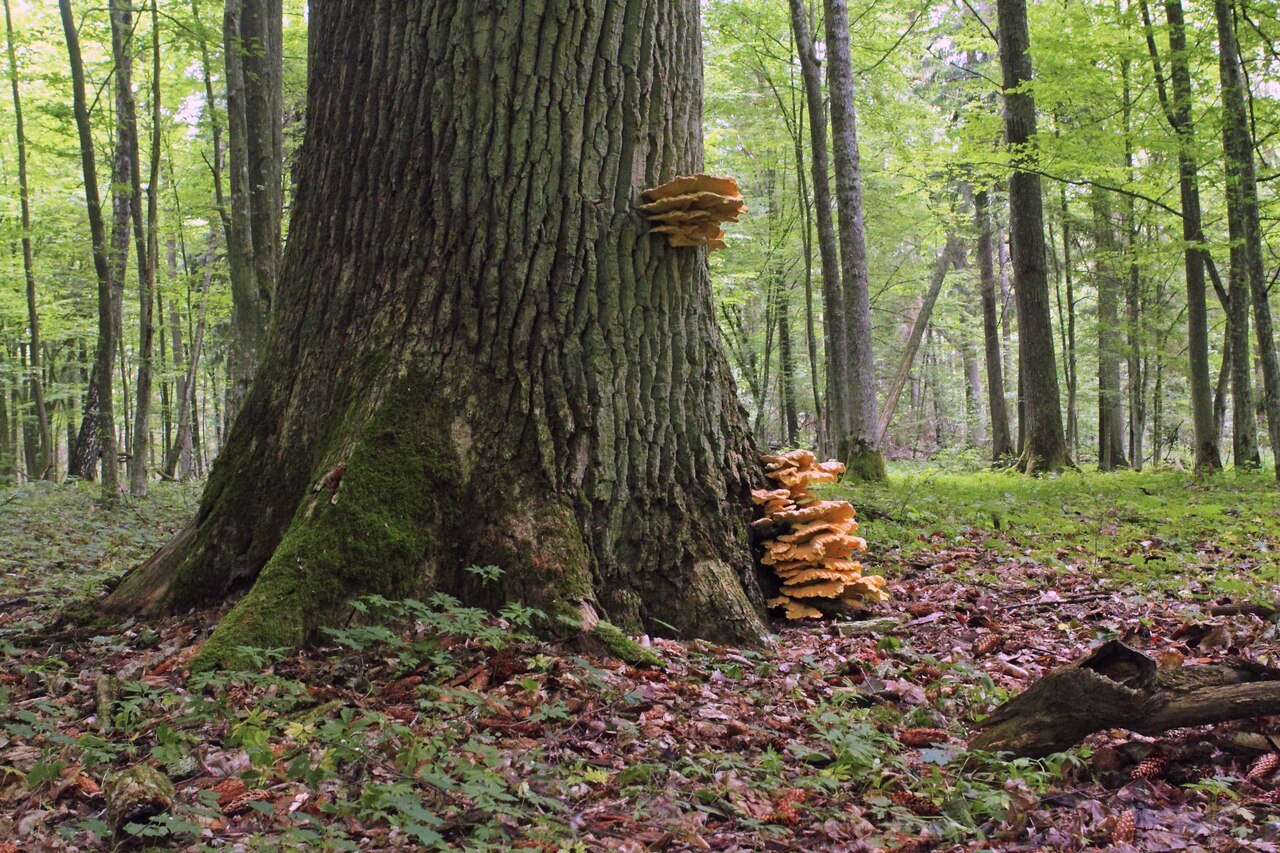
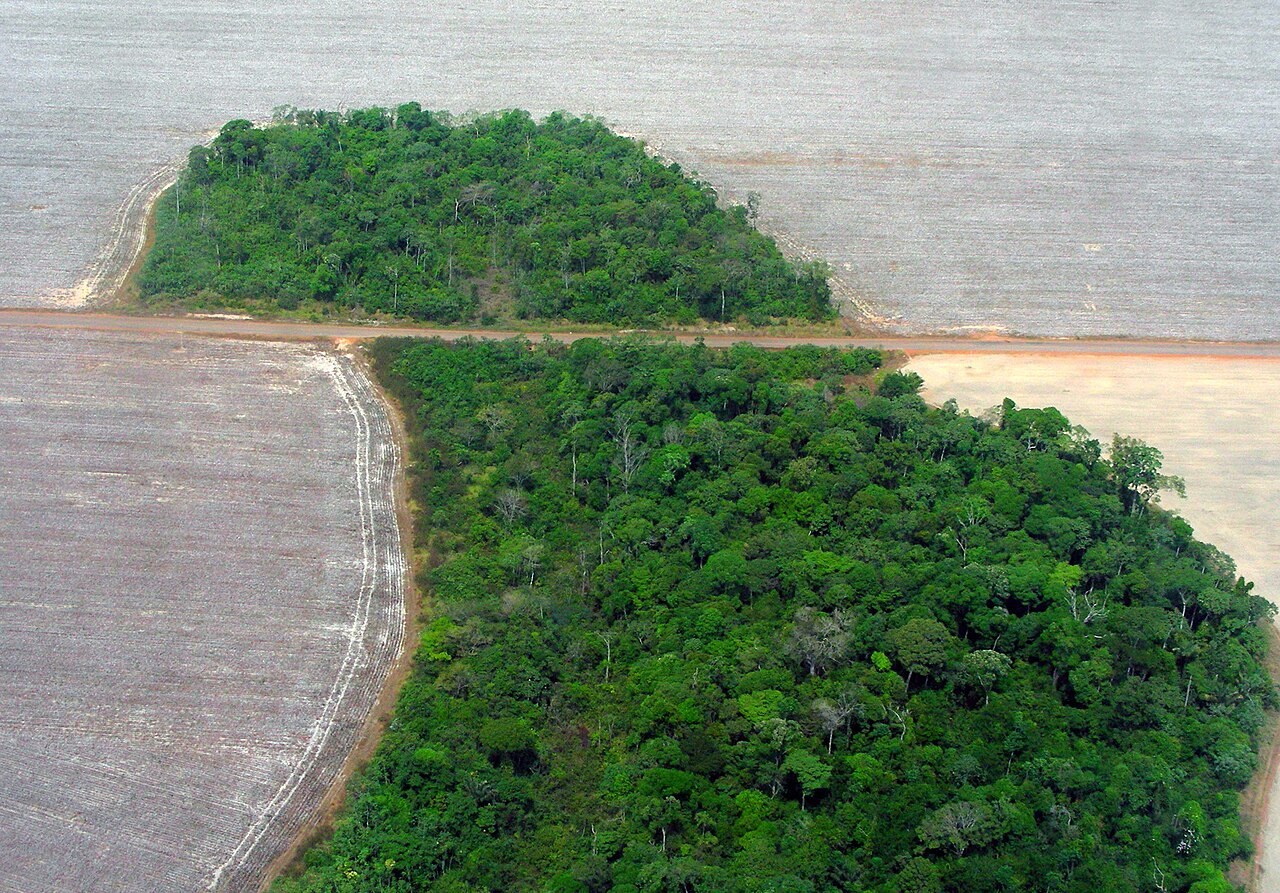
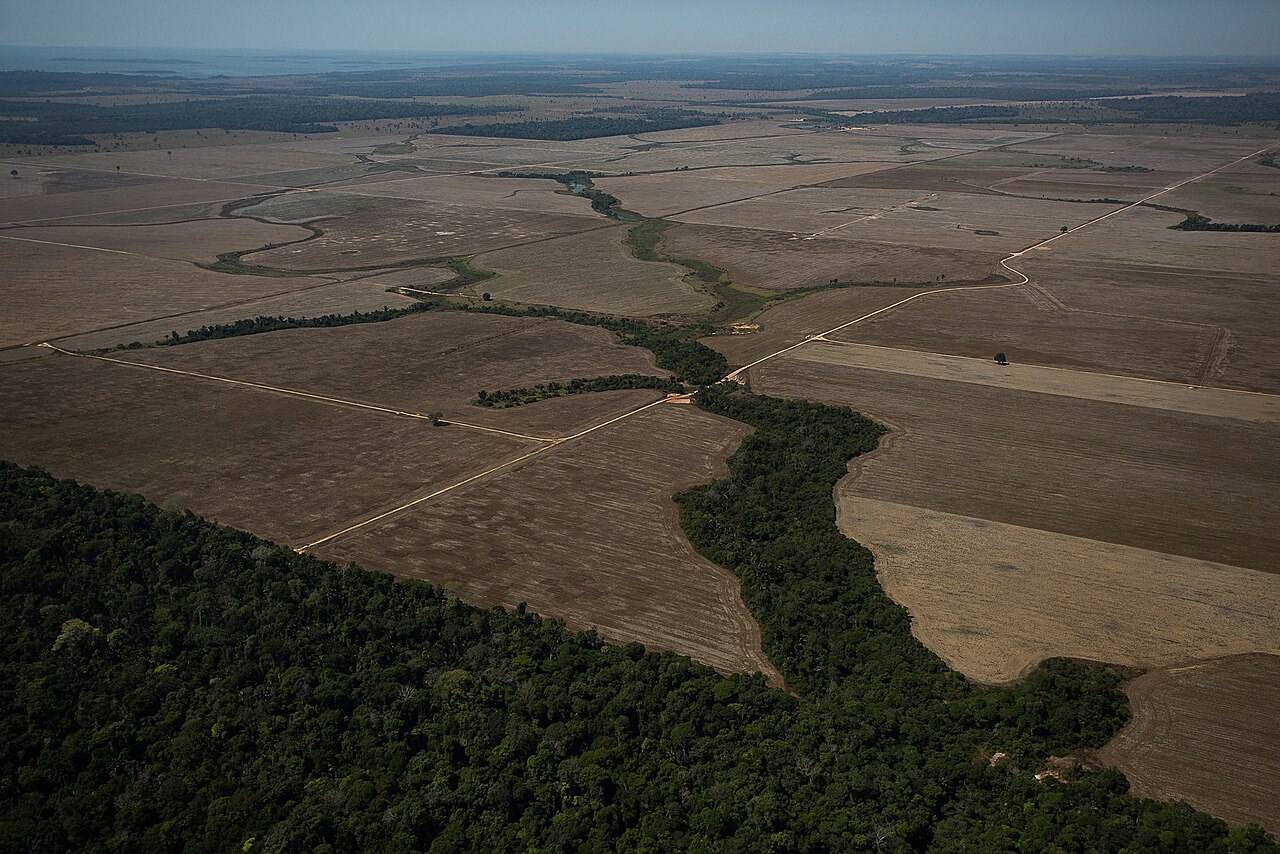
About 45 percent of reported forest is tropical. The rest is mostly boreal and temperate, in the 2025 assessment. Boreal loss is often fire, insects, or logging, and the land can return to forest in the land-use sense. Tropical primary loss is usually conversion: a soy field or an oil-palm stand takes the place of the old forest. Secondary forest and plantations can raise the forest-area total while primary area falls. Planted forest is 312 million hectares, 8 percent of the total, alongside 1.18 billion hectares of primary forest. Net loss of 4.12 million hectares a year from 2015 to 2025 is deforestation of 10.9 million hectares a year minus expansion. Intact forest landscapes cover 1,086 million hectares in 2025, on their own map. Tropical primary loss was 6.7 million hectares in 2024 and 4.3 million hectares in 2025, on the Global Forest Watch record.