

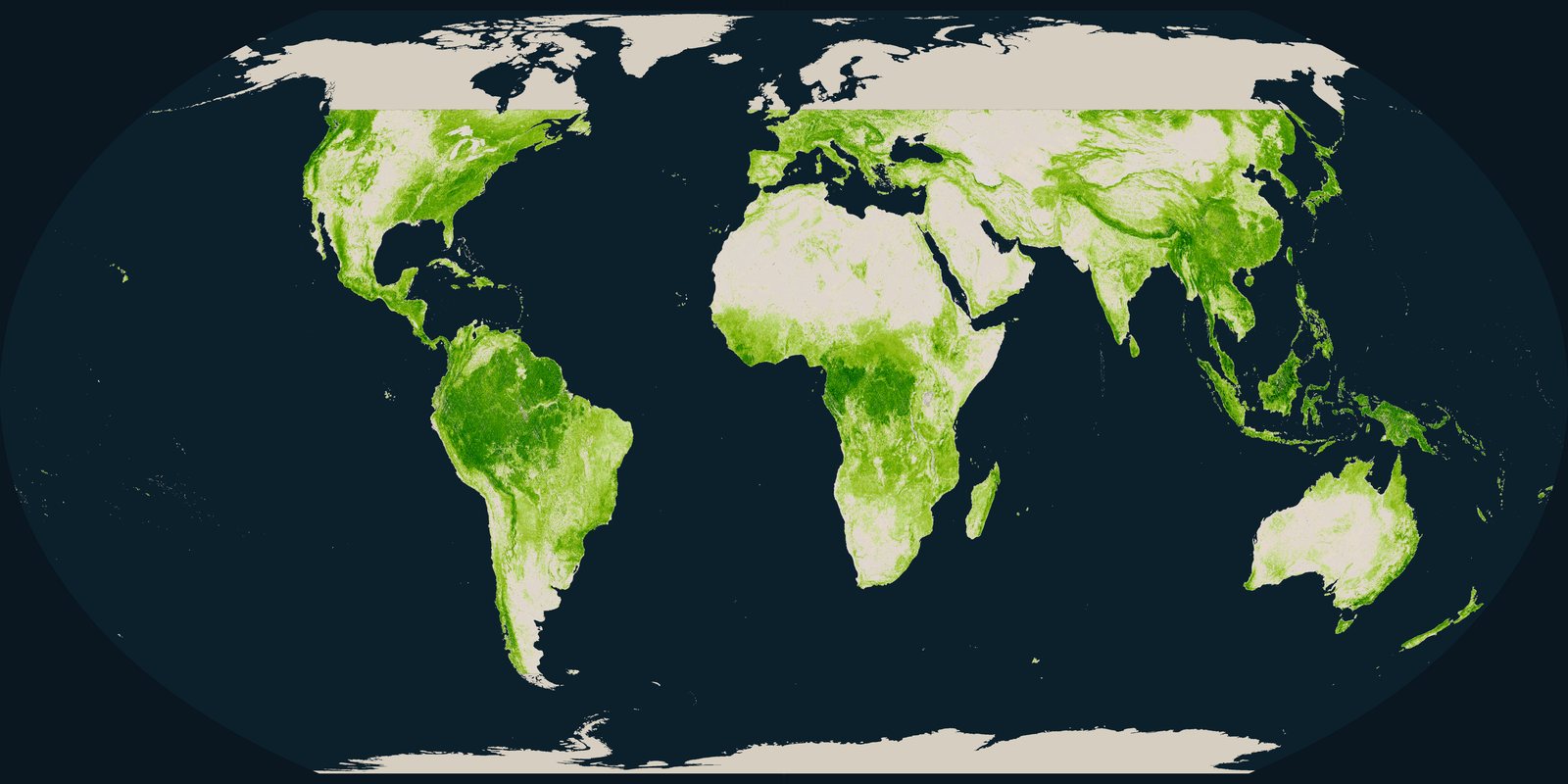
Canopy height
How tall the forest canopy is, measured by spaceborne lidar as a mean top height on a grid of about 1 kilometre.
Open the layerThe Food and Agriculture Organization of the United Nations reports that forests cover 4.14 billion hectares, 32 percent of the world land, based on reports from 236 countries and areas.
Global Forest Resources Assessment 2025 · 4.14 billion hectares · 32 percent of land
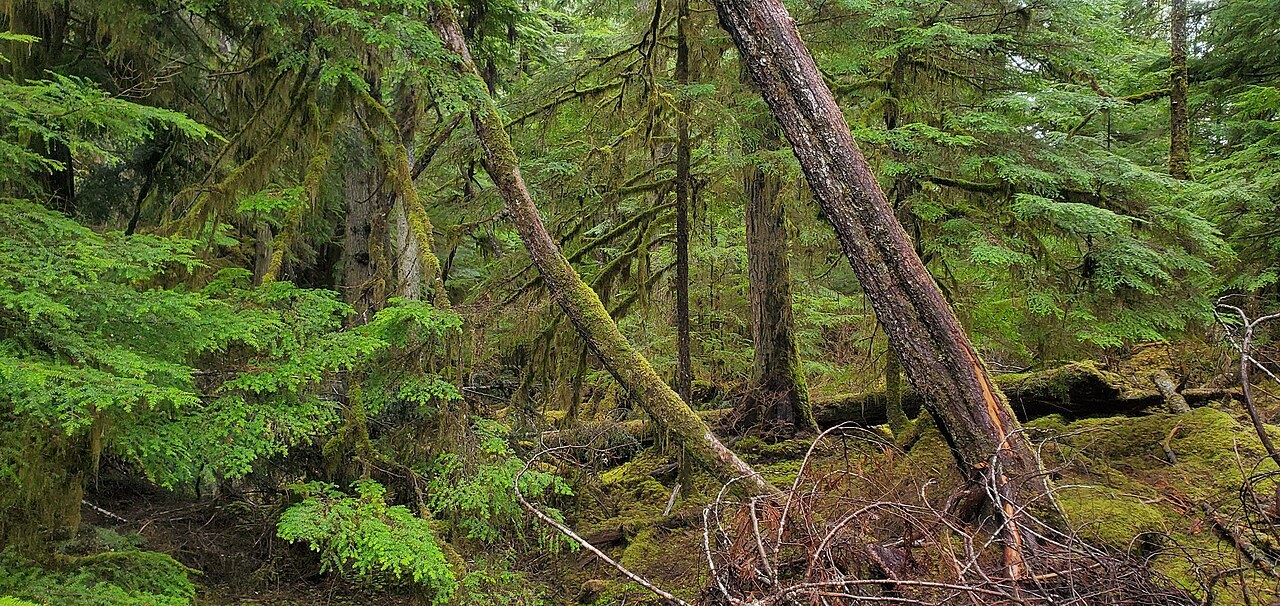
Old-growth forest on Prince of Wales Island in the Tongass National Forest, Alaska, with moss-covered trunks and fallen logs.
Photo: Nicholas Thomas, USDA Forest Service Alaska Region, via Wikimedia Commons, public domain (work of a U.S. federal government agency).
The Global Forest Resources Assessment 2025, published by the Food and Agriculture Organization of the United Nations, reports that the world has 4.14 billion hectares of forest. That is 32 percent of the global land area, or 0.5 hectares of forest per person, and it rests on reports from 236 countries and areas. The assessment defines forest as land spanning more than 0.5 hectares with trees higher than 5 metres and a canopy cover of more than 10 percent, or trees able to reach those thresholds in place. Land mainly used for farming or for towns and cities is left out of the definition.
The organization says that nearly half of the world forests are in the tropics and that more than half, 54 percent, are in five countries: the Russian Federation, Brazil, Canada, the United States of America and China. Of the world regions, Europe has the largest forest area, 25 percent of the world total. The assessment adds that the rate of deforestation slowed in every region over the last decade and that more than half of the world forests are covered by long-term management plans.
The total is a land-use figure compiled from official national reports under one shared definition, and land counts as forest because of how it is used. Areas that are temporarily without trees after clear-cutting or natural disasters, and are expected to regenerate within 5 years, are included. Of the total, 92 percent, or 3.83 billion hectares, is naturally regenerating forest and about 8 percent, or 312 million hectares, is planted forest. Primary forests make up at least 1.18 billion hectares of the naturally regenerating part.
The figure is a snapshot for 2025 from an assessment that appears every five years, and the 2025 edition was released on 21 October 2025. Values are generally rounded to three significant figures, so totals can differ slightly from the sum of their parts. Not all countries and areas reported on every parameter.
How tall the forest canopy is, measured by spaceborne lidar as a mean top height on a grid of about 1 kilometre.
Open the layer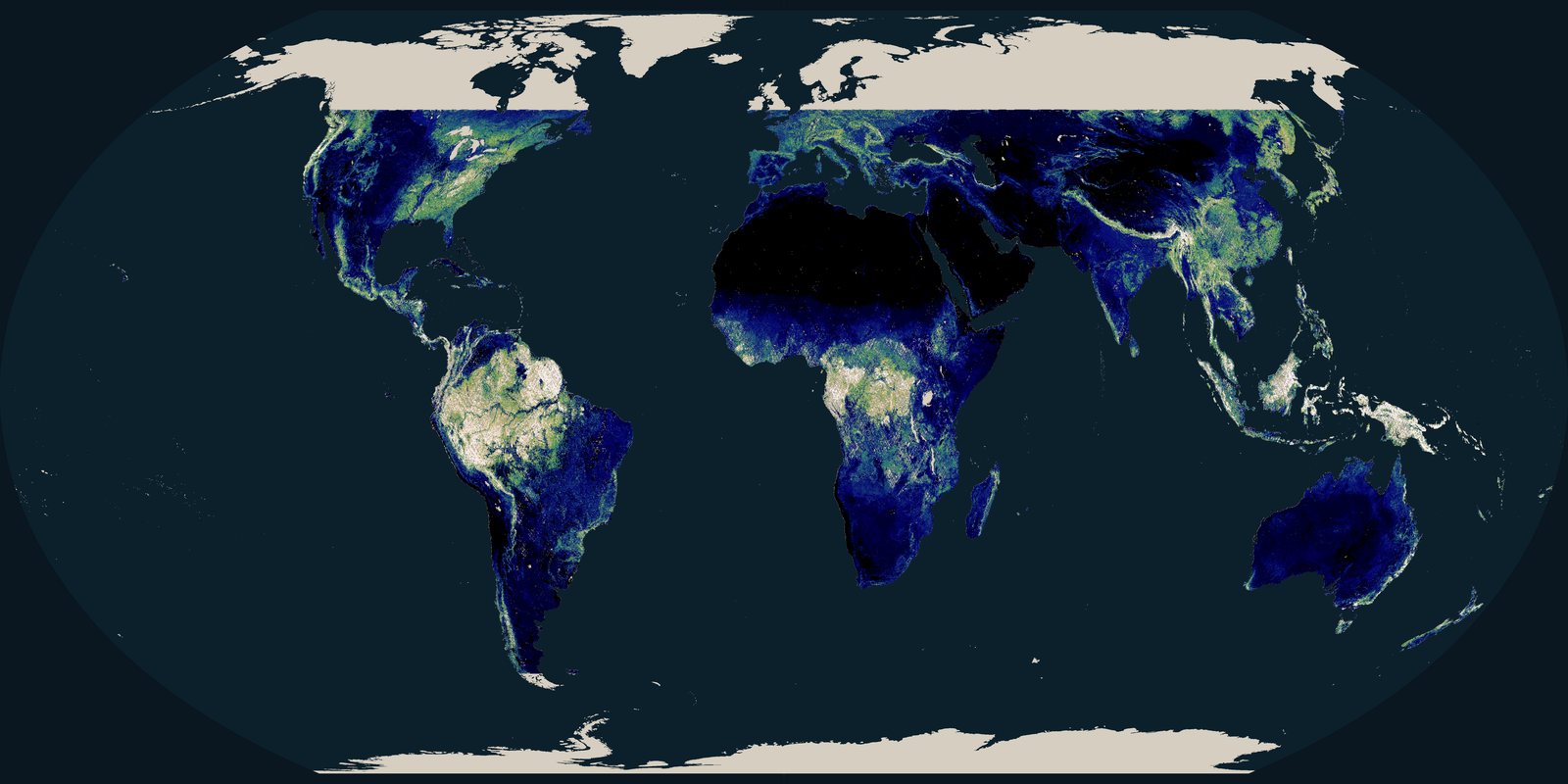
Aboveground biomass density from spaceborne lidar, mapped in tonnes per hectare.
Open the layer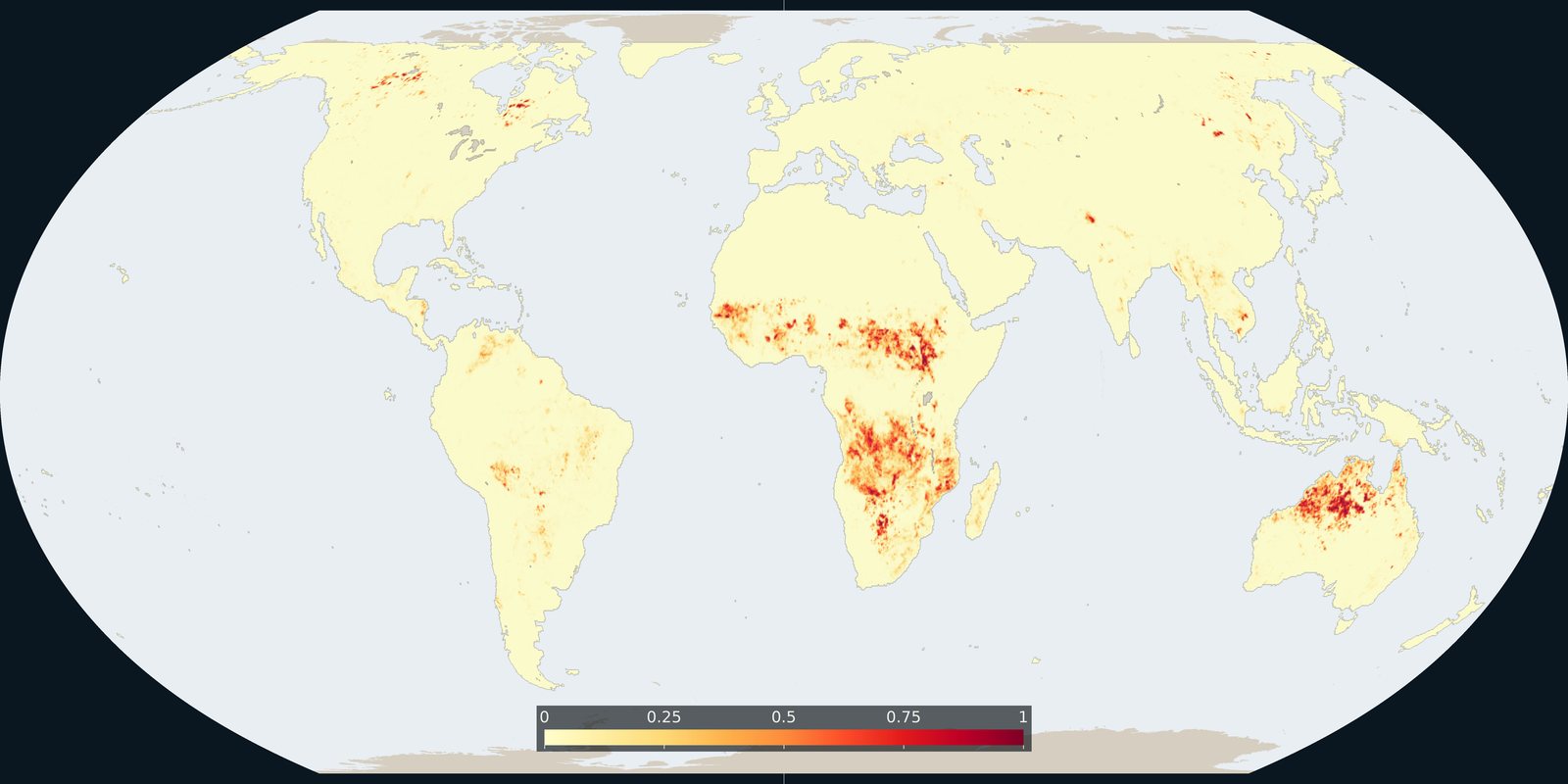
Where fire burned in 2023, as the annual burned fraction on a quarter-degree grid.
Open the layer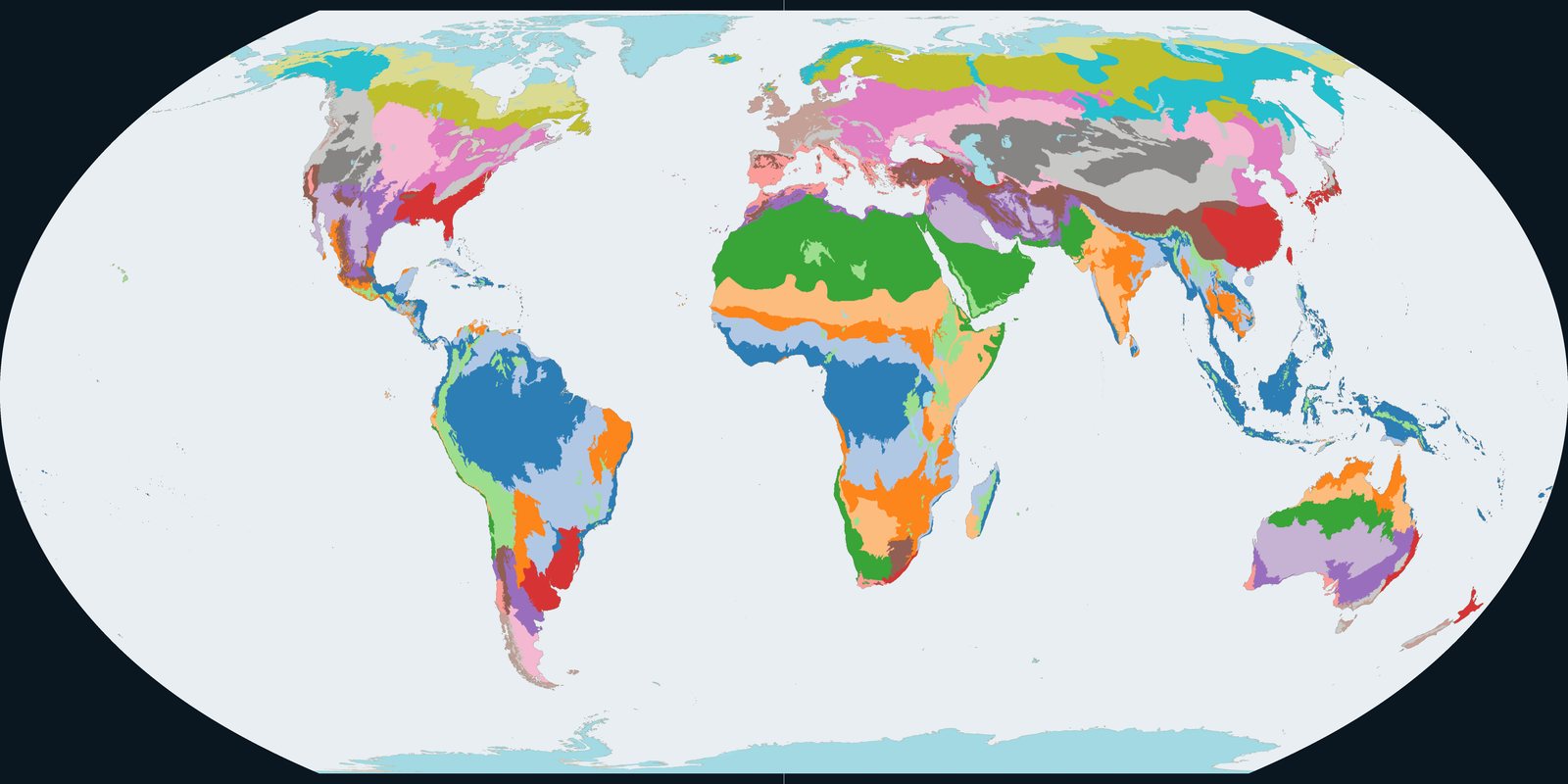
Climatic and ecological zones used for forest reporting: a zoning of land by climate and ecology.
Open the layer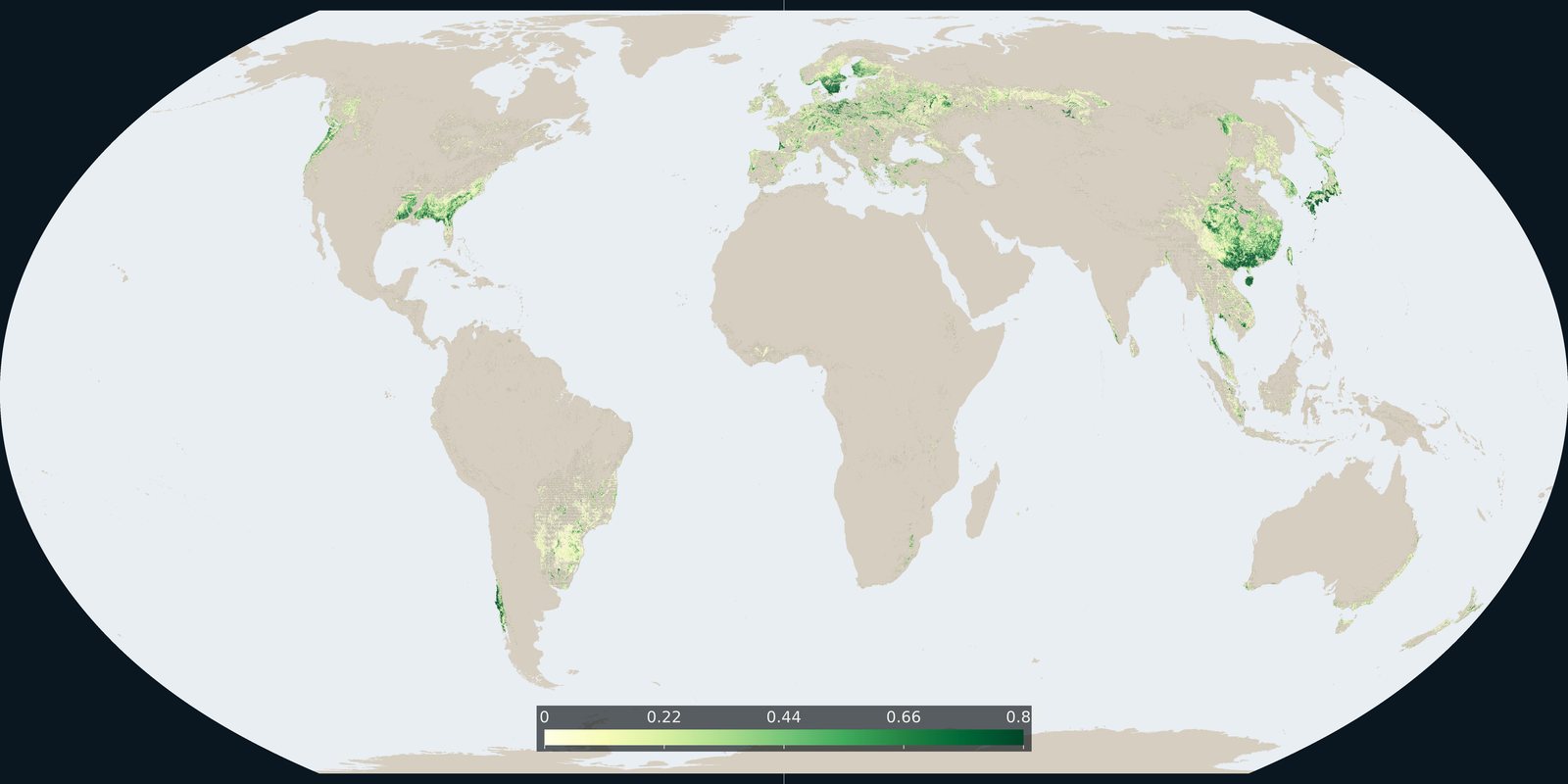
Where the 2015 forest-management map marks planted forest and short-rotation timber plantation, with the reported total of about 312 million hectares.
Open the layer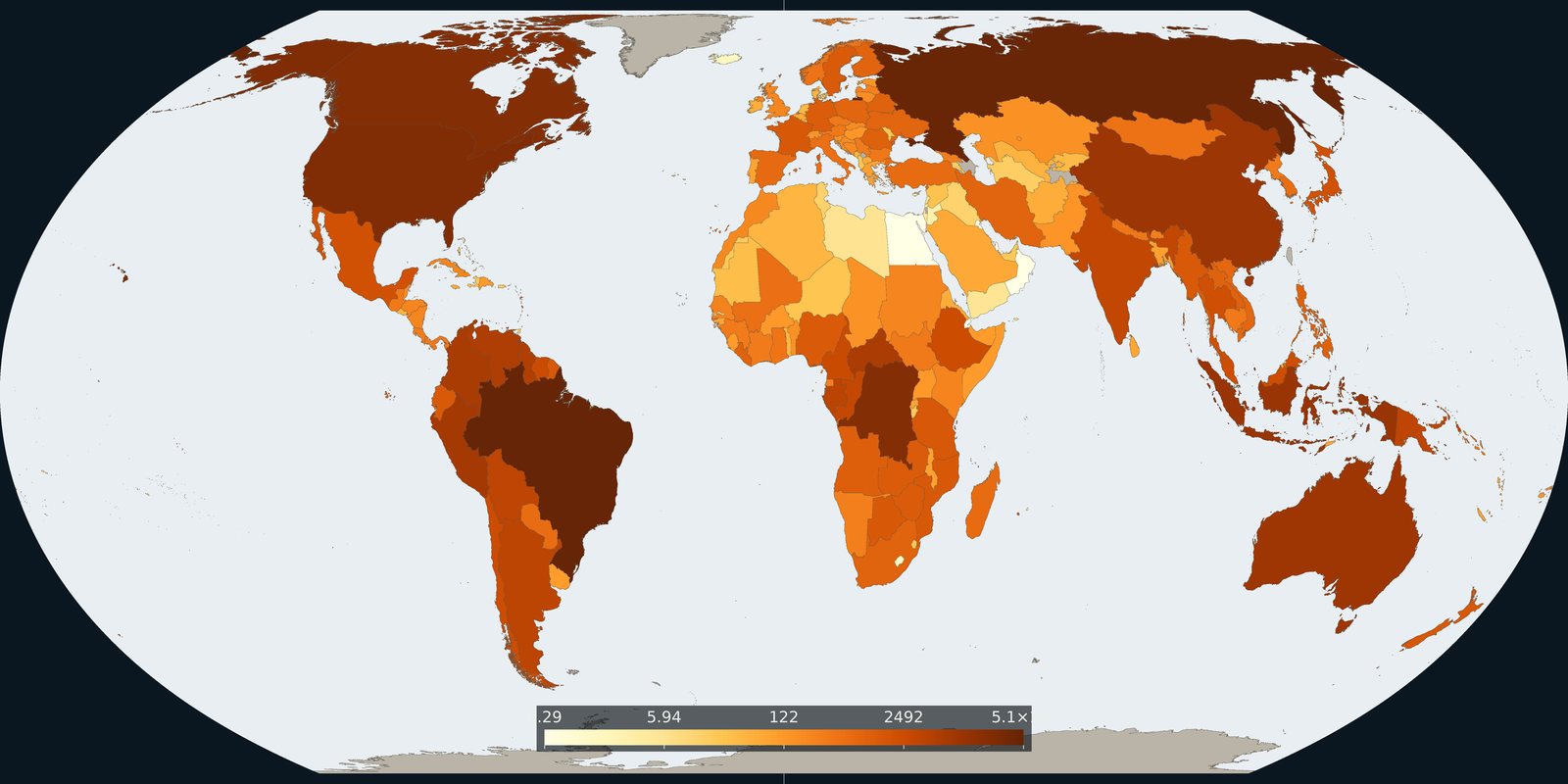
Country totals of living-biomass carbon in 2025, aboveground plus belowground, from the forest assessment, with the five-pool global total alongside.
Open the layer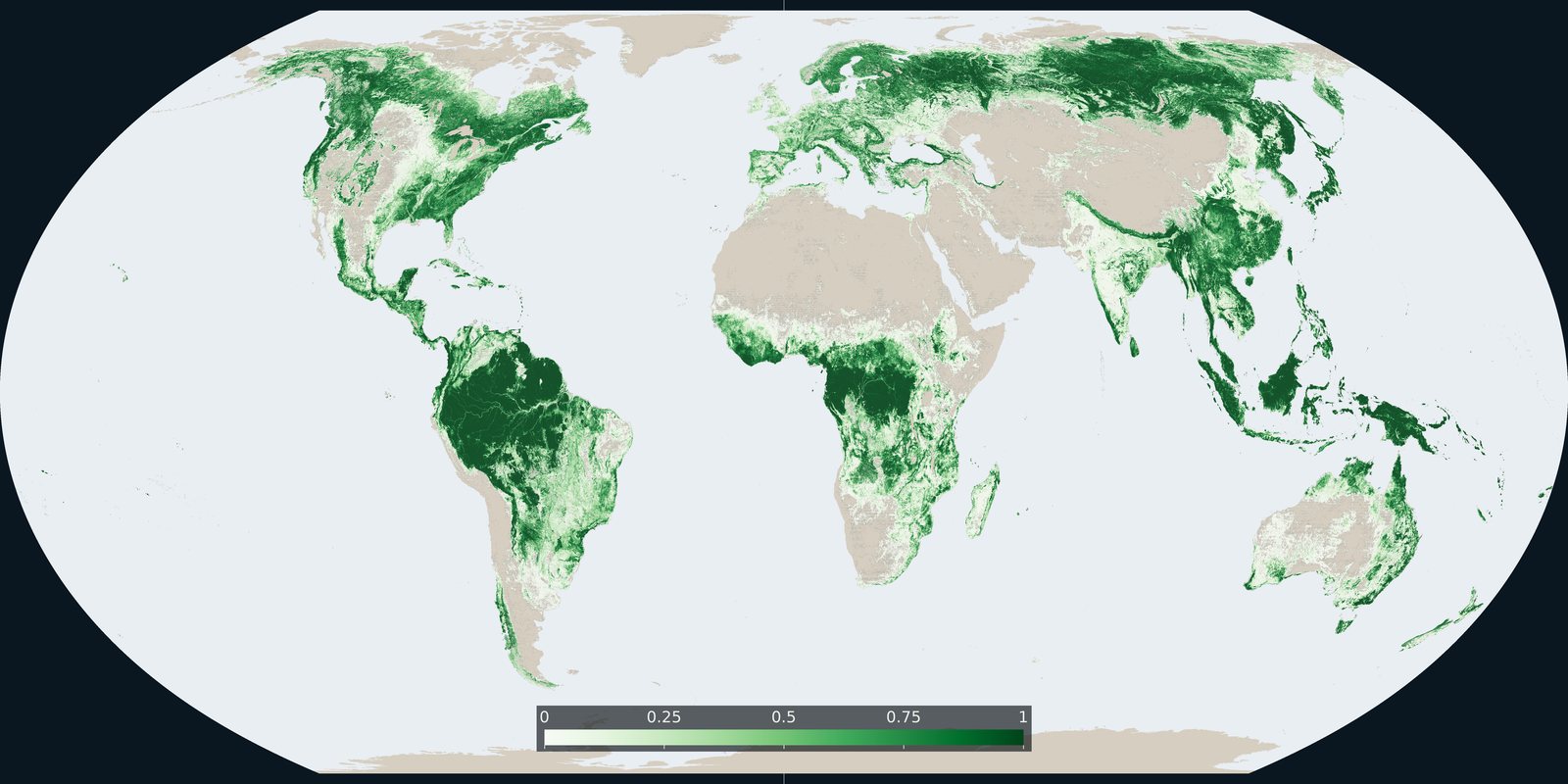
Where the 2021 land-cover map assigns the tree-cover class, counted as the share of each cell.
Open the layer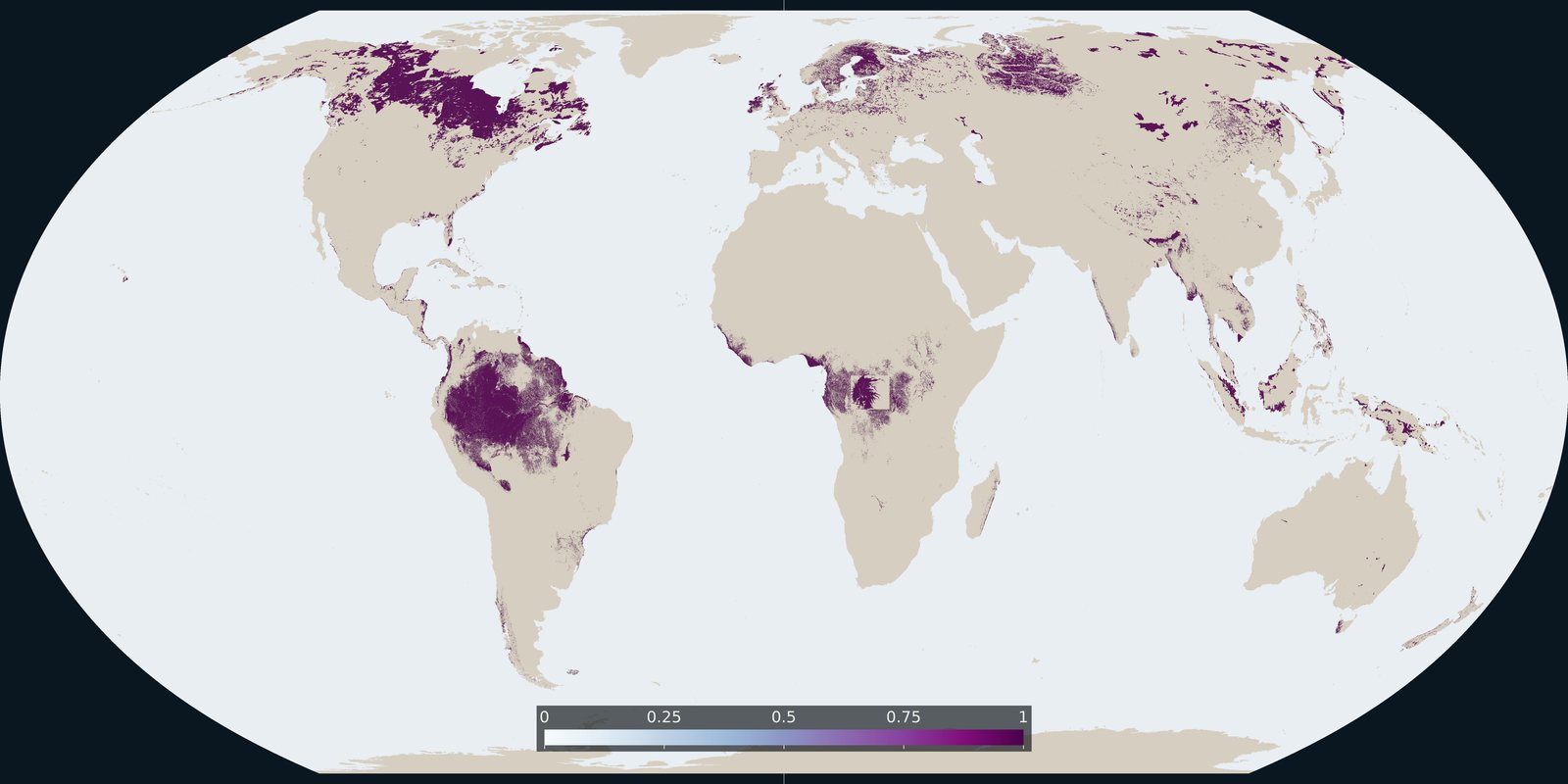
Where the peat map records peat: a global extent of organic soils.
Open the layer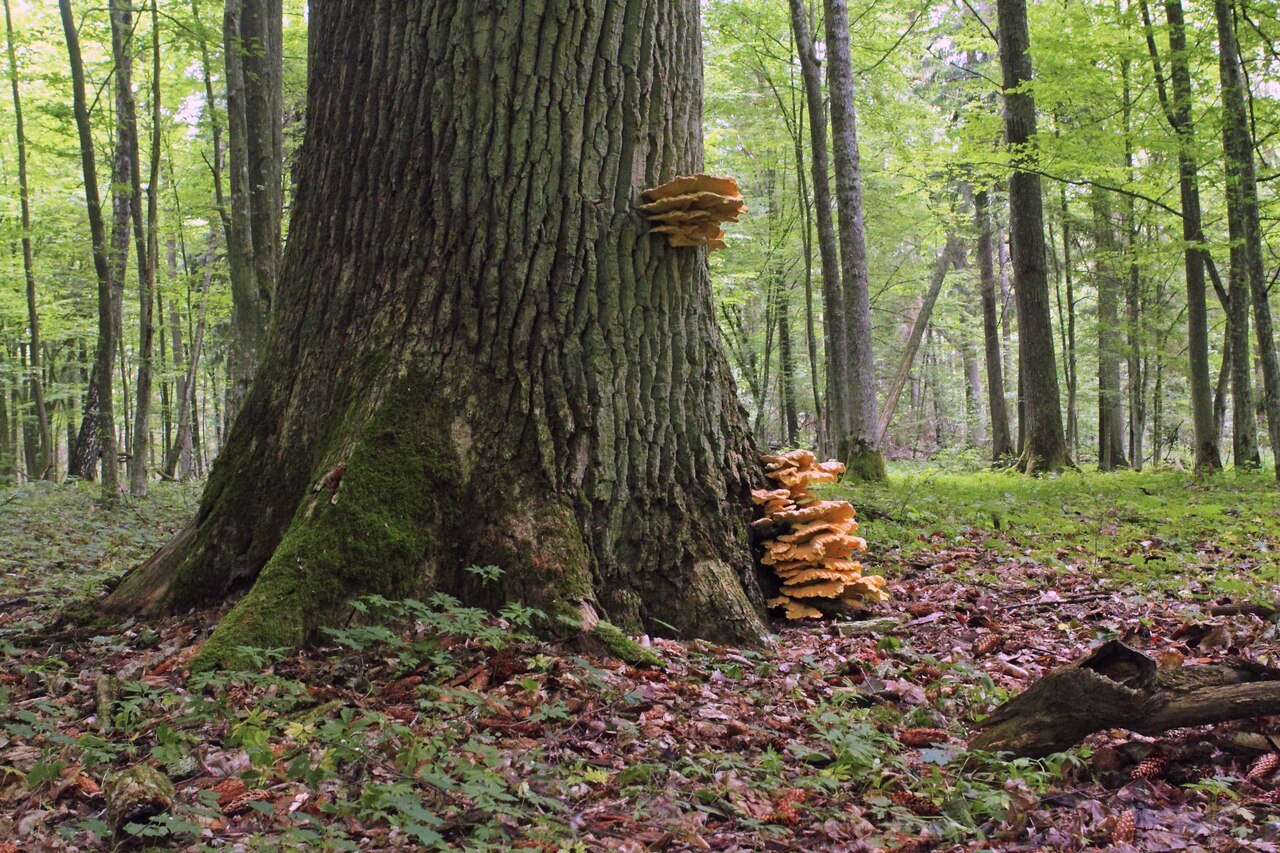
The Food and Agriculture Organization of the United Nations reports at least 1.18 billion hectares of primary forest, 29 percent of all forest: naturally regenerating forest of native tree species with no clearly visible signs of human activity.
Open the layerSource: Global Forest Resources Assessment 2025, primary forests
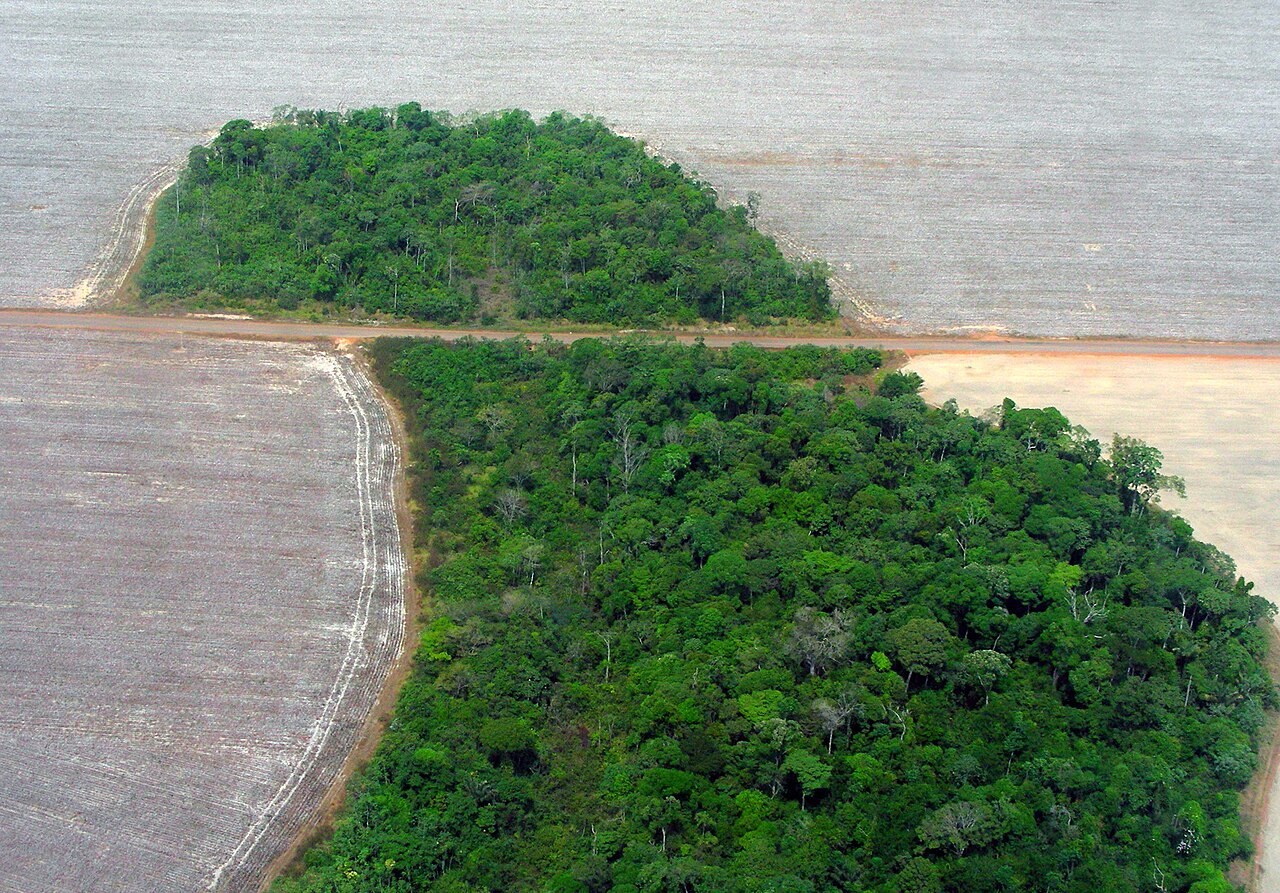
The Food and Agriculture Organization of the United Nations reports that the world forest area shrank by a net 4.12 million hectares a year in 2015 to 2025, down from 10.7 million hectares a year in 1990 to 2000.
Open the layer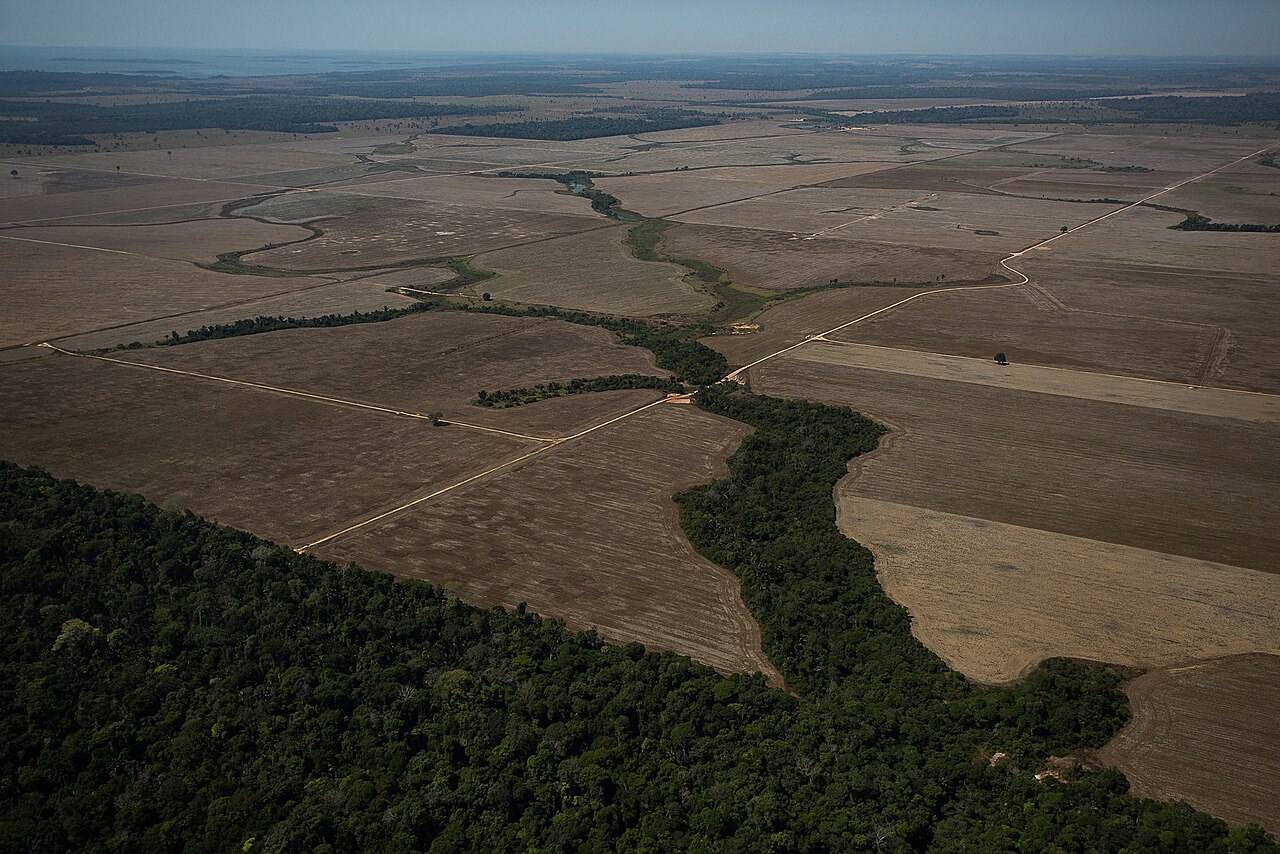
The World Resources Institute reports that the world lost 4.3 million hectares of tropical primary rainforest in 2025, 36 percent less than in the record year 2024.
Open the layerSource: World Resources Institute, Global Forest Review analysis of tropical forest loss in 2025
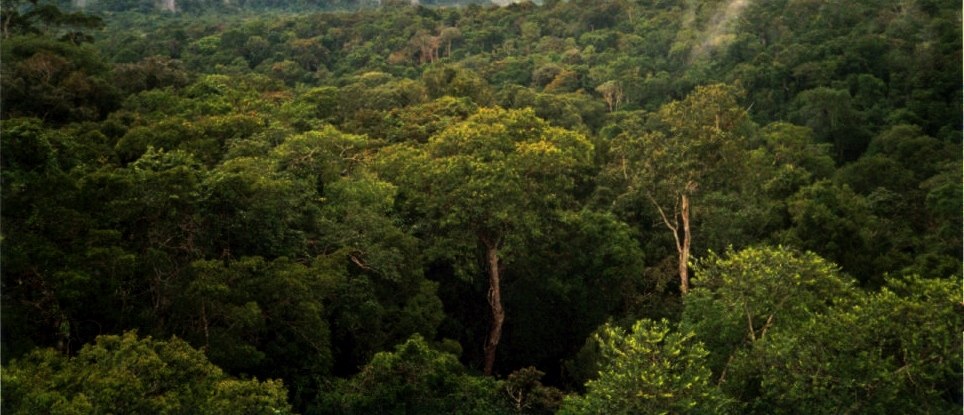
A 2015 study in the journal Nature combined 429,775 forest plot measurements with remote sensing and mapping layers and estimated that there are about 3.04 trillion trees on Earth.
Open the layerSource: Nature, Mapping tree density at a global scale (2015)
Definitions, sources, and the rest of the published set.
Open the layer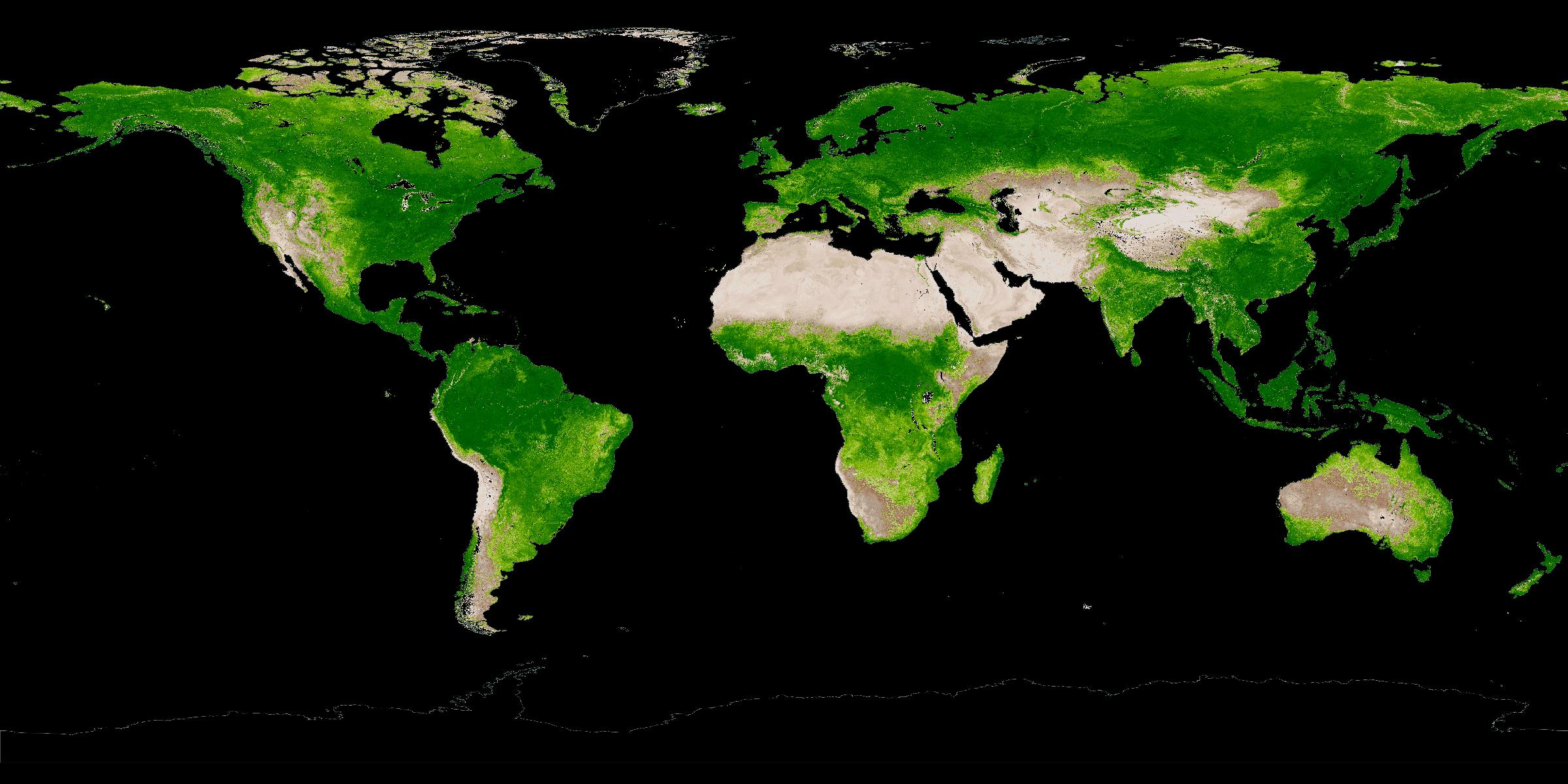
July canopy greenness from space, 2001-2025.
Open the layer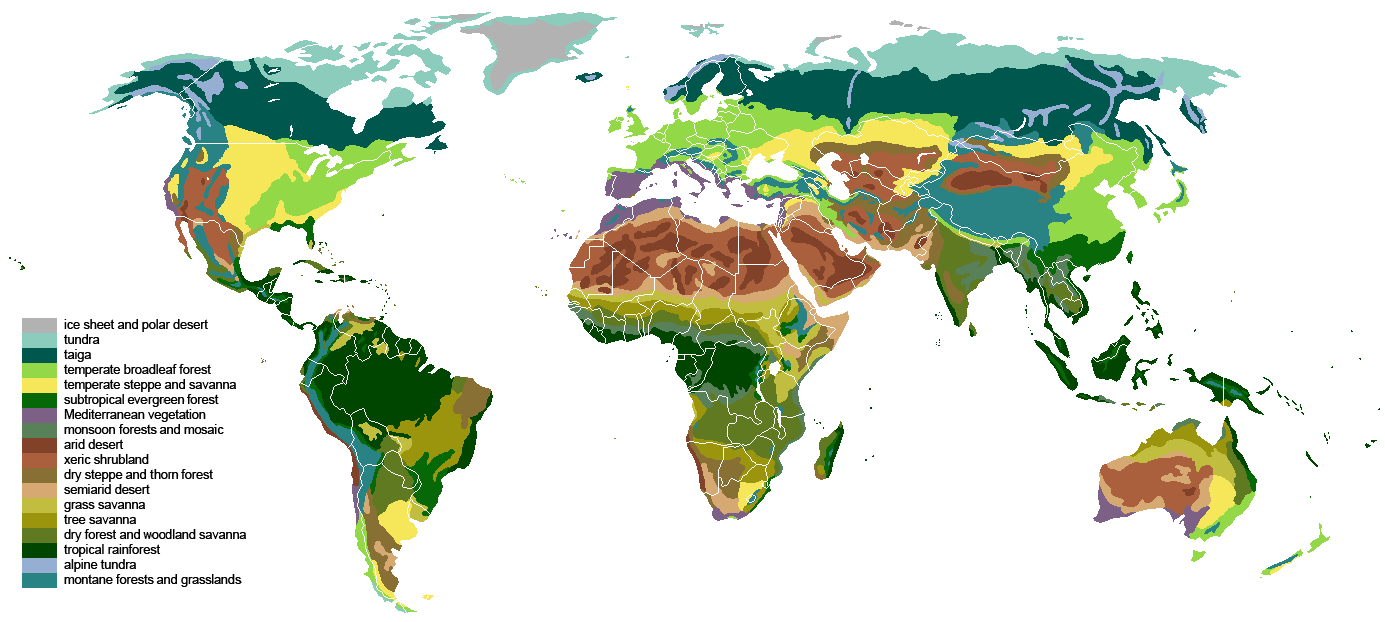
Ice-age vegetation, biomes, and land after people.
Open the layer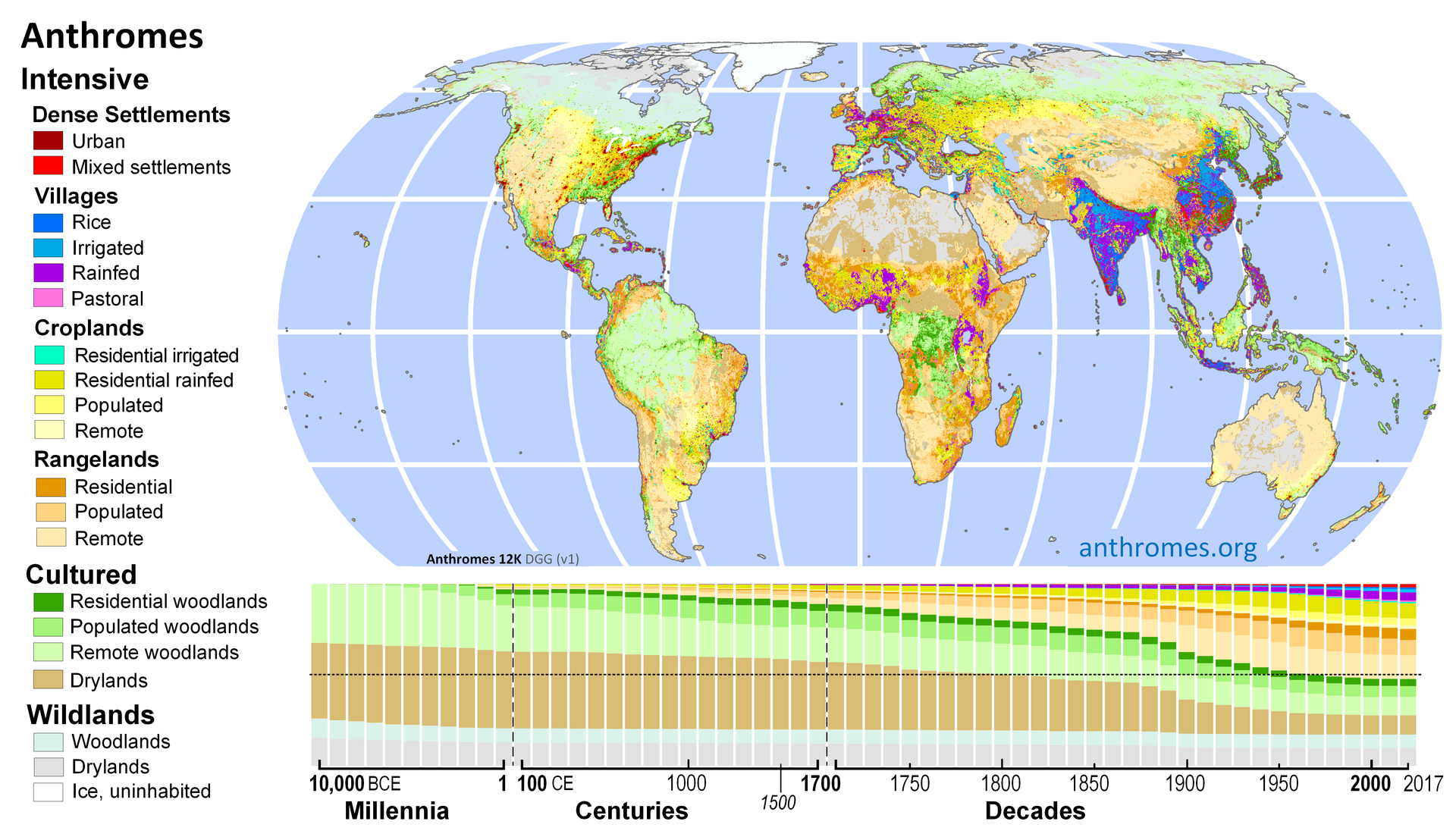
The long view, the years we can measure, and three possible paths.
Open the layer