
Subsurface
Mineral deposits and commodities
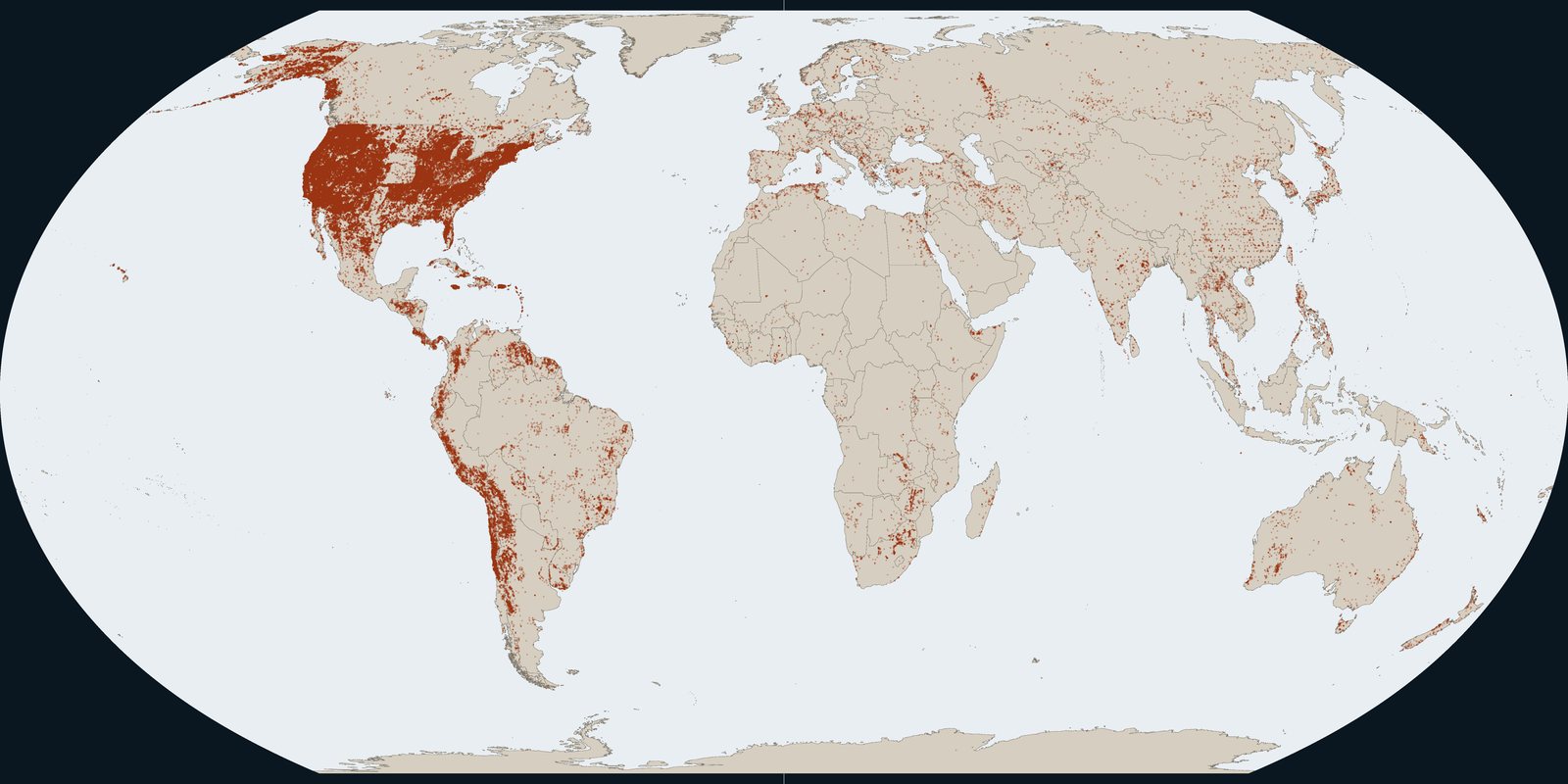
Known deposits of metals and industrial minerals, including gold, from the U.S. Geological Survey.
Read the card →Source: U.S. Geological Survey, Mineral Resources Data System
Petroleum and natural-gas deposits, reserves, and trade, published by the U.S. Energy Information Administration.
Map key
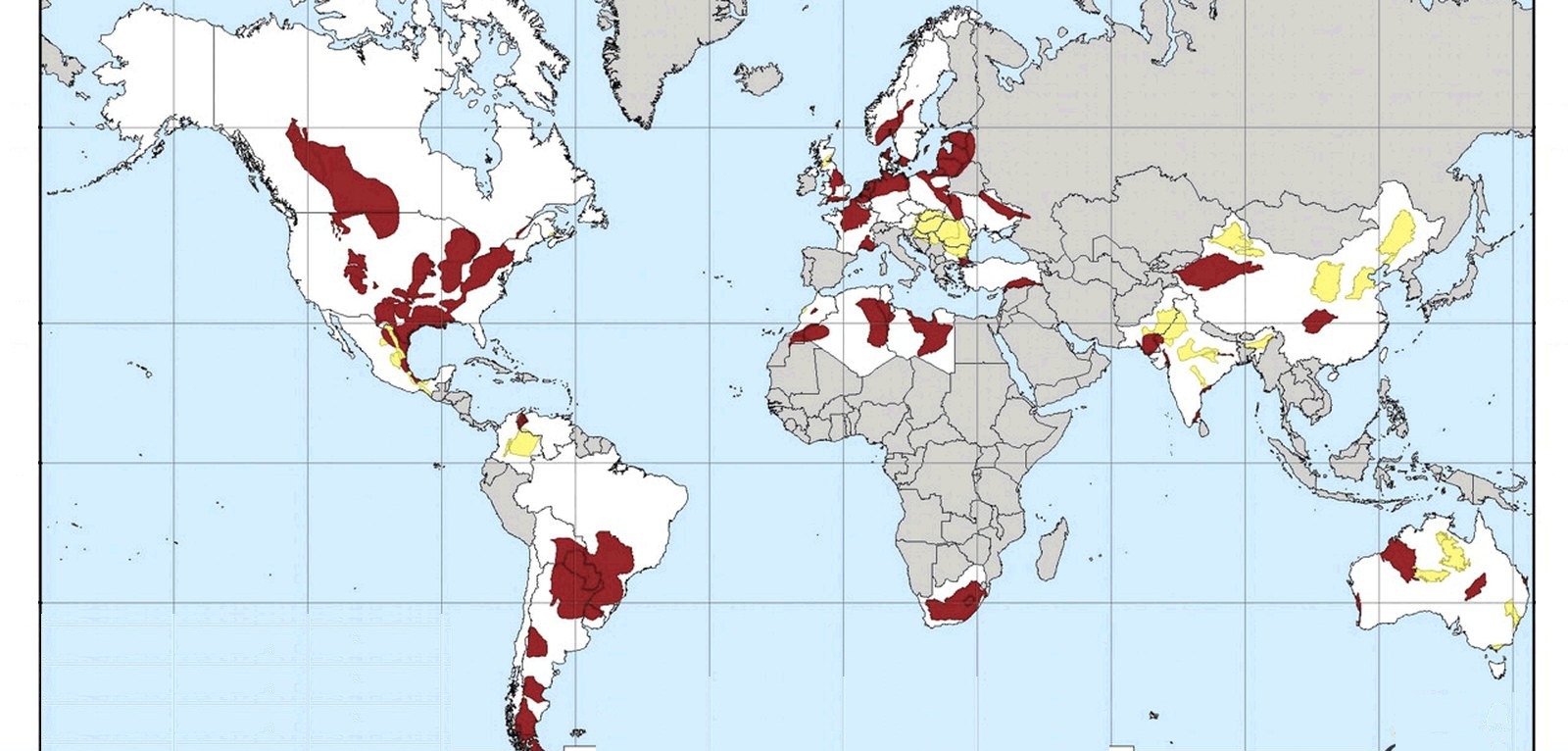
Assessed shale-gas basins, cropped from a public-domain map of the U.S. Energy Information Administration.
Map: cropped from the U.S. Energy Information Administration public-domain map of assessed shale-gas basins.
The U.S. Energy Information Administration publishes international energy statistics, country analyses, and maps of oil and gas. The U.S. Geological Survey world petroleum assessments estimate undiscovered resources that are technically recoverable. Together the series cover deposits, reserves, and trade.
Reserves are the amounts judged economic at today’s prices and with today’s technology. Resources are the larger geologic quantities, with wider uncertainty. A colored basin on this map is an assessed shale-gas area. Pipelines and liquefied natural gas carry gas from the country that produces it to the country that burns it.
Countries prepare their own reserve reports, and those reports follow each country’s rules as well as the geology. Figures from the U.S. Energy Information Administration are among the most transparent public series. The public tables give national totals and assessed basins.
Works of the U.S. Energy Information Administration and the U.S. Geological Survey are U.S. government works in the public domain. The preview is cropped from the Administration’s public-domain map of assessed shale-gas basins. Current oil and gas maps and tables are on the Administration’s international pages.
Open source map → Known deposits of metals and industrial minerals, including gold, from the U.S. Geological Survey.
Read the card →Source: U.S. Geological Survey, Mineral Resources Data System
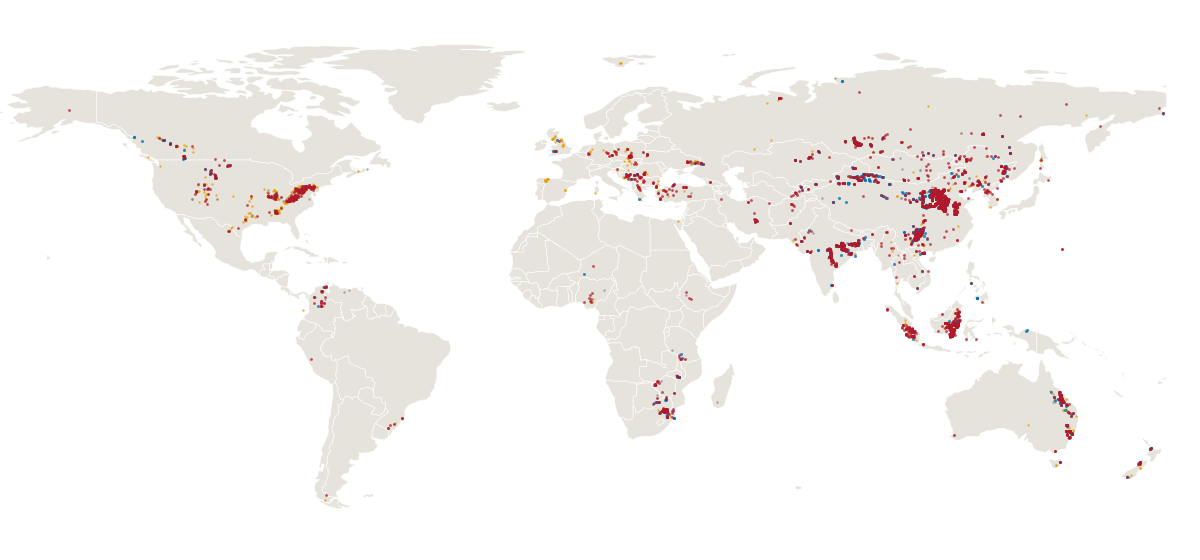
Operating, proposed and recently closed coal mines around the world, with their status, owners and output.
Read the card →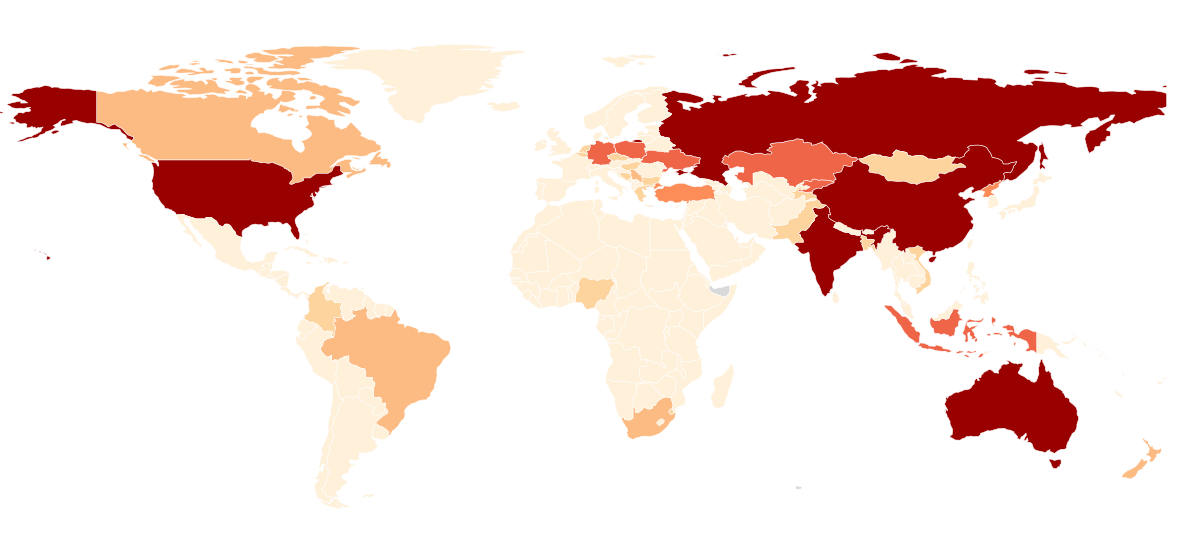
How much coal each country reports as proved reserves, the coal that known deposits can yield at today’s prices and with today’s technology.
Read the card →Source: U.S. Energy Information Administration, via Our World in Data
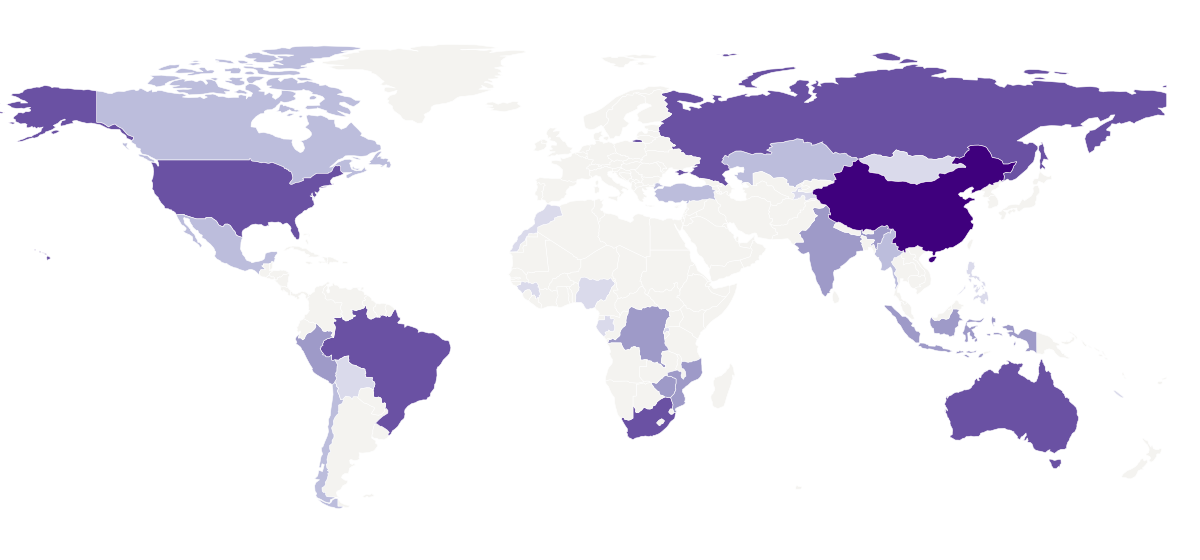
The countries that produced at least 5% of world output of key minerals in 2023, at the mine and at the refinery.
Read the card →Source: U.S. Geological Survey, Global Maps of Critical Mineral Production in 2023
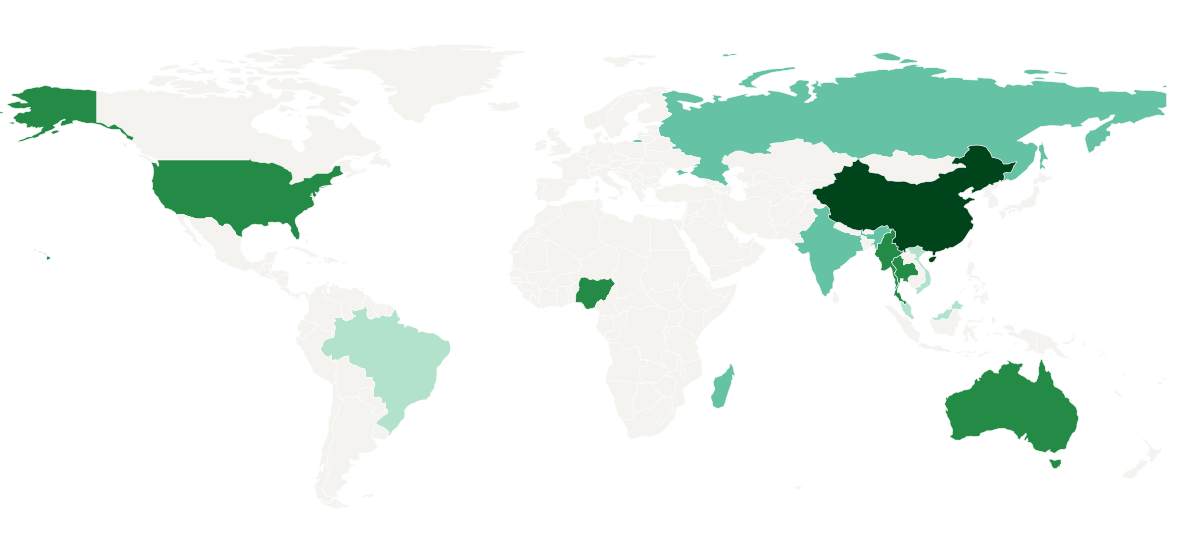
Where rare earths, the metals in permanent magnets and catalysts, are mined, and how large known reserves are.
Read the card →Source: U.S. Geological Survey, Rare Earths Statistics and Information
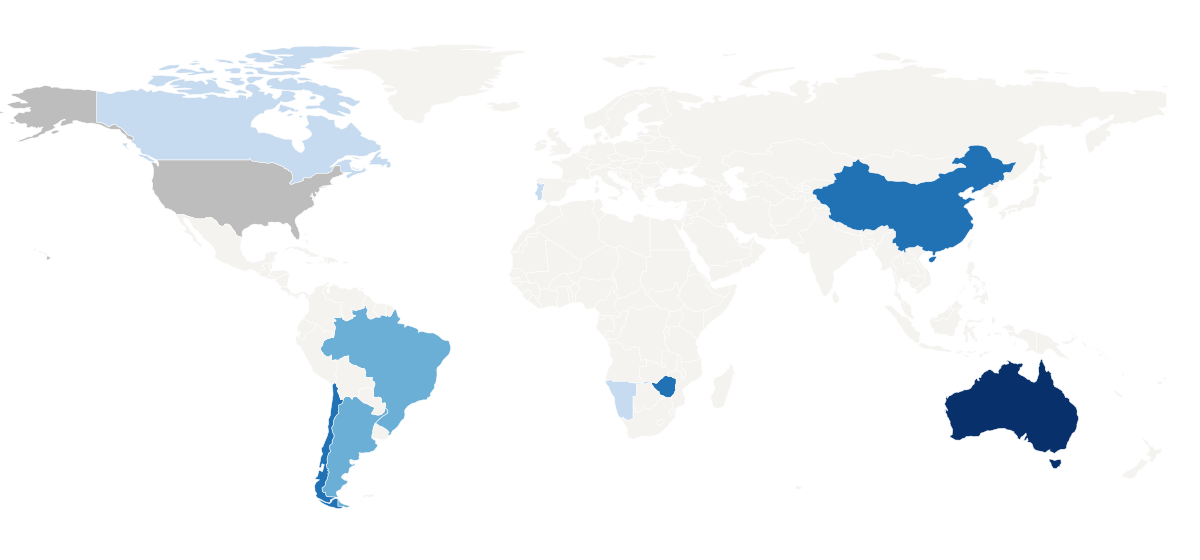
Where lithium, the light metal in rechargeable batteries, is mined, and how large known reserves are.
Read the card →Source: U.S. Geological Survey, Lithium Statistics and Information