

Deposit-return systems
A small deposit on a bottle or can is refunded when the empty container comes back to a collection point. Some schemes collect more than 90 percent of the containers they cover, and litter surveys record fewer of those containers on the ground.
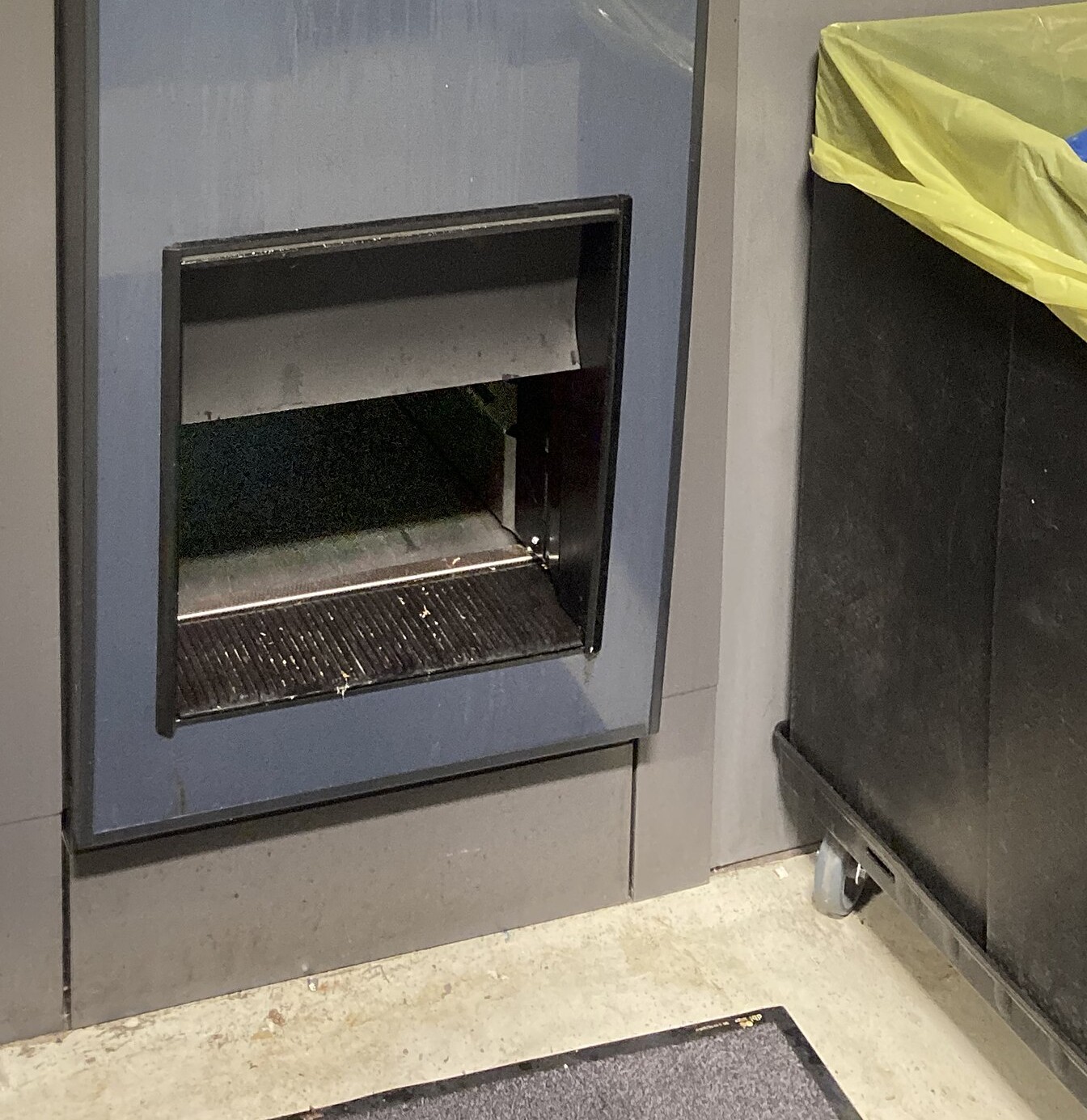
The loading opening of a reverse vending machine for deposit bottles and cans in a supermarket in Krefeld, Germany.
Photo: Alexis Jazz, via Wikimedia Commons, cropped, licence Creative Commons Attribution 4.0 (https://creativecommons.org/licenses/by/4.0/). File page: https://commons.wikimedia.org/wiki/File:Krefeld,_Germany_-_Bottle_reverse_vending_machine_in_Rewe.jpg

What it is
In a deposit-return system a customer pays a deposit when buying a drink and gets that money back when the empty container is returned to a collection point. The Organisation for Economic Co-operation and Development describes such a system as one form of extended producer responsibility when producers finance and operate it. Collection points are staffed or use reverse vending machines, which take the empty containers automatically.
Why it matters
According to the Organisation for Economic Co-operation and Development, some jurisdictions with a deposit-return system collect more than 90 percent of the targeted containers, and litter surveys show items under deposit reduced by 40 to 90 percent. Germany, Lithuania and Norway run a deposit-return system alongside a take-back requirement for packaging. The European Commission lists a separate collection target of 77 percent for single-use plastic bottles by 2025, rising to 90 percent by 2029.
How to read it
The return rate is the share of deposit containers sold that come back for a refund. The same analysis says the size of the deposit drives consumers' incentive to take part and correlates with higher return rates, and a chart shows markets with higher minimum deposits and higher return rates. Unredeemed deposits can partly offset the running costs, and the analysis suggests considering collection targets or a tax tied to the collection rate, so that operators aim for high return rates while relying only partly on unclaimed deposits.
Limits
Compared with kerbside collection, the extra cost of collecting each additional container is usually higher in a deposit-return system, and revenue from selling the material in most cases covers only part of it, so such systems typically need producer fees or public support. Reverse vending machines require significant capital investment. Where a kerbside packaging scheme already exists, a deposit-return system takes valuable material away from it, so the rules need to define which products belong to which scheme, and each product should fall under only one of them.
Sources
Links are for verification. The article stays on Fix Planet.
- Organisation for Economic Co-operation and Development (OECD): Deposit-refund systems and the interplay with additional mandatory extended producer responsibility policies : https://www.oecd.org/en/publications/deposit-refund-systems-and-the-interplay-with-additional-mandatory-extended-producer-responsibility-policies_a80f4b26-en.html
- Organisation for Economic Co-operation and Development (OECD): Deposit-refund systems and the interplay with additional mandatory extended producer responsibility policies, OECD Environment Working Papers No. 208 (PDF) : https://www.oecd.org/content/dam/oecd/en/publications/reports/2022/12/deposit-refund-systems-and-the-interplay-with-additional-mandatory-extended-producer-responsibility-policies_c92a063b/a80f4b26-en.pdf
- European Commission: Single-use plastics : https://environment.ec.europa.eu/topics/plastics/single-use-plastics_en