

Bus rapid transit
Bus rapid transit (BRT) gives buses their own lanes, level boarding and frequent service, so an ordinary route runs almost like a metro line at a fraction of the cost of rail. An international scoring guide rates each corridor as basic, bronze, silver or gold.
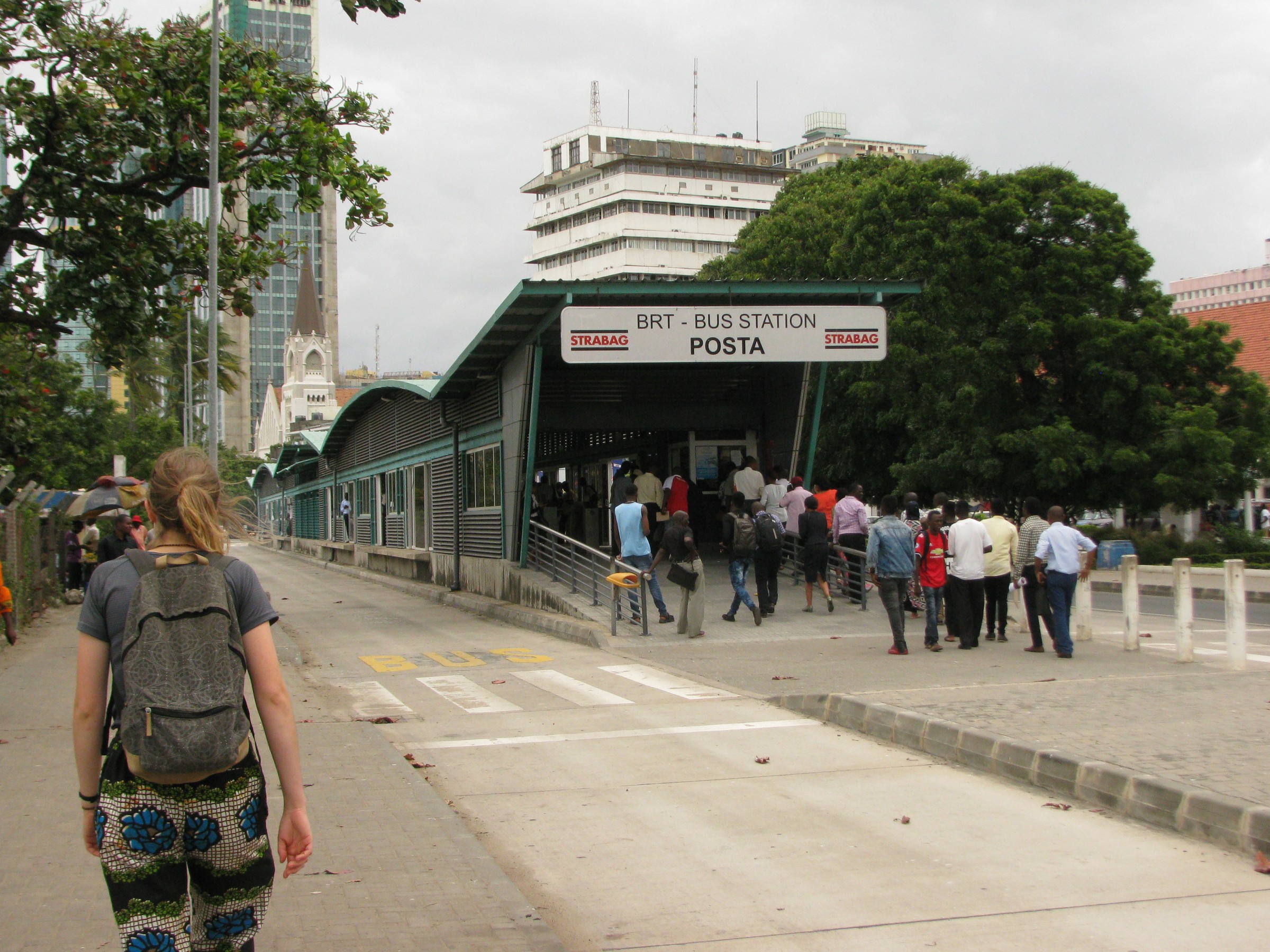
Posta station on the bus rapid transit line in Dar es Salaam, Tanzania. Only the rapid-transit buses and emergency vehicles may use its bus lanes.
Photo: Grahamcole, Wikimedia Commons ( CC BY-SA 4.0 )

What it is
Bus rapid transit (BRT) is a high-capacity bus system built to run fast and on time. The BRT Standard published by the Institute for Transportation and Development Policy (ITDP) names five essentials: a lane reserved for buses, a busway placed in the middle of the road where possible, fares paid before boarding, priority for buses at junctions, and platforms level with the bus floor. A corridor needs at least 3 kilometres of dedicated lanes to count as BRT at all.
Why it matters
BRT gives a city mass rapid transit sooner and for less money than rail. Curitiba in Brazil opened its system in 1974, and Bogotá's TransMilenio followed in 2000. According to the 2024 edition of the standard, more than 153 corridors opened in 91 cities in 24 countries in the ten years after the scoring guide first appeared in 2012.
How to read it
The standard scores a corridor out of 100 points. Gold means 85 points or more, silver 70 to 84.9 and bronze 55 to 69.9. "Basic BRT" meets only the minimum requirements. The final score is given six months after opening, once points are taken off for problems in daily operation such as overcrowding, long waits at traffic lights and buses bunching together.
Limits
Lanes that are only painted, without proper stations, enforcement and frequent service, deliver little. A bus called BRT that lacks the basics is still a bus stuck in traffic.
Sources
Links are for verification. The article stays on Fix Planet.