
Remittances to developing countries
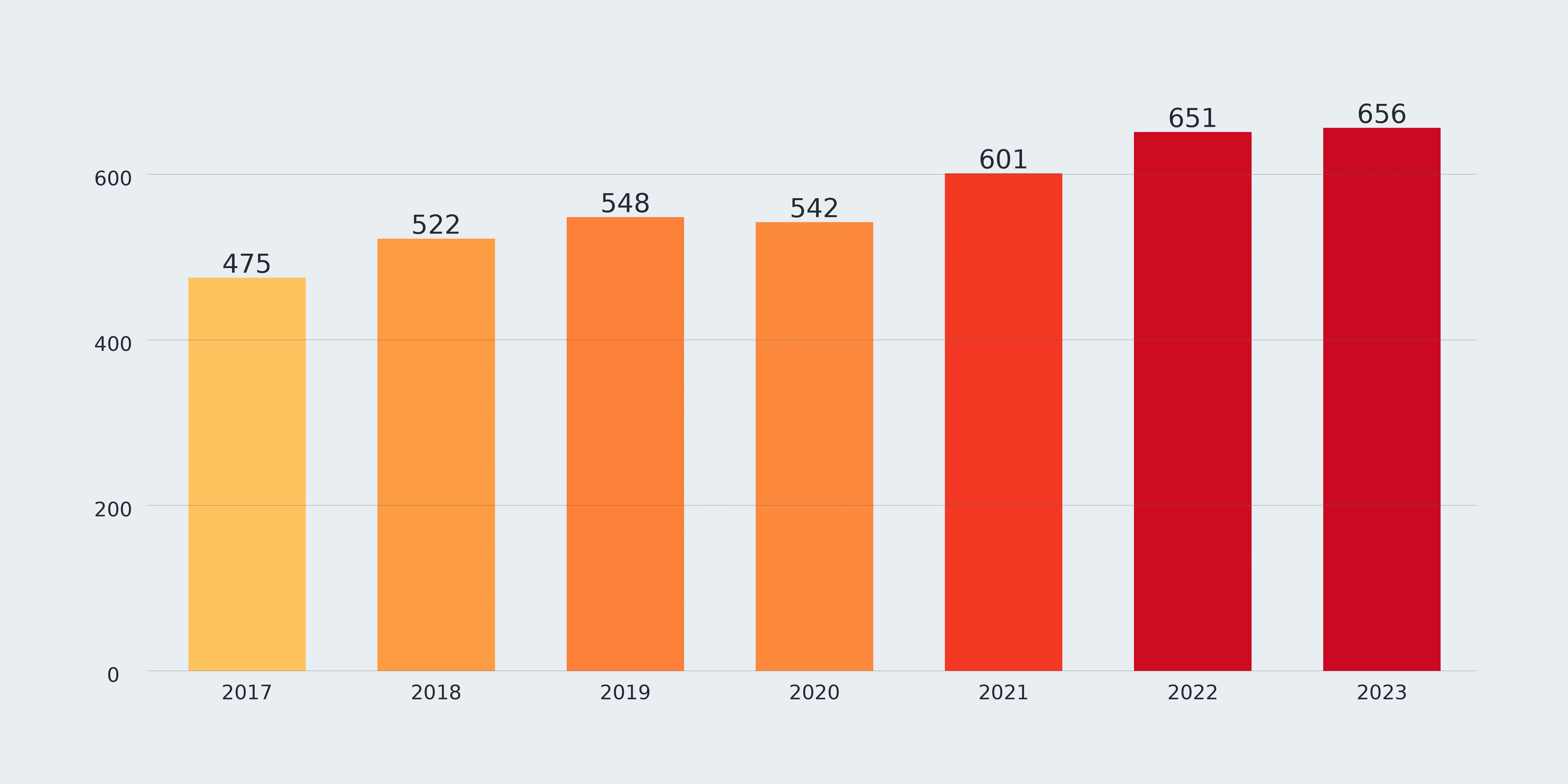
Low- and middle-income countries received an estimated $656 billion in officially recorded remittances in 2023, and World Bank authors put the 2024 total near $685 billion: still larger than foreign direct investment and official development assistance combined.
Flows · Low and middle income
656 billion US dollars, 2023
- 2023
- $656 billion (+0.7%)
- 2024 estimate
- about $685 billion (+5.8%)
What the number is
Officially recorded money migrants send home to low- and middle-income countries. The World Bank’s Migration and Development Brief 40 (June 2024) puts the 2023 total at about $656 billion (+0.7% after the strong post-pandemic years). An 18 December 2024 PeopleMove update by the same research team estimates about $685 billion for 2024 (+5.8%). Informal channels mean the true total is larger.
Why it matters
For many countries these flows are the largest stable source of external finance: often bigger than foreign direct investment or aid. They support household consumption, education, health, and current-account buffers when other capital flows swing.
How to read it
These are estimates of the money sent during each calendar year. Regional growth is uneven; Migration and Development Brief 40 and the December 2024 update publish the regional tables behind the headline.
Chart: low- and middle-income remittances, 2017-2023, World Bank Migration and Development Brief 40. The number is billions of US dollars.
Sources
- World Bank: Migration and Development Brief 40 (June 2024)
- World Bank: press release, 26 June 2024: Remittances Slowed in 2023, Expected to Grow Faster in 2024
- World Bank PeopleMove: remittance flows to low- and middle-income countries, 18 December 2024
- ReliefWeb: Migration and Development Brief 40 (June 2024)