
Remittances as a share of GDP
In smaller economies remittances can dwarf other finance: Tajikistan ~45% of GDP, Tonga ~38%, then Nicaragua, Lebanon, and Samoa around 26-27% in the 2024 estimates.
Dependence · 2024 estimates
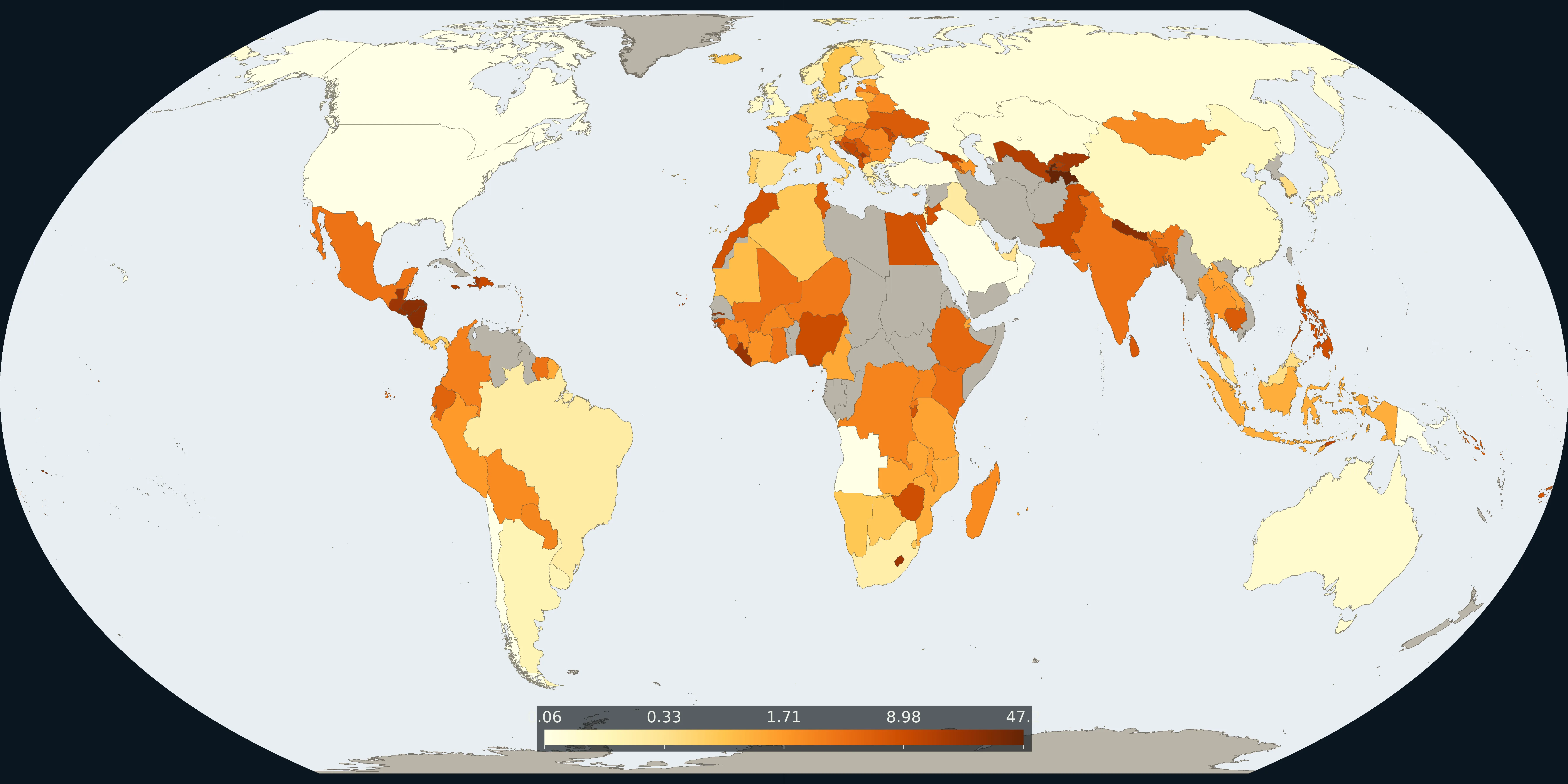
47 percent of GDP, Tajikistan on the 2024 map
- Tajikistan, 2024 estimate
- ~45% of GDP
- Tonga, 2024 estimate
- ~38% of GDP
- Nicaragua, Lebanon, and Samoa, 2024 estimates
- about 26-27% of GDP
What the list is
Estimated remittance inflows as a percentage of GDP for the most dependent countries in the 2024 PeopleMove update. Migration and Development Brief 40’s 2023 dependence list was similar in spirit (Tonga 41% · Tajikistan 39% · Lebanon 31% · Samoa 28% · Nicaragua 27%).
Why it matters
Where remittances are a double-digit share of GDP they finance current-account gaps, household consumption, and often fiscal stability more than foreign direct investment or aid. Shocks to host-country labour markets or to corridors then transmit quickly into domestic demand.
How to read it
Share of GDP answers a different question from absolute US$ volume. India can lead the world in dollars and still show a modest GDP share; Tonga or Tajikistan can sit outside the top five by dollar volume and still be among the most remittance-dependent economies on Earth.
Map: personal remittances received as a share of GDP, 2024, World Bank World Development Indicators. These figures follow balance-of-payments definitions and differ from the estimates in the list.