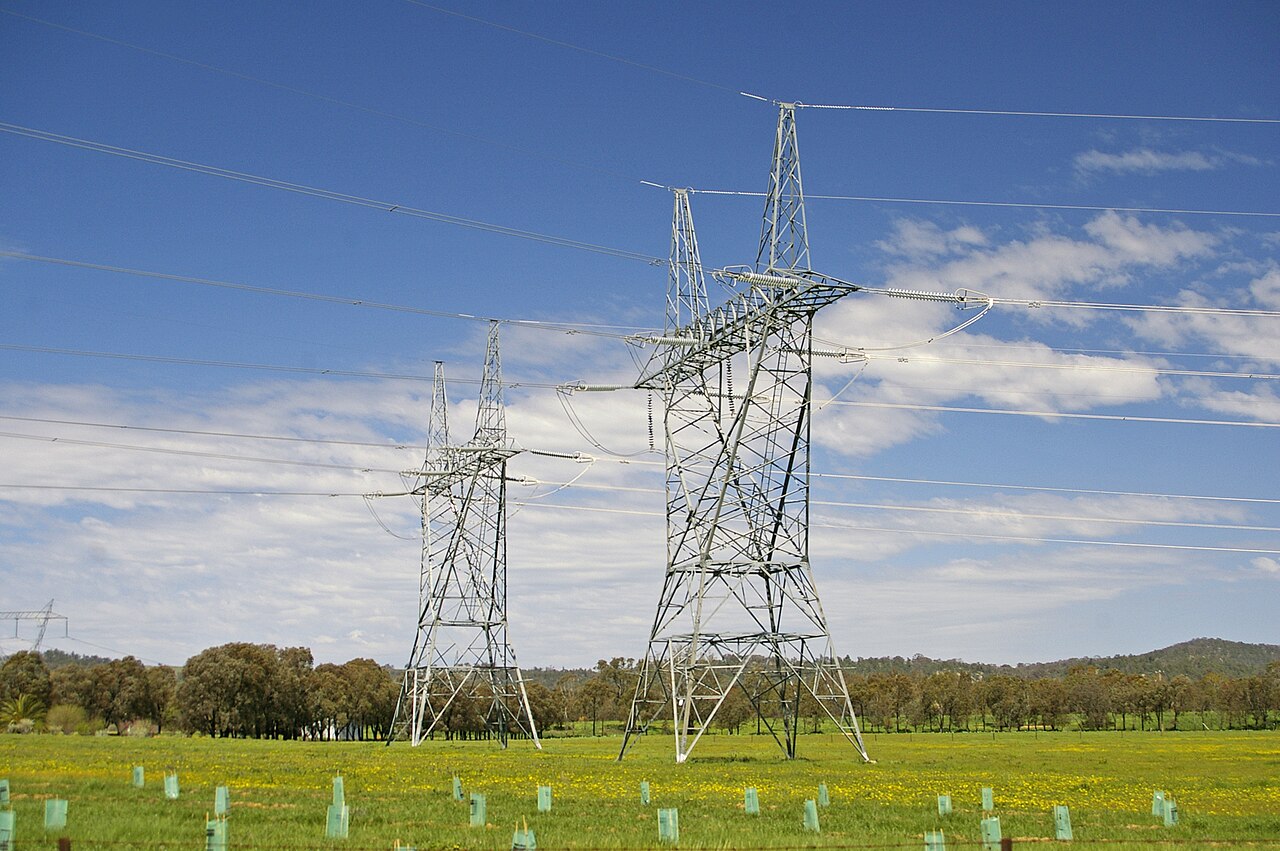
Image: Bidgee ( CC BY-SA 3.0 )

What it is
Grid operators already use optimization. Machine learning adds faster forecasts of wind, solar, and demand, and sometimes suggests dispatch. DeepMind’s published 2019 result was on Google’s U.S. wind farms: a neural net predicted output about 36 hours ahead and raised the value of those megawatts by about 20 percent versus making no time-based commitments. Talks with Britain’s National Grid were exploratory and did not become a deployed grid product. Other operators trial similar tools.
Problem it targets
Variable renewables need better prediction and faster control or we burn more gas “just in case.” Congestion and inverter-based stability are separate, harder problems.
How it works
Models ingest weather and SCADA-like histories and output a tighter forecast or a recommended set-point. Humans and existing energy-management systems stay in the loop. A blackout is not an acceptable training run.
Status and players
Google DeepMind on Google-owned U.S. wind (public 2019); various ISO/RTO and vendor pilots; later UK solar-forecast work by groups such as Open Climate Fix. IEA digitalization reports survey the field.
Risks and limits
Cybersecurity, hidden bias when the weather is new, and vendors claiming an “AI grid.” Physics of inverters and protection still rules.
Sources
DeepMind 26 February 2019 wind-value note (U.S. Google farms); IEA Digitalisation and Energy. National Grid talks were not a shipped product.