
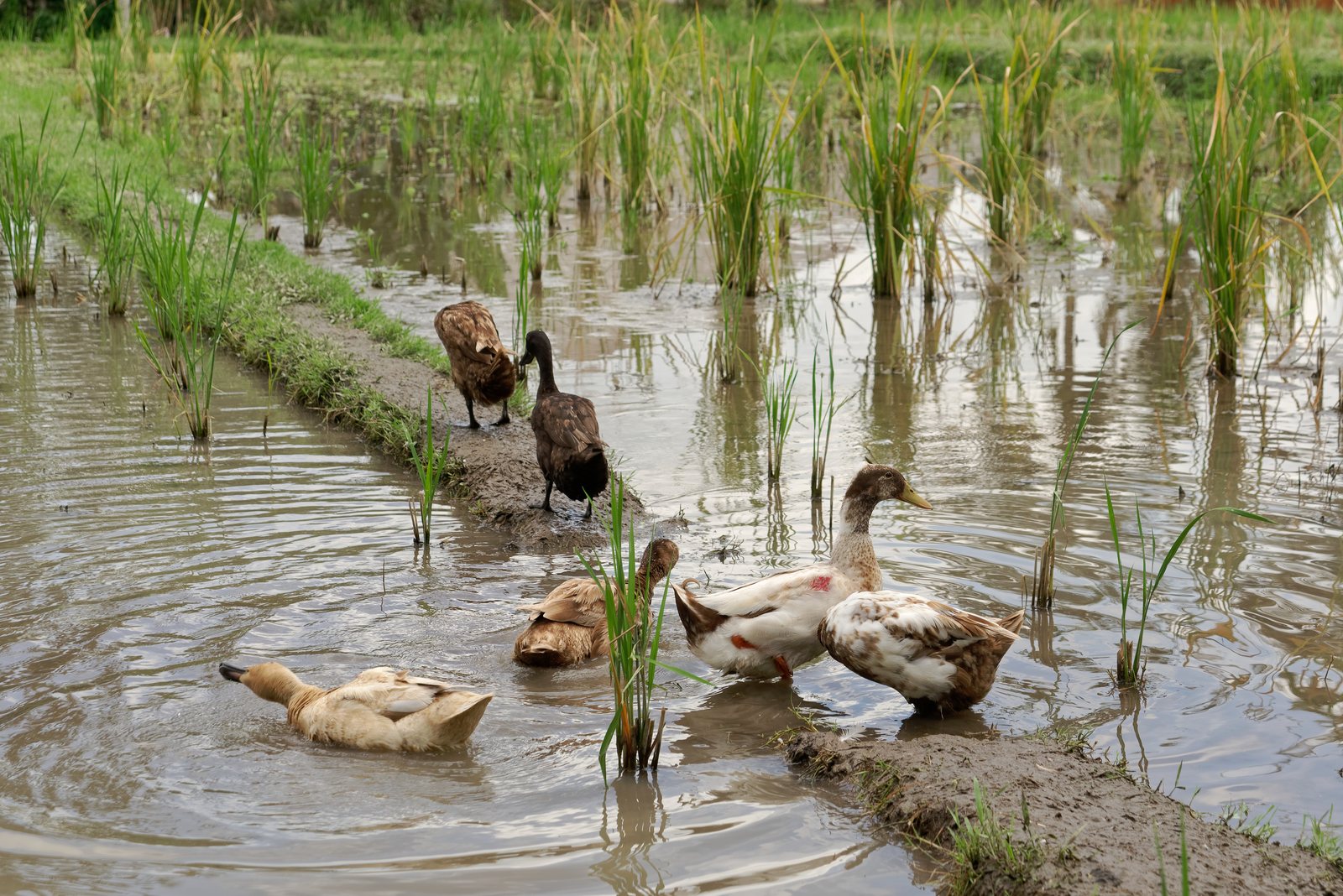
Domestic ducks in the paddy fields near Ubud, Bali, Indonesia.
Photo: Jakub Hałun, Wikimedia Commons (CC BY-SA 4.0)

What it is
Farm ducks are raised for meat, eggs and feathers. According to the Food and Agriculture Organization of the United Nations (FAO), most farmed ducks descend from the mallard (Anas platyrhynchos). Breeds vary greatly with place and with whether they were bred for meat, eggs, feathers or several purposes at once.
Range
Ducks are most numerous in areas with abundant water. FAO notes particularly large numbers in Bangladesh, China and Southeast Asia; ducks are also popular in Egypt, Nigeria and much of Europe, especially western France. FAO publishes global maps of ducks per square kilometre for 2010 and 2015.
What happened
People first domesticated ducks from mallards in Southeast Asia at least 4,000 years ago. Today ducks are raised in many kinds of farming, from a few birds on a mixed farm to vast flocks taken by lorry to paddy fields to clear them after the rice harvest.
When / status
A living domesticate. FAO's Domestic Animal Diversity Information System (DAD-IS) records duck breeds.
Human role
Farmers keep ducks on ponds and mixed farms, and in rice-growing regions flocks feed in the paddies after the harvest.