
← Terraforming · Water & diversion
Bradfield Scheme
A 1930s plan to pipe wet-tropics water into dry inland Australia. It was never built. Modern hydrology still says the water is less, and the bill is larger, than the dream.
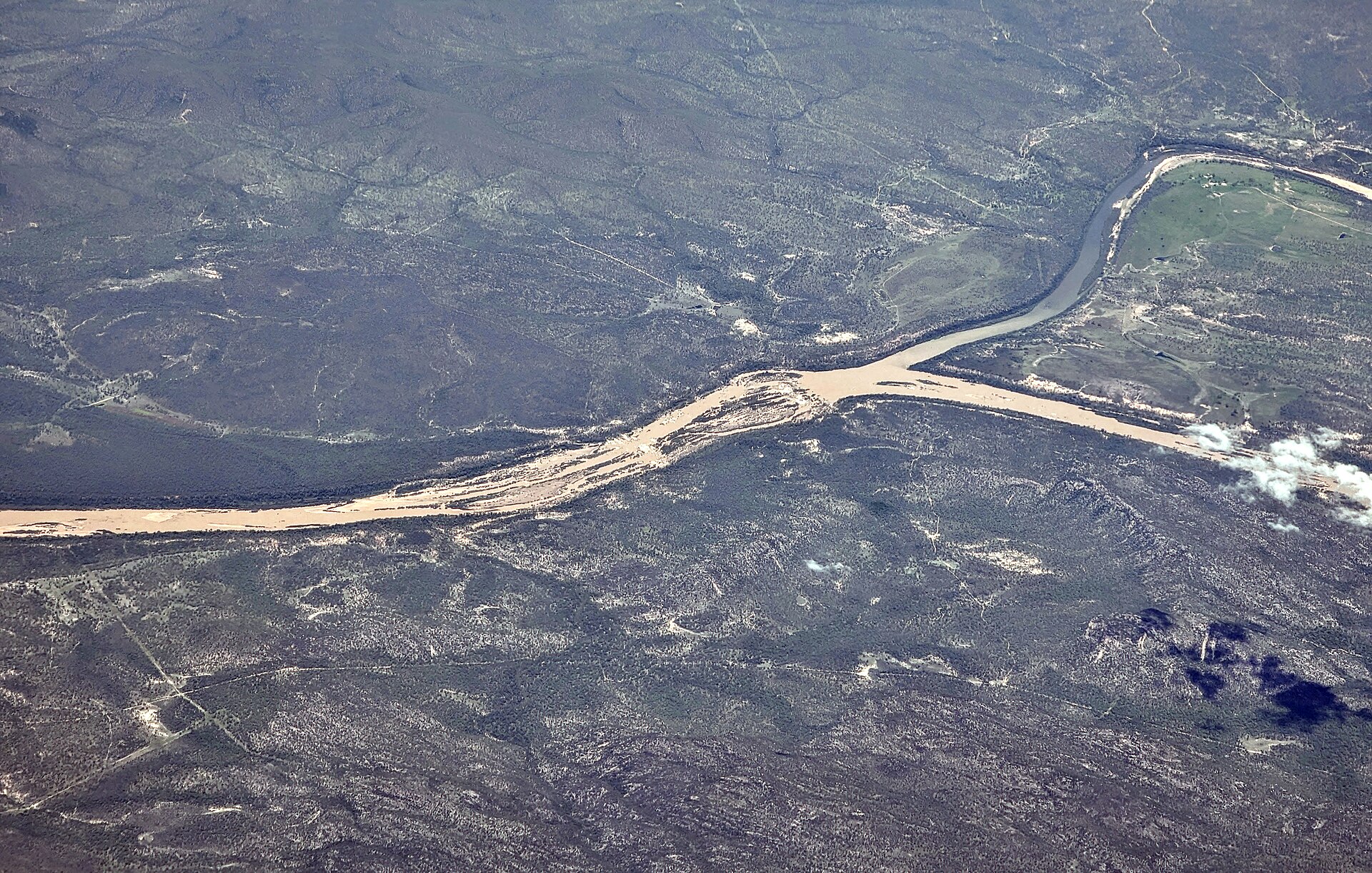

Jurisdiction: Australia (Queensland / inland basins)
Years / status: Proposed 1938 (revised 1941-42). Not constructed. Reassessed by CSIRO for the National Water Grid Authority (reports 2021).
The plan
Engineer J. J. C. Bradfield proposed dams, tunnels and canals to take floodwater from north Queensland rivers (including the Tully, Herbert and Burdekin) over the Great Dividing Range and into inland catchments such as the Thomson-Barcoo / Cooper Creek system. The political pitch was drought-proof inland farms and, in some versions, more inland rain. Bradfield put a 1941 cost at up to £40 million: a figure later reviews treated as a severe underestimate.
Construction / status
Nothing matching the historic scheme was built. Pieces of ordinary Queensland water infrastructure exist in the same catchments; they are not Bradfield’s trans-basin canal. The idea returns in dry years. CSIRO’s desktop study of the 1938 scheme and the 1942 Hell’s Gates variant found both technically feasible on paper.
What went wrong, or only partly worked
CSIRO concluded that the maximum volume that could physically be diverted is less than half of what Bradfield claimed, and that storage-and-diversion costs would never be paid back by crop revenue even under optimistic assumptions. A 1945 Queensland meteorological committee had already said the hoped-for rainfall increase “could not be substantiated.” A 1947 review found water supply overstated by about 250 percent. Inter-basin transfer would turn ephemeral inland rivers perennial, favouring generalist and invasive species, and would move water from one community to another.
Lessons
A canal is not a climate. Drought politics revives megaprojects that hydrology and farm economics have already rejected. If inland water is the goal, CSIRO’s own recommendation is smaller developments closer to where the water falls: not a continent-scale pipe.
Sources
CSIRO Bradfield Scheme Assessment pages and the 2021 historic-scheme summary for the National Water Grid Authority; ABC News 2019 fact file on repeated official rejections.