
Reclaimed wastewater / NEWater
Singapore’s PUB recycles treated used water through membranes and ultraviolet light. Four plants are in operation. Most of the water goes to industry; in dry periods some is blended into reservoirs.

What it is
NEWater is Singapore’s name for high-grade reclaimed water: treated used water put through membranes and disinfection until it is ultra-clean. A dense city can use more freshwater than its reservoirs and imports can reliably supply. Treated used water is then discarded to the sea while taps stay at risk in drought.
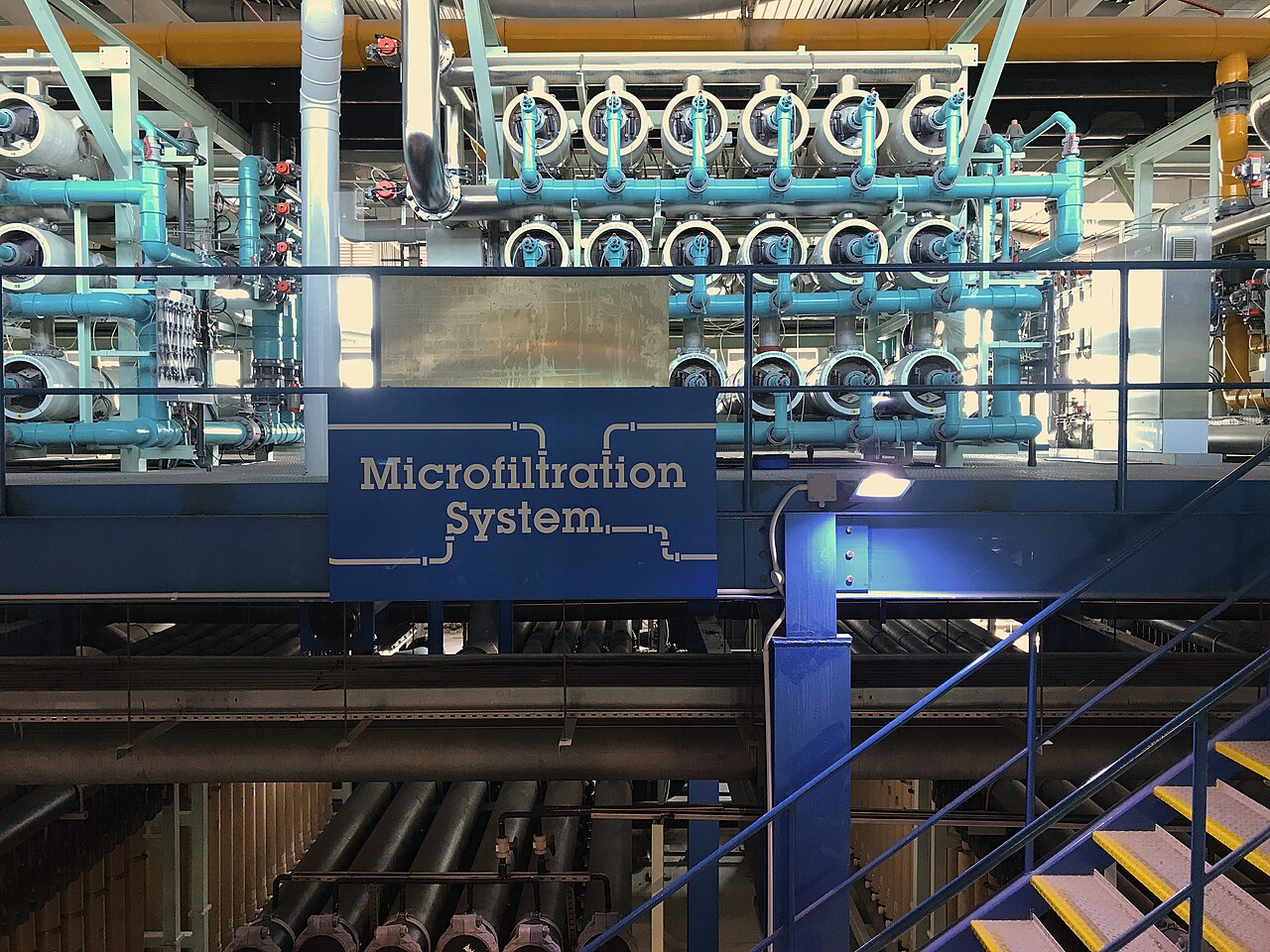
Singapore’s PUB recycles treated used water through micro- or ultrafiltration (or a membrane bioreactor), reverse osmosis, and ultraviolet disinfection: branded NEWater. PUB says four plants are in operation. Most of the water goes to industry and cooling; in dry periods some is blended into reservoirs and treated again before it becomes tap water. Reuse needs tight treatment and public trust.
How it works
PUB describes a three-stage process. Stage one is microfiltration or ultrafiltration, or a membrane bioreactor that combines biological treatment and those membranes in one step: to take out particles and bacteria. Stage two is reverse osmosis: a tight membrane that lets water through and holds back viruses, salts, metals, and many organic chemicals. Stage three is ultraviolet disinfection as a last safety step.
Indirect potable use means NEWater is added to raw-water reservoirs in dry periods. The blend then goes through conventional waterworks before the tap. Direct industrial use goes through a dedicated pipe network. Wafer-fabrication plants are the largest users; they need water cleaner than drinking water. The visitor-facing story is on PUB’s NEWater and Our Water Story pages.
Where it already runs
PUB’s public account: a 1970s feasibility study found reclamation technically possible but then too costly. Membrane costs fell. In 1998 PUB tested membranes for potable reuse; a demonstration plant in 2000 made 10,000 cubic metres a day. Experts judged the water within WHO and U.S. EPA drinking-water requirements and recommended indirect potable use. NEWater was launched to the public on 9 August 2002. The first two plants, Bedok and Kranji, opened the following year.
PUB says there are currently four NEWater plants in operation. They are a named pillar of Singapore’s water loop: local catchment, imported water, NEWater, and desalination: on the Our Water Story page. The Bedok factory and visitor centre later closed (31 July 2024 on PUB’s page); the four-plant figure is PUB’s current operational claim. This page does not invent a fifth plant.
Limits: what it does not fix
Reuse needs tight treatment and public trust. It does not make a city independent of catching rain or using less. If the used-water collection network fails, the plant has nothing clean to feed. Reverse osmosis still makes a concentrate that must be managed. Power must arrive every hour the trains run.
NEWater is not a licence to grow demand without a catchment. It is not a household filter. It is a municipal factory with audits, membranes, and a political story that had to be told in public: including the 2002 National Day Parade toast: because people will not drink what they do not trust.
Sources
Links are for verification. The article stays on Fix Planet.