

REDD+ payments
Reducing emissions from deforestation and forest degradation (REDD+) covers activities in developing countries that cut emissions from deforestation and forest degradation, conserve forest carbon stocks, manage forests sustainably and enhance forest carbon stocks.
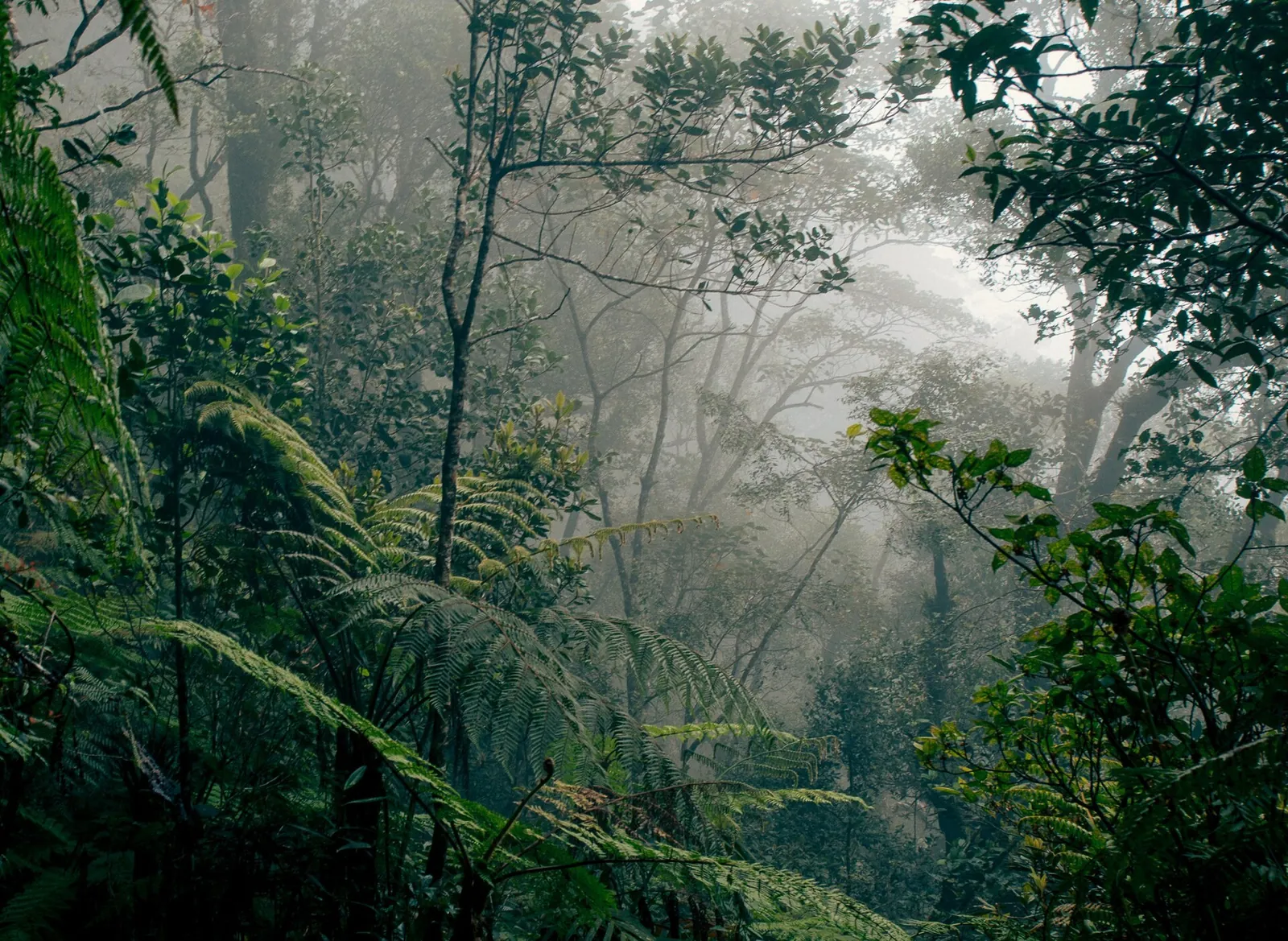
Rainforest in Kinabalu Park, Borneo.
Photo: Dukeabruzzi, via Wikimedia Commons, Creative Commons Attribution-ShareAlike 4.0 International licence.
What it is
Reducing emissions from deforestation and forest degradation (REDD+) covers activities in developing countries that cut emissions from deforestation and forest degradation, conserve forest carbon stocks, manage forests sustainably and enhance forest carbon stocks. The World Bank's Forest Carbon Partnership Facility (FCPF) is a global partnership of governments, businesses, civil society and Indigenous Peoples' organizations focused on these activities. It works with 47 developing countries in Africa, Asia, and Latin America and the Caribbean, and with 17 donors whose contributions and commitments total $1.3 billion. The partnership runs two funds. The Readiness Fund operated from 2008 to 2022 with total funding of $472 million and helped countries prepare: designing national REDD+ strategies, developing reference emission levels, building systems to measure, report and verify emissions, and setting up national management arrangements with environmental and social safeguards. The Carbon Fund pilots results-based payments to countries that have advanced through readiness and achieved verifiable emission reductions in their forest and wider land-use sectors. Its current funding is $900 million.
Why it matters
Results-based payment ties money to measured outcomes: it is paid only after emission reductions have been achieved and verified. The FCPF reports that in 2024 it more than tripled its results-based payments, from $53.2 million in 2023 to $164.5 million, and that it was on track to pay for more than 35 million emission reductions, which it says is more than 10 percent of all emission reduction transactions in carbon markets worldwide in 2023. All 15 countries in the Carbon Fund have now reported emission reductions.
How to read it
A payment is the last step of a sequence. First a country prepares strategies, reference emission levels and measurement systems. Then it reduces emissions from its forests and land use. Then the reductions are verified, and only then is payment made. Countries in the Carbon Fund are also putting in place benefit-sharing mechanisms so that proceeds reach people on the ground. In Mozambique, for example, the FCPF and a partner programme aim for women to make up at least 50 percent of the beneficiaries of the emission reductions programme.
Limits
The payment and reduction figures are reported by the FCPF itself. The Readiness Fund operated until 2022, and the Carbon Fund has been extended to December 2028. The FCPF says it is crucial to keep momentum and the long-term sustainability of emission reductions programmes beyond the life of the facility, and it says that the World Bank has demonstrated the proof of concept for emission reductions, so an improved model now needs to be scaled up.
