

Walking and cycling networks
Continuous, safe routes for people on foot and by bike, joined up at every junction, so short trips stop needing a car. Advice from the International Transport Forum puts the quality and safety of walking and cycling first, ahead of raw trip counts.
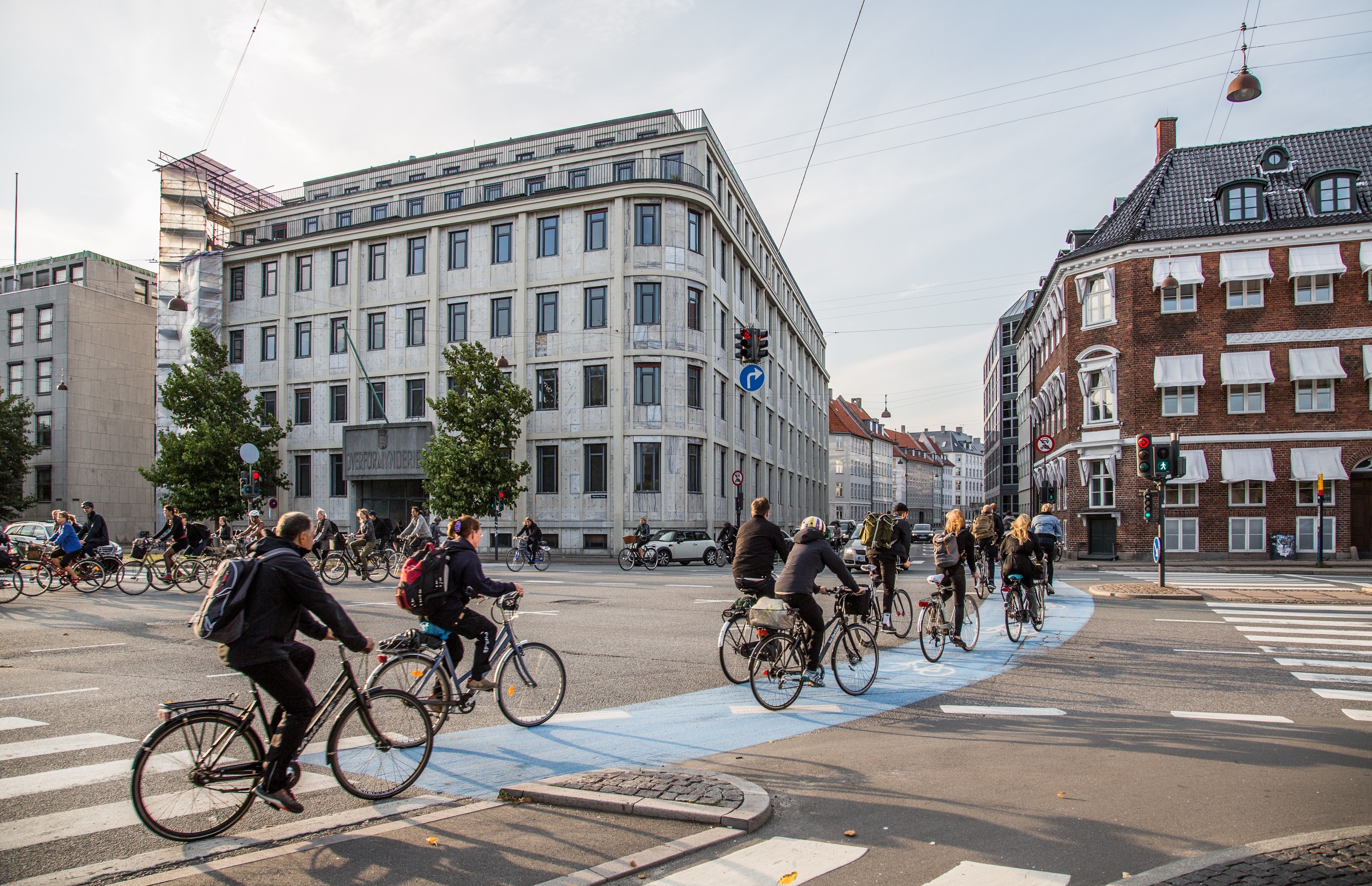
Cyclists cross the junction at Holmens Kanal in Copenhagen on a blue-painted cycle crossing that carries the bike route through the intersection.
Photo: Tony Webster, Wikimedia Commons ( CC BY 2.0 )

What it is
A walking and cycling network is a connected set of footways, crossings and cycle routes that lets people reach everyday places safely under their own power. A roundtable report published in December 2023 by the International Transport Forum (ITF), the intergovernmental transport body linked to the OECD (Organisation for Economic Co-operation and Development), urges cities to raise the quality of these trips with lower traffic speeds, safe crossings and good links to buses, trams and trains.
Why it matters
Walking and cycling serve four goals the report names: moving people efficiently, a cleaner environment, more enjoyment of daily life and a fairer share of benefits. In many cities walking is the main way people travel under their own power, especially in the Global South and in countries with few cars. The report also warns that decades of car-centred planning have pushed people on foot and on bikes to the edges of the street.
How to read it
The report judges progress by quality rather than quantity. It asks whether people who already walk and cycle can do so with dignity, safety and comfort, and whether they feel protected from dangerous traffic and harassment. Walking and cycling also have different needs, so a good network plans for each of them separately.
Limits
Infrastructure alone falls short if streets feel unsafe or are cut off from frequent public transport. Networks need continuity, lower traffic speeds and real crossings.
Sources
Links are for verification. The article stays on Fix Planet.