
What it is
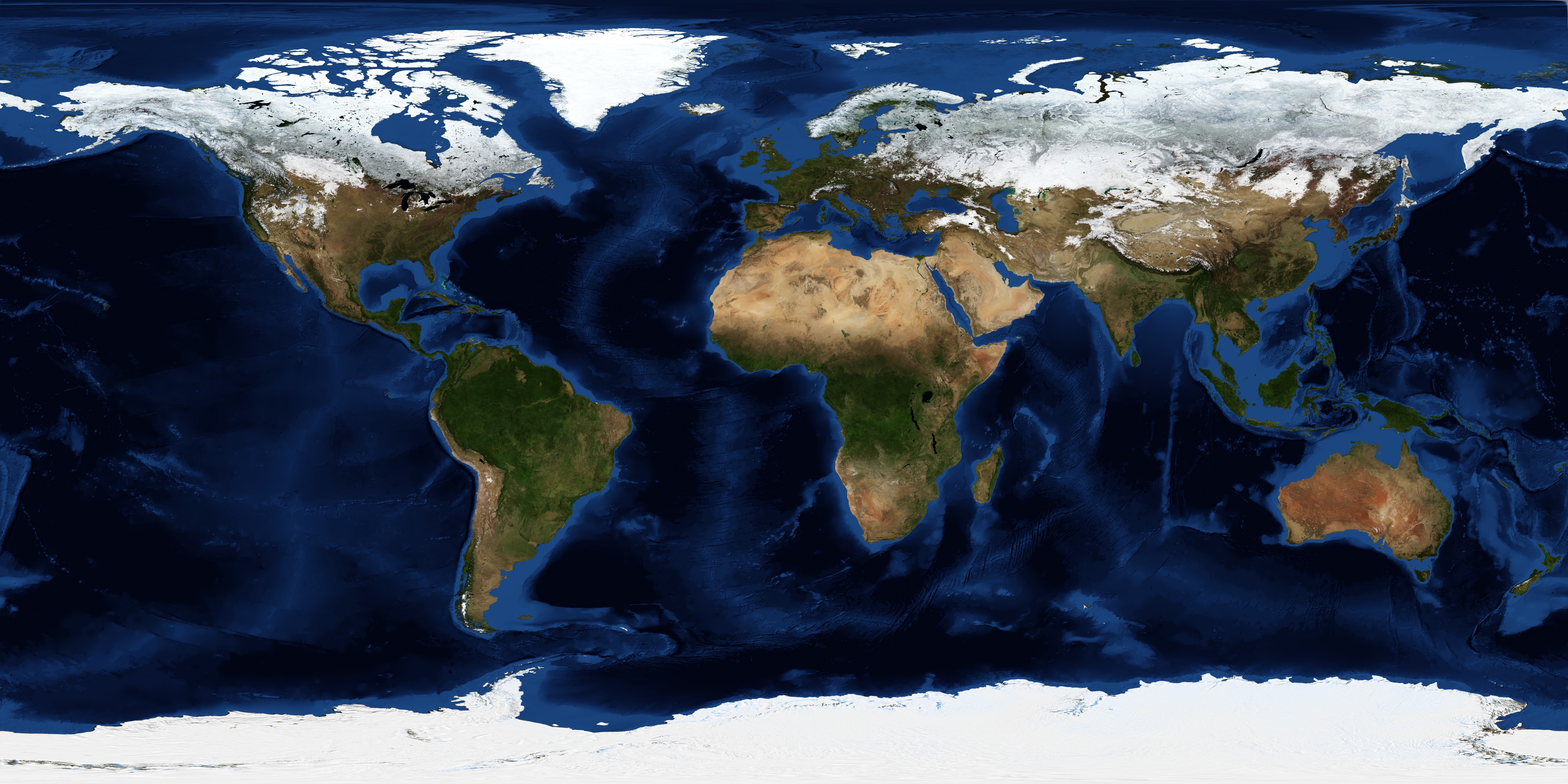
After the Last Glacial Maximum (~26-19 thousand years ago) huge areas of Europe and North America became habitable again. This is the best-documented Holocene “great migration” of biota: not one species and not one year. Hewitt’s genetic maps (1999, 2000) are the European frame: temperate species waited in Iberia, Italy, the Balkans, and some northern pockets (Carpathians and others), then expanded. Different species used different peninsulas: his grasshopper, hedgehog, and bear paradigms. North America has its own south / east / Beringian sources. Two published tree speeds exist for named eastern North American conifers (Payette et al. 2022). They are not a slogan for every tree.
Route
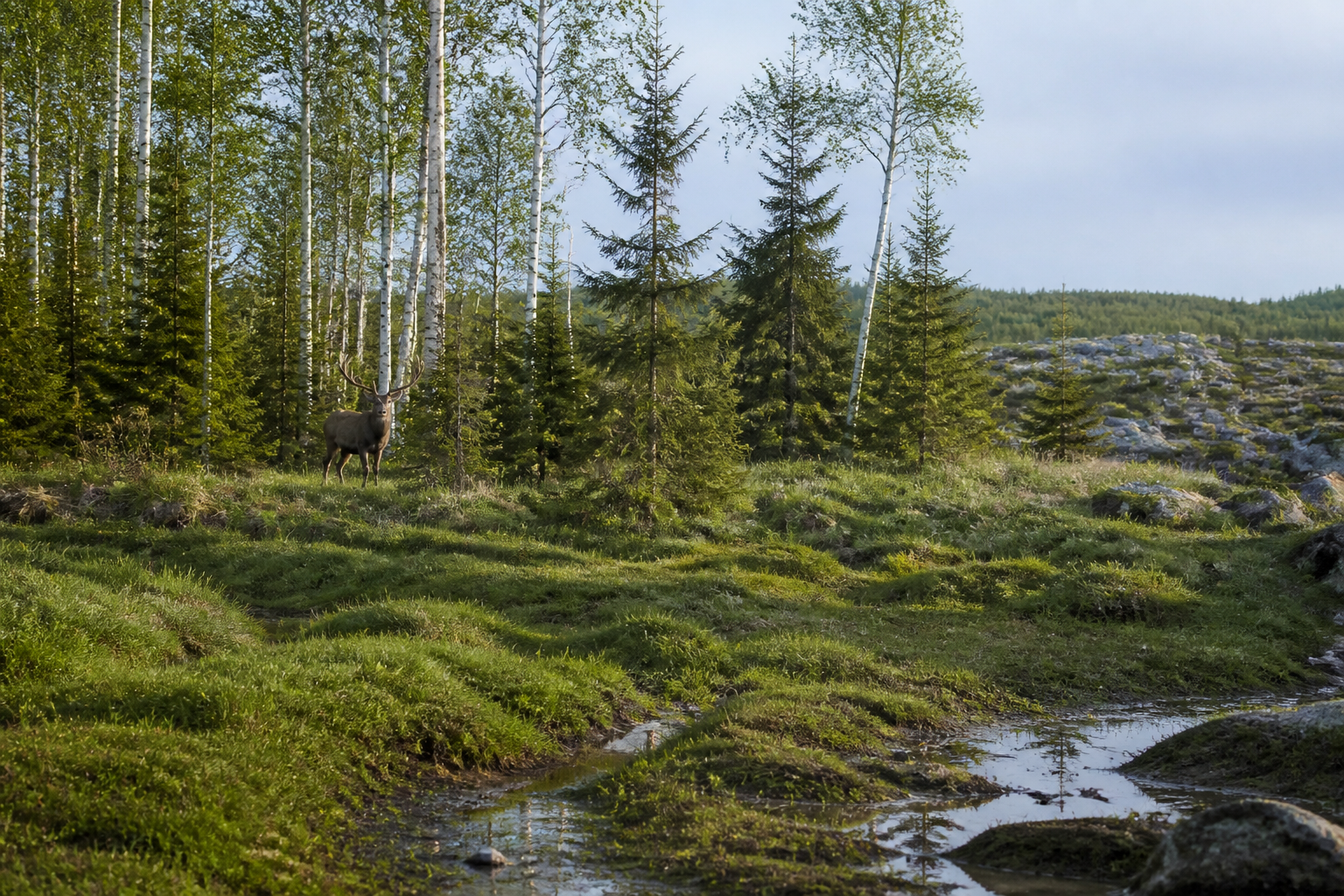
Red and roe deer: southern refugia in the cold peak (LGM and early Late Glacial), then a sudden range into Central Europe at the start of Greenland Interstadial 1 / Bølling-Allerød (~14.7 thousand years), and onto the northern European lowlands in the early Holocene (Sommer & Zachos 2009). Brown bear, hedgehog, and wood mouse follow Hewitt-style suture zones where expanding genomes met. Grey wolves are a different geometry: Loog et al. (2020) model living mitochondrial diversity as an expansion from Beringia, or nearby Northeast Asia: at the end of the Last Glacial Maximum, not a simple Iberian walk. In North America the ice-free corridor (Heintzman et al. 2016) is a late door, not the first human road. Trees pulled fauna. Payette et al. (2022), using dated macrofossils, give black spruce a mean 25 km per century from the Bølling-Allerød ice border and jack pine 19 km per century from unglaciated eastern North America to its subarctic limit, where that spread stopped about 3,000 years ago. Fennoscandian plant ecosystems took millennia to assemble; Alsos et al. (2022) find trait and functional diversity stabilizing around 8,000 years ago even as species still arrived.
Why: drivers
Climate first: ice retreat, longer seasons, soils that can hold trees. Then habitat. A deer cannot occupy a plain that is still ice or still dry steppe. Humans arrive into this already-moving field; they are not the named cause of the first Holocene tree line.
When
LGM ~26-19 ka; Bølling-Allerød ~14.7 ka; early Holocene filling of northern Europe. One Arctic-Norwegian cave: Nygrotta (Boilard et al. 2024): already has freshwater fish, brown bear, Norwegian lemming, and mountain hare in a layer about 9,500 years old: colonization close behind local ice. By about 5,800 years the later layer in that cave records cold-adapted species leaving that section. Those are dated layers in one cave, not a European census.
What is changing
The Holocene forest is itself now cut, warmed, and fenced. This card is the ice-out migration. Later human landscape change belongs on other shelves. Do not fold Pleistocene Humans (Out of Africa) into this biotic return.
Sources
Hewitt 1999 and 2000 for refugia and suture zones. Sommer & Zachos 2009 for the deer clock. Loog et al. 2020 for the wolf expansion. Payette et al. 2022 for two named North American tree rates. Alsos et al. 2022 for Fennoscandian trait stability from ~8 ka. Boilard et al. 2024 for Nygrotta. Heintzman et al. 2016 for the North American corridor clock.
- Hewitt, Biological Journal of the Linnean Society, 1999: post-glacial recolonization of European biota; Iberia, Italy, Balkans
- Hewitt, Nature, 2000: genetic consequences of Quaternary climatic oscillations
- Sommer & Zachos, Journal of Biogeography, 2009: red deer and roe deer: LGM southern restriction, GI-1 / Bølling-Allerød push into Central Europe, northern lowlands in the early Holocene
- Loog et al., Molecular Ecology, 2020: modern wolf mitochondrial diversity modeled as a late-Pleistocene expansion from Beringia or nearby Northeast Asia
- Payette et al., PNAS, 2022: eastern North America macrofossils: black spruce ~25 km/century, jack pine ~19 km/century; jack-pine spread stopped ~3 ka
- Alsos et al., Science Advances, 2022: Fennoscandian plant sedaDNA; trait and functional diversity stabilize around 8 cal ka BP
- Boilard et al., Science Advances, 2024: Nygrotta, Arctic Norway: ~9.5 ka freshwater fish, bear, lemming, hare; later ~5.8 ka layer in that cave
- Heintzman et al., PNAS, 2016: ice-free corridor chronology from bison (also used on the Beringia card)