

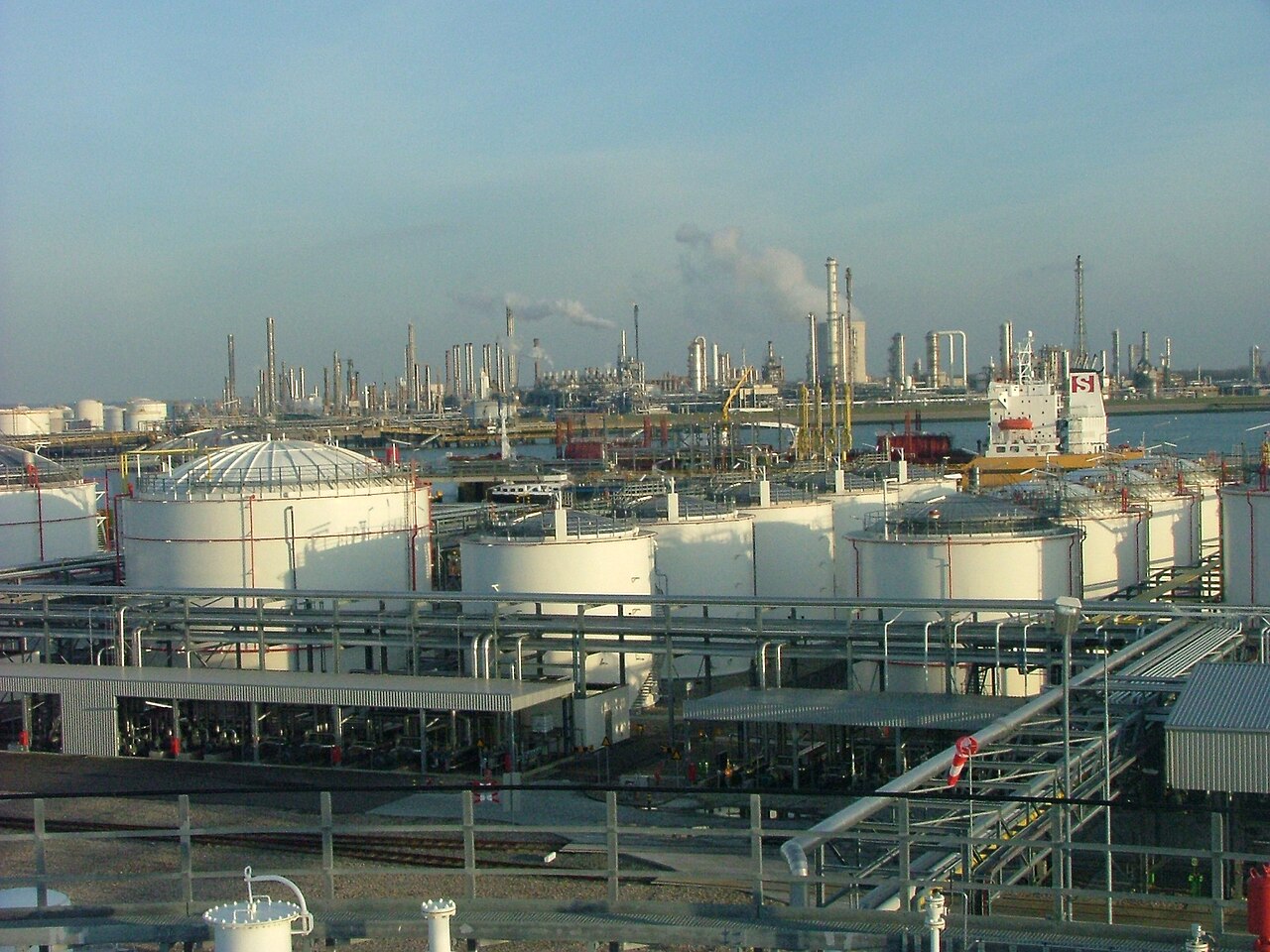
Image: Adriaan van Oost ( CC BY 3.0 )

What it is
Yara’s ammonia and fertilizer works at Sluiskil in the Netherlands inaugurated a capture-and-liquefaction plant on 7 September 2026. Coverage of the opening says the site is designed to capture up to 800,000 tonnes of process CO₂ a year from ammonia production and ship it to Northern Lights for storage under the North Sea: Europe’s largest commercial CCS facility and an early cross-border capture-transport-store chain. Over 15 years the project is expected to move about 12 million tonnes if it runs as designed. This is point-source CCS: it keeps industrial CO₂ out of the air. It does not pull CO₂ that is already mixed in the atmosphere, and it is not a voluntary carbon-removal credit factory. The money case is avoiding EU ETS allowances.
Problem it targets
Ammonia for fertilizer still makes process CO₂ that electricity alone does not erase. Cement and incineration have the same class of leftover tonnes. Capture only matters if the ship and the store also run.
How it works
CO₂ is captured from the ammonia process, compressed, and liquefied at Sluiskil, then loaded on Northern Lights ships (about 7,200 tonnes each; up to two loaded ships a week in earlier Yara outlines) for Øygarden and injection about 2,600 metres under the Norwegian shelf. Phase 1 of Northern Lights is 1.5 million tonnes a year of storage.
Status and players
Yara International; Northern Lights (Equinor, Shell, TotalEnergies) and Norway’s Longship. Neighbor card: Northern Lights transport and storage. Yara’s 2026 capital-markets figures put net investment near $200 million.
Risks and limits
Capture rate, shipping, and storage have to operate together. Using CCS to stretch fossil ammonia is a real debate. 800,000 tonnes is serious engineering and still small next to EU industry. Do not file this tonne as a DAC credit.
Sources
Yara news-and-media hub; Northern Lights pages. Opening-week coverage put design capture at up to 800,000 t/yr. Design capacity is not a year of stored tonnes.