

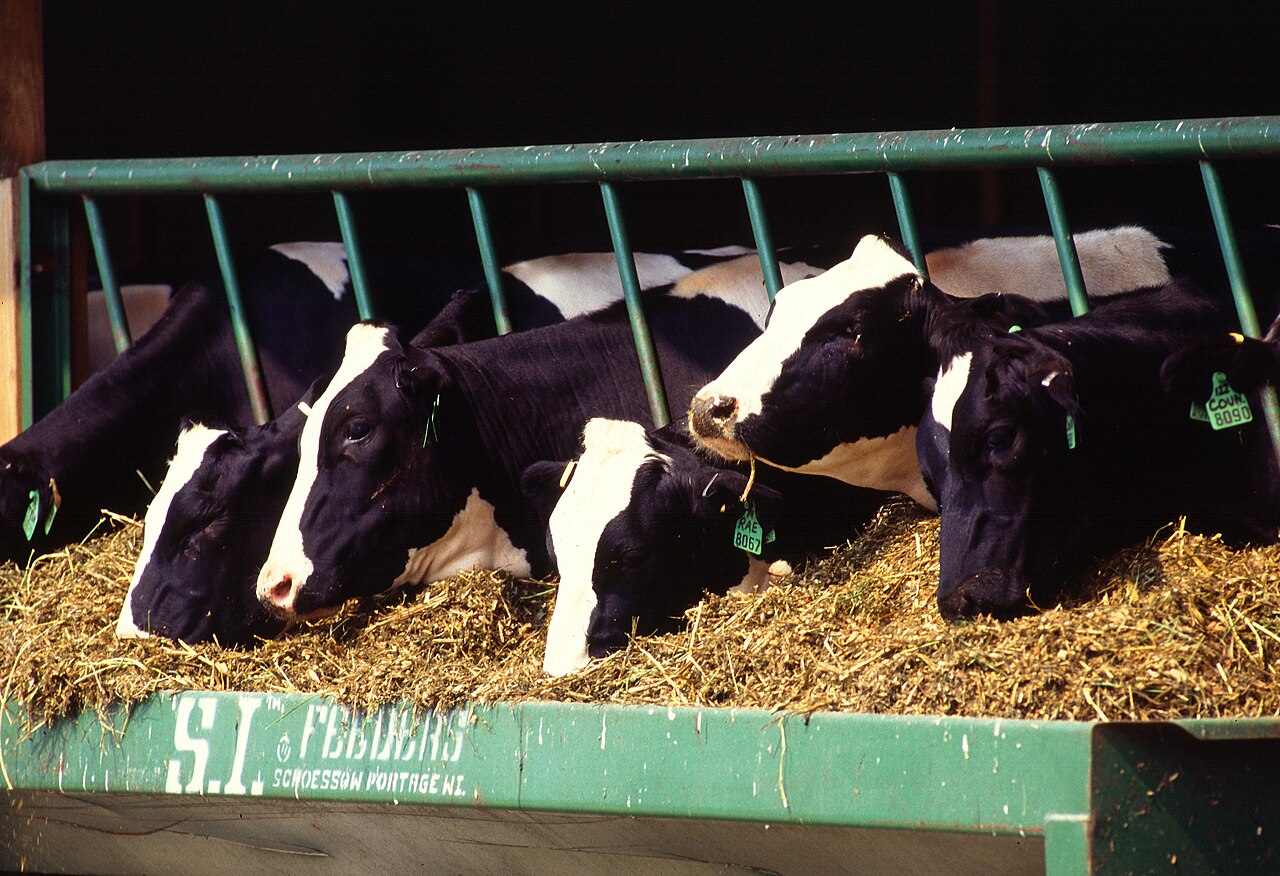
Image: Wikimedia Commons ( Public domain )

What it is
3-nitrooxypropanol (3-NOP), sold as Bovaer by dsm-firmenich, inhibits a rumen enzyme in the last step of methane making. The EU authorized it in 2022; the U.S. FDA finished its review in May 2024. A dsm-firmenich note on large-scale Dutch farm data (162 farms, about 20,000 cows, 18 months from July 2022, with FrieslandCampina and Agrifirm) says the farms confirm a 30 percent methane cut without a hit to milk, health, or fertility. That 30 percent figure is the company and dossier number, not an independent inventory of national dairy emissions.
Problem it targets
Cattle are a large source of methane, a short-lived but strong greenhouse gas. Feed additives can cut that flow while herds still exist. They do not erase land use or nitrous oxide.
How it works
The additive is mixed into the mineral mix or total mixed ration at grams-per-cow-per-day scale. It must be fed daily. Effect size depends on diet. It is not a vaccine and not a genetic rewrite of the animal.
Status and players
dsm-firmenich; FrieslandCampina and Agrifirm on the Dutch validation; Elanco in North America. The company says more than 500,000 cows were fed Bovaer across 25 countries at the time of the 2026 farm-data note. Other methane tools (asparagopsis seaweed, 3-NOP rivals) run in parallel.
Risks and limits
Cost versus milk price; public distrust; and the temptation to call a 30 percent cut “climate-neutral beef.” Leakage if herds grow. This card is about 3-NOP farm use, not every feed claim.
Sources
dsm-firmenich Dutch farm-data note (20,000 cows / 18 months); EU 2022/565; May 2024 FDA review. About 30% is the company/dossier figure.