
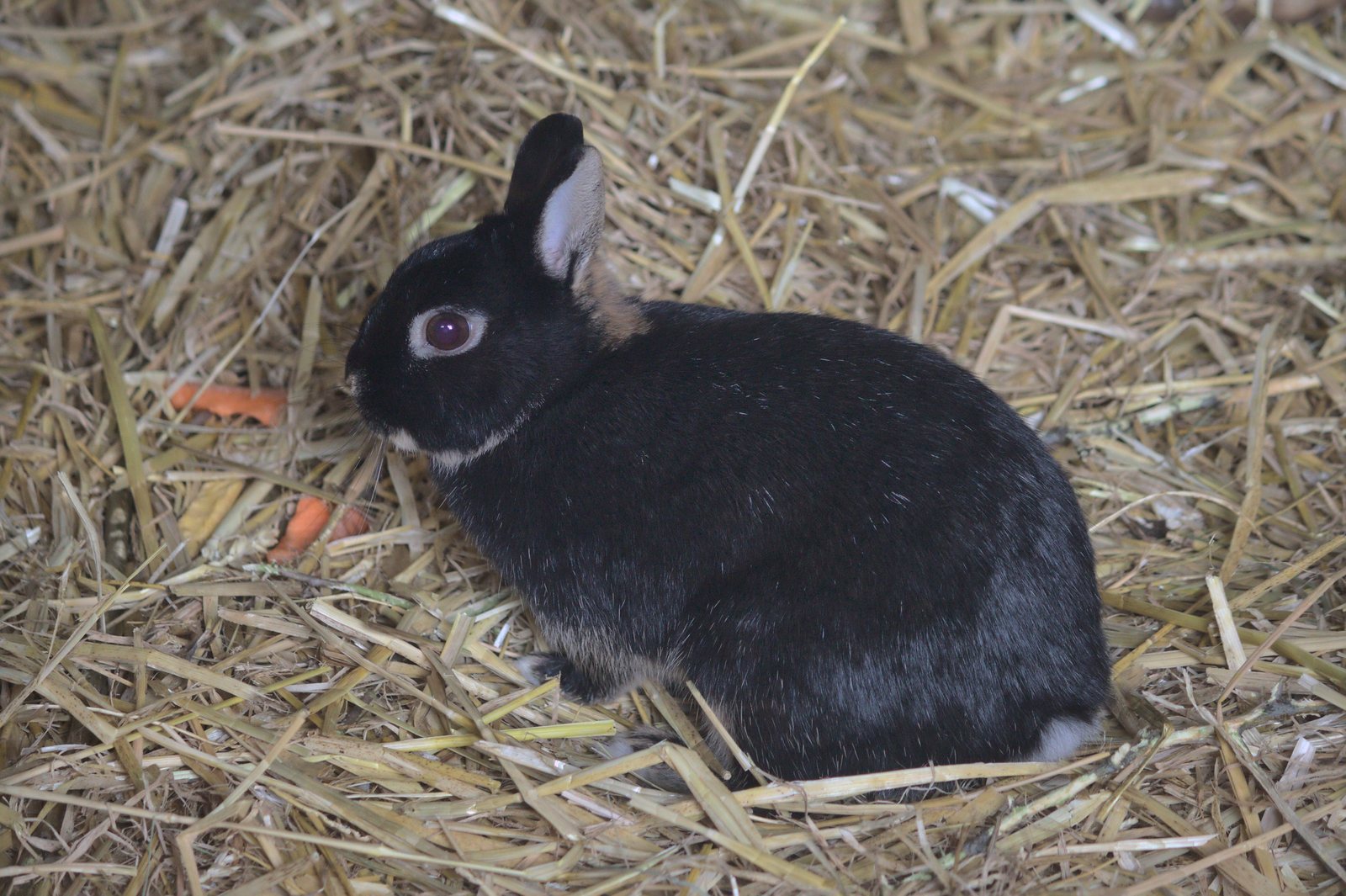
A black domestic rabbit on straw at the Hirschstetten flower gardens in Vienna, Austria.
Photo: Paul Korecky, Wikimedia Commons (CC BY-SA 2.0)

What it is
The domestic rabbit (Oryctolagus cuniculus) is raised for meat, for skins used as fur and, in Angora rabbits, for wool. It descends from the wild rabbit of southern Europe and North Africa.
Range
Rabbit keeping in hutches spread across rural western Europe and into city suburbs, and European colonial expansion took rabbits to many countries where they had been unknown, such as Australia and New Zealand. Rabbits are now found in almost every climate. The rabbit manual of the Food and Agriculture Organization of the United Nations (FAO) describes backyard rabbitries as well suited to small farmers, with or without land of their own.
What happened
According to the FAO manual The Rabbit: Husbandry, health and production (1997), Phoenicians who reached the coast of Spain about 1000 BCE are thought to have discovered the wild rabbit. The Roman writer Varro (116-27 BCE) suggested keeping rabbits in leporaria, stone-walled pens or parks shared with hares and other wild animals for hunting; rabbits were still not domesticated then. Several breeds were known in the sixteenth century, the first sign of controlled breeding, so domestication is traced to the late Middle Ages, probably mainly the work of monks.
When / status
A living domesticate. FAO's Domestic Animal Diversity Information System (DAD-IS) records rabbit breeds.
Human role
Fibrous feed is an important part of a rabbit's diet, so rabbits do not compete directly with people for food, and in efficient systems they turn 20% of the protein they eat into edible meat. This makes them useful to rural families who need more animal protein.