

What it is
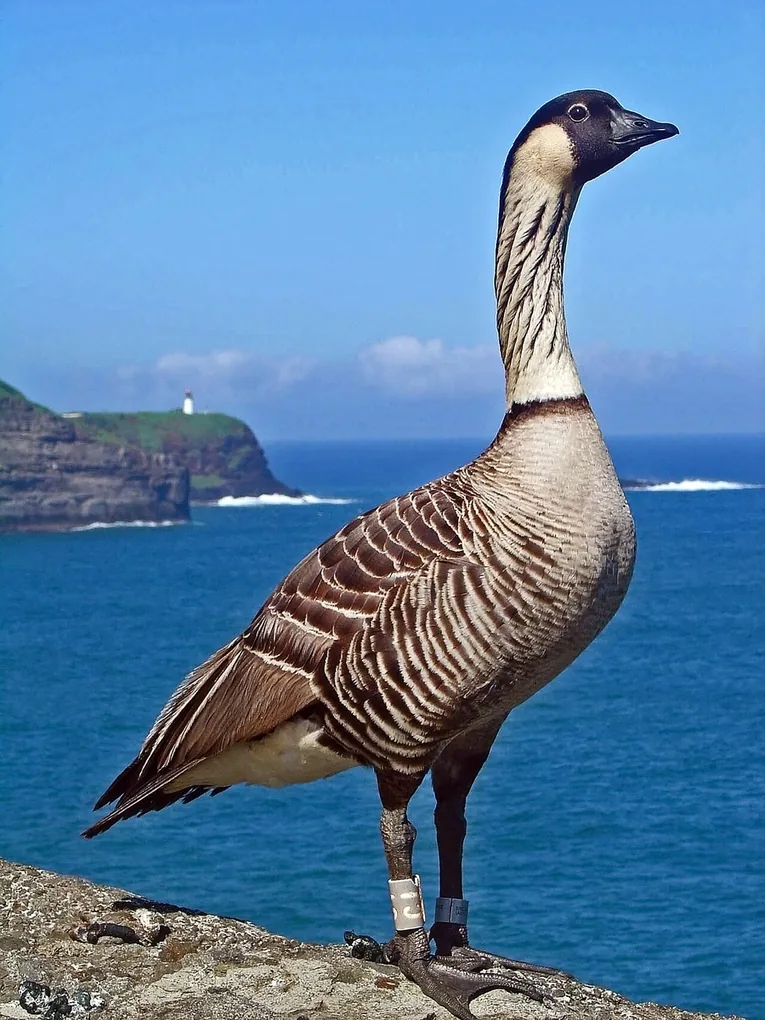
The nēnē (Branta sandvicensis), or Hawaiian goose, lives only in the Hawaiian Islands. It has a black face and crown, cream cheeks and a buff neck with black streaks. Its long legs and only partly webbed toes suit walking on lava. The International Union for Conservation of Nature lists it as Near Threatened.
Range
Grassland, shrubland and lava slopes of the Hawaiian Islands, today mostly on Kauaʻi, Hawaiʻi Island and Maui.
What happened
Hunting, the loss of its habitat and introduced predators such as mongooses cut the nēnē down to as few as 30 wild birds by the 1950s. Captive breeding, sanctuaries that keep predators out and releases on several islands brought it back, and the 2025 statewide count found about 4,300 birds.
When / status
Near Threatened now, with most birds on Kauaʻi.
Human role
Rats, cats, dogs and mongooses still kill nēnē, and many are hit by cars.