

What it is
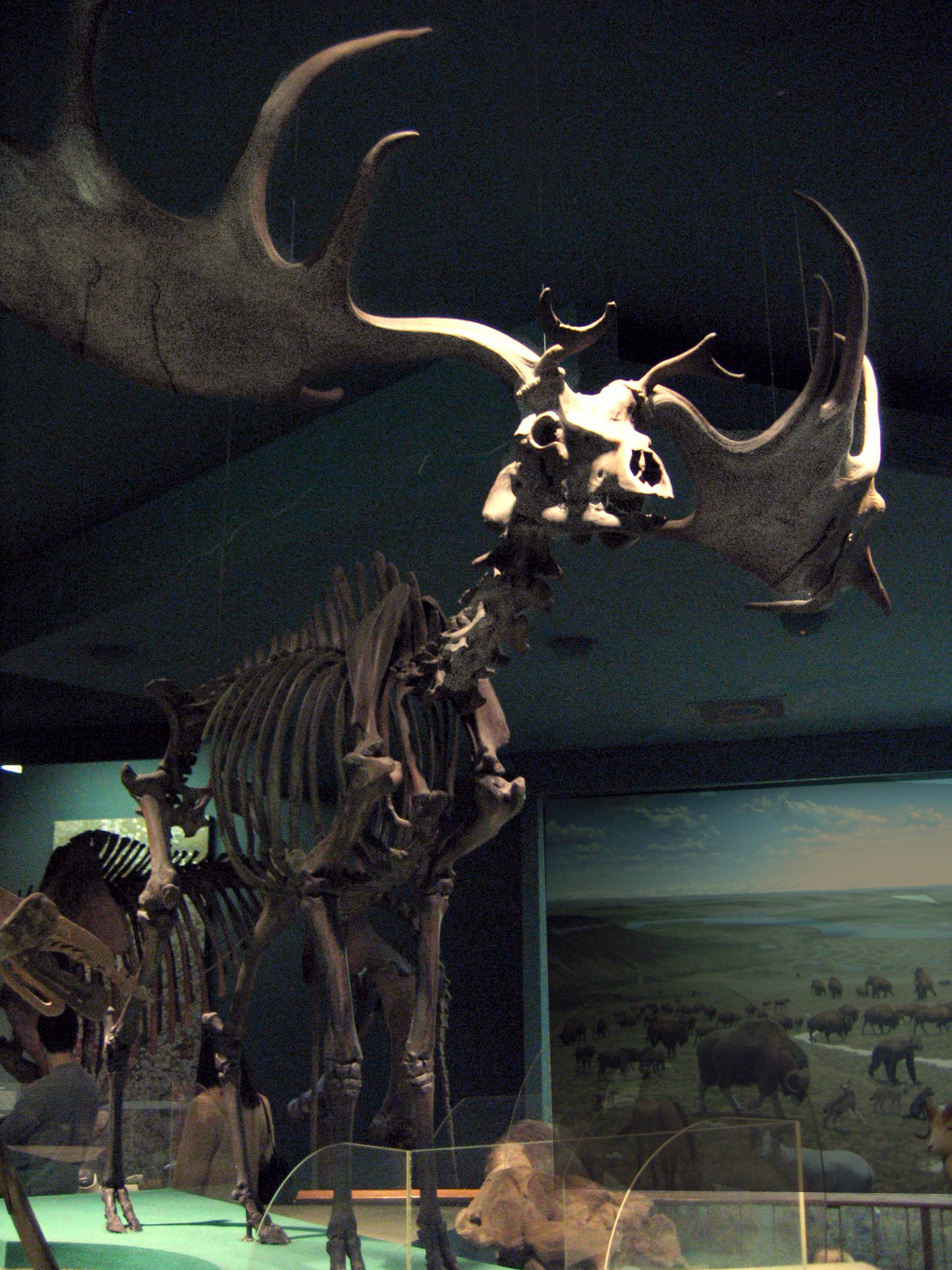
The Irish elk, or giant deer, was not an elk. It was a cervid whose males carried the largest antlers of any deer: spans of about 3.5 metres. It is extinct. The famous Irish bog skeletons are the best-known fossils; the living range was far wider than Ireland.
Range
Temperate Eurasia in the Late Pleistocene, from Ireland and western Europe to Siberia. Ireland holds many complete skeletons from peat.
What happened
The Irish population disappeared around the Younger Dryas cold snap, before people settled the island: a climate-driven local extinction. The species then survived in the Urals and western Siberia into the Holocene. The youngest well-dated bones are about 7,700 years old (Stuart et al. 2004). Closing forest and, possibly, growing Neolithic hunting pressure are both discussed for that last range. A single cause is not proven.
When / status
Extinct. Ireland: end-Pleistocene. Last dated Siberian remains: about 7,700 years ago.
Human role
Not the cause in Ice Age Ireland. A possible contributing cause in the last Siberian populations, alongside habitat change: a debate, not a verdict.
Sources
Stuart et al. 2004 (Nature) on Holocene survival; later radiocarbon syntheses for Megaloceros giganteus.