
← Terraforming · Water & diversion
Toshka / New Valley
Pump Lake Nasser into the Western Desert and grow a second Nile valley. The pumps and the canal exist. The 1997 population-and-farm dream does not.

Jurisdiction: Egypt (Western Desert / Lake Nasser)
Years / status: Launched 1997 as the South Valley / Toshka scheme. Pumping station and Sheikh Zayed Canal built. Work stalled about 2008; revived from 2020. Status: partial.
The plan
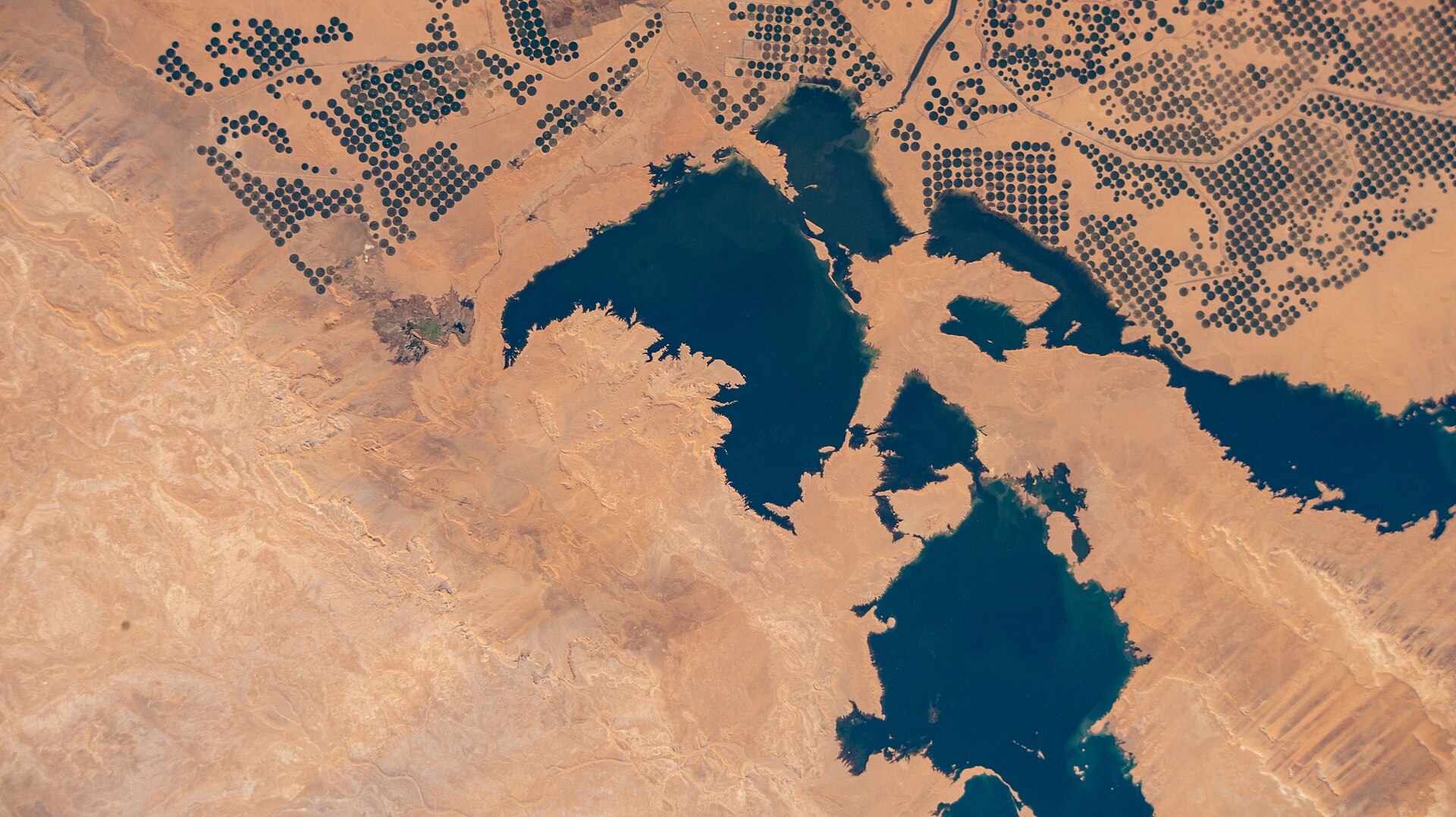
Hosni Mubarak’s government announced a scheme to pump Nile water from Lake Nasser through a new canal (Sheikh Zayed) and irrigate about 540,000 feddans (about 227,000 hectares) of desert, supporting a new community of some three million people by 2017. The Mubarak Pumping Station was designed for on the order of 25 million cubic metres a day. Private concessions, including a large Kingdom Agricultural Development Company holding, were meant to do the farming.
Construction / status
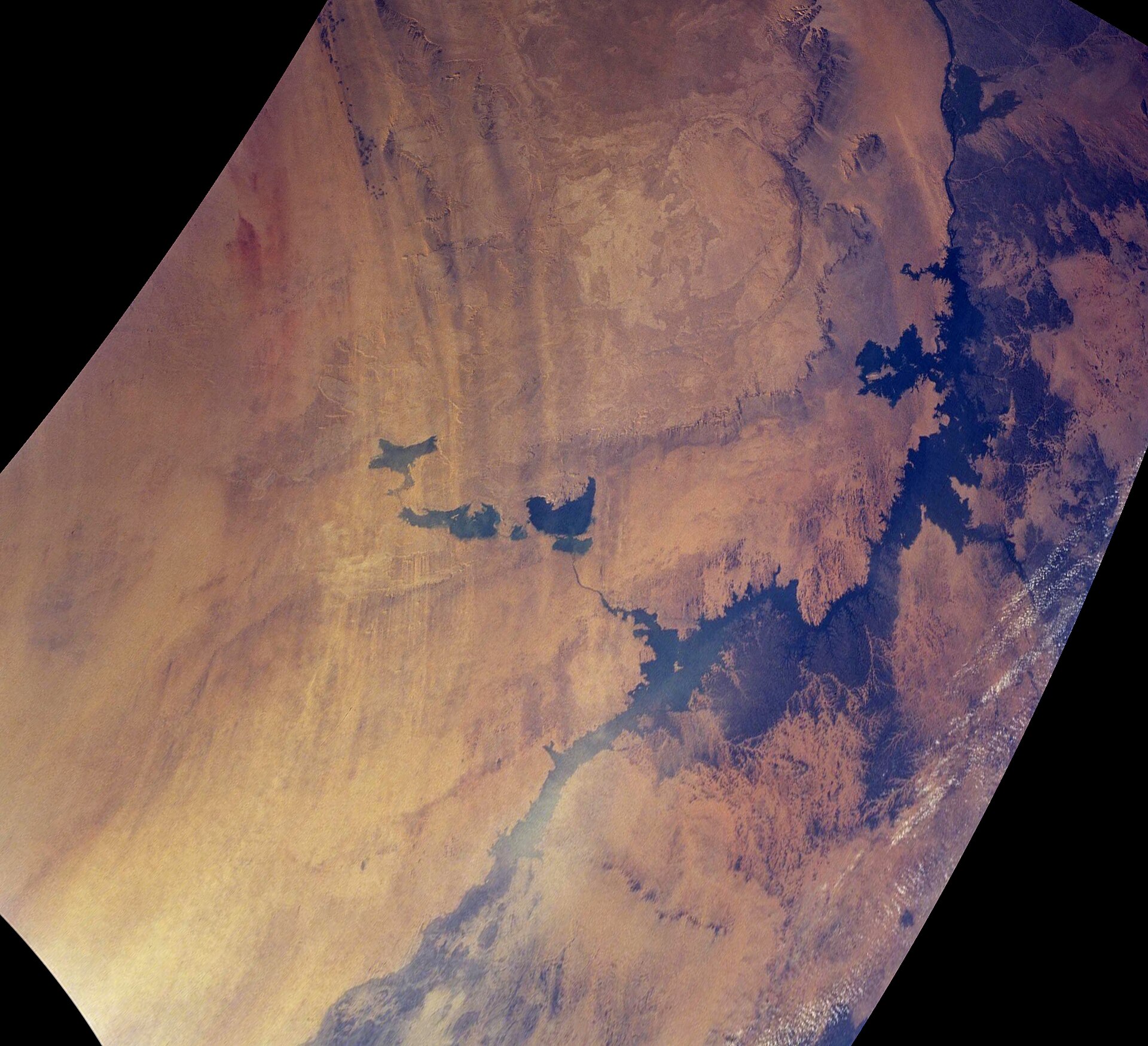
The pumping station and the main canal were built. Spill from Lake Nasser also filled the Toshka overflow lakes in wet years: a hydrologic side-effect, not the farm plan. Independent reporting around 2008-2010 found only a small fraction of the advertised area actually cultivated (one ministry figure cited about 147 square kilometres). Work stopped in 2008. Abdel Fattah el-Sisi’s government restarted land reclamation in 2020; official 2021 figures claimed about 85,000 of a 100,000-feddan first phase.
What went wrong, or only partly worked
Infrastructure outran settlement. High evaporation, poor soils, distance from markets, and Nile allocation politics limited farms. Later phases lean more on the Nubian Sandstone Aquifer as well as canal water. A 2023 modelling paper on Toshka wells found that a 102-well pumping regime could stay near a 25-metre century-scale drawdown limit under stated assumptions: a sustainability bound, not a licence to scale without monitoring. GRACE-based work reports multi-year storage loss in Egypt’s desert aquifers, including the Western Desert Nubian system.
Lessons
A pumping station is not a city. Desert reclamation can grow some crops and still miss the demographic promise. Groundwater next to a reservoir is not infinite; publish well fields and drawdowns, not only inauguration photos. Treat official feddan counts as claims until independent maps agree.
Sources
Ahram Online 2021 on the original 540,000-feddan target, 2008 stop and 2020 revival; Water 2023 Toshka groundwater model; Sultan et al. 2023 GRACE depletion over Egypt.