
← Terraforming · Desert greening
Three-North Shelterbelt
The world’s largest afforestation programme. Satellites see greener patches. Wells and poplar graveyards see the other half of the story.
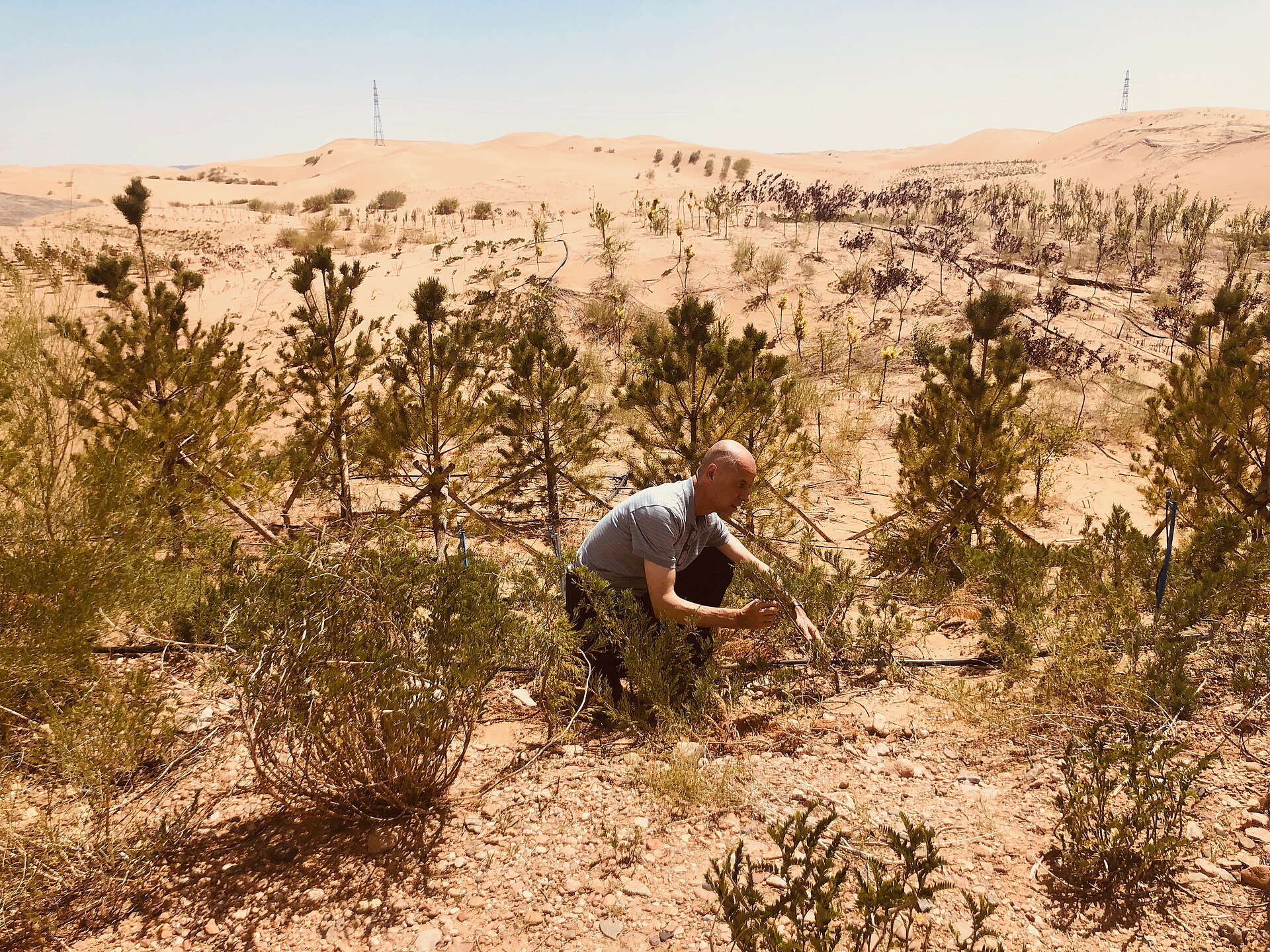

Jurisdiction: People’s Republic of China (northeast, north, northwest)
Years / status: Launched 1978; scheduled through 2050. Still planting and replanting. Status: ongoing, mixed results.
The plan
A multi-decade “green wall” of shelterbelts against sandstorms and desertification across the Three Norths, later wrapped in carbon and “ecological civilisation” language. Fast-growing poplars were a workhorse species. Official area figures are programmatic targets and reported afforestation, not a single verified living forest.
Construction / status
Decades of state campaigns, local targets, and later ecological-engineering science. Some belts established. Remote sensing shows vegetation increase in parts of the programme region. That is not the same as a continuous wall of trees from Xinjiang to Heilongjiang.
What went wrong, or only partly worked
Turner et al. (2023) review the Three-North programme with other “great green walls”: mixed technical success; published survival often in a 40-60 percent range, worse in drier sites; wind-erosion benefits in some places; reduced soil moisture and falling water tables in others; social costs where planting enclosed pastoral land. Field studies document widespread Populus dieback in arid belts. Newer work (including 2024-2026 papers) still finds a tension between surface greening and groundwater.
Lessons
NDVI is not a forest. Monoculture poplars are a drought bet. A shelterbelt can cut sand and still mine the water table. Count surviving, useful cover, and who lost grazing: not only seedlings issued.
Sources
Turner, Davis & Barron, Annual Review of Environment and Resources 2023; Zheng et al. 2024 on the programme to 2022.