
← Terraforming · Climate intervention
Ocean iron fertilization
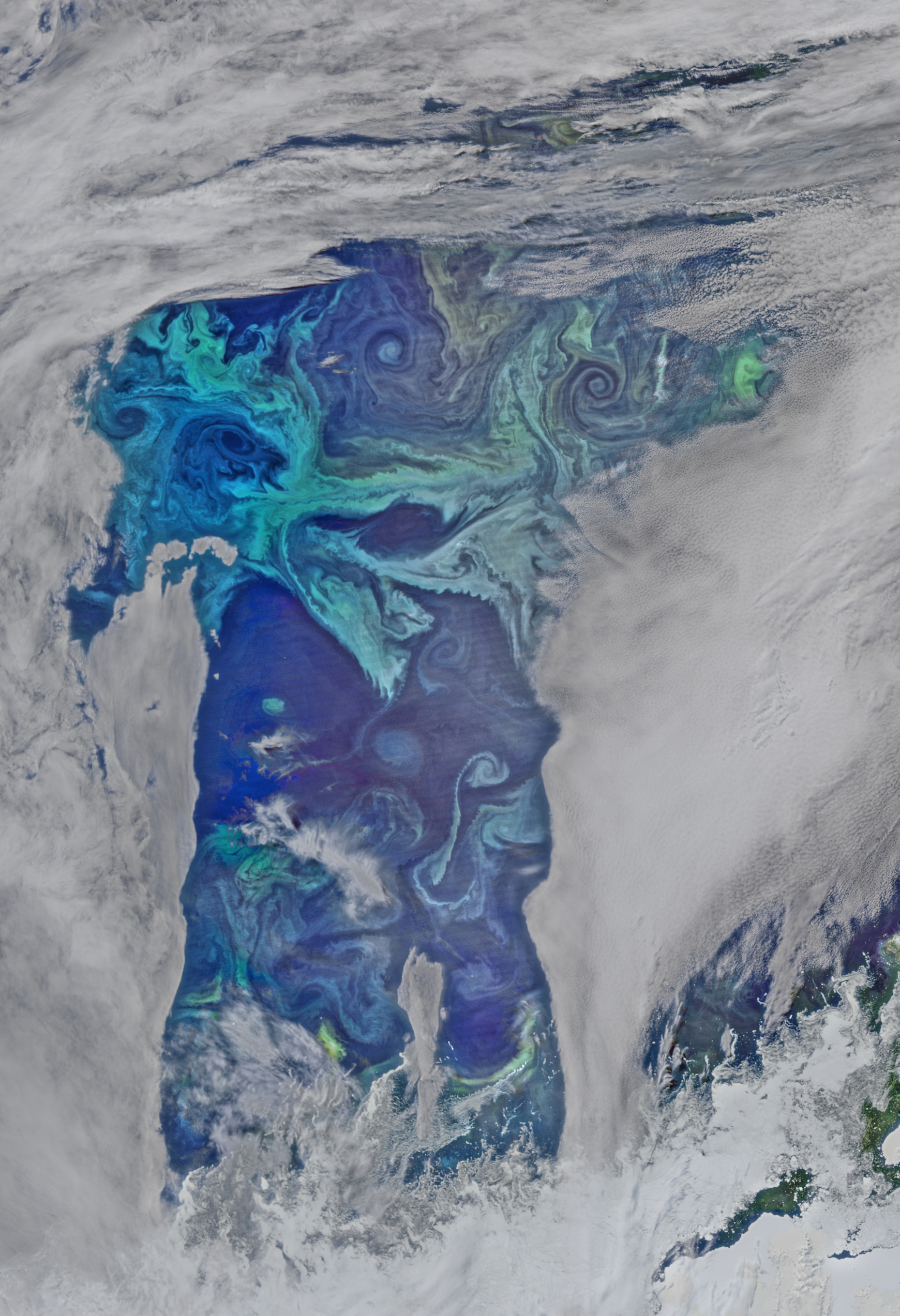
Add iron, grow plankton, sink carbon. Small experiments grew green water. They did not prove a carbon vault, and a 2012 dump became a dumping case.

Jurisdiction: High seas / London Convention and Protocol parties
Years / status: IronEx I 1993; later Southern Ocean trials including SOIREE and LOHAFEX (2009). Haida Salmon Restoration Corporation dump 2012. LC/LP assessment framework 2010; LP amendment 2013. Status: research (commercial use not allowed).
The plan
John Martin’s iron hypothesis: in high-nutrient, low-chlorophyll waters, a little iron can trigger a bloom. If enough organic carbon sinks and stays out of the atmosphere, the ocean would take up CO₂. That is a testable biogeochemical idea, not a climate service.
Construction / status
Lawful scientific cruises fertilized patches of a few to tens of square kilometres and watched for weeks. Blooms often appeared. LOHAFEX (India-Germany, 2009) found higher net community production but not higher export flux out of the mixed layer in low-silicate water: grazing ate the bloom. In 2012 the Haida Salmon Restoration Corporation put about 100 tonnes of iron sulfate off western Canada; LC/LP parties stated grave concern. Commercial fertilization is not permitted; only assessed scientific research is.
What went wrong, or only partly worked
The experiments showed that iron can change surface ecology. They did not show a reliable, verifiable, long-lived carbon sink at climate scale. Side effects include shifted food webs, possible low-oxygen patches, and nutrients stolen from downstream waters. Credits sold on the back of a dump are not science.
Lessons
A green satellite swirl is not sequestered carbon. Export and residence time are the measurement. The legal default on the high seas is no. Keep this card on the research shelf.
Sources
Boyd & others on IronEx/SOIREE (Nature 2000); Martin et al. 2013 on LOHAFEX export.