
UV disinfection
Clear-looking water can still carry Cryptosporidium and other microbes that chlorine alone does not always stop.

What it is
Ultraviolet light inactivates microbes in a drinking-water plant without leaving a chemical residual. Validated reactors are standard practice under the U.S. EPA Long Term 2 guidance. This is a plant barrier for drinking water, not a desalination membrane and not a wetland filter. Singapore’s NEWater uses ultraviolet light as one step in municipal wastewater reclaim; that is a different practice.
How it works
Water passes a bank of ultraviolet lamps inside a reactor. The dose has to be validated for the flow and the clarity of the water. Turbid water and unvalidated lamps fail. Ultraviolet light does not leave a residual in the pipes downstream, and it does not remove salts or most chemicals.
Where it already runs
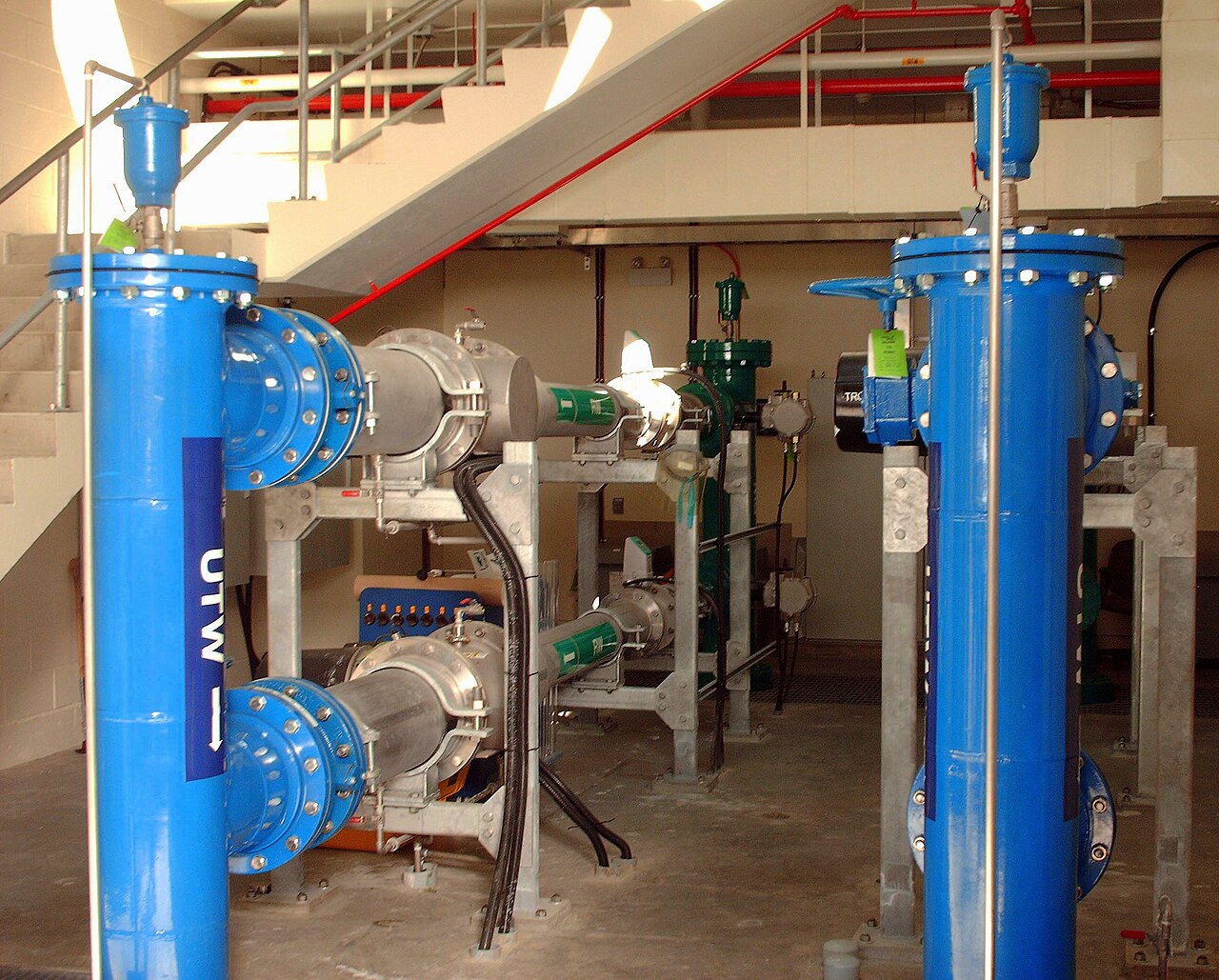
The U.S. EPA Ultraviolet Disinfection Guidance Manual and the Long Term 2 rule documents are the reference for validated reactors. The photograph is the Sooke River Road ultraviolet disinfection plant in British Columbia, a municipal drinking-water works.
Limits: what it does not fix
No lasting residual in the distribution network. Turbid water and unvalidated lamps fail. Ultraviolet disinfection does not remove salts or most chemicals.
Sources
Links are for verification. The article stays on Fix Planet.