

Sand dams
Seasonal sandy rivers run for days then leave dryland villages walking hours for water while the bed looks empty.
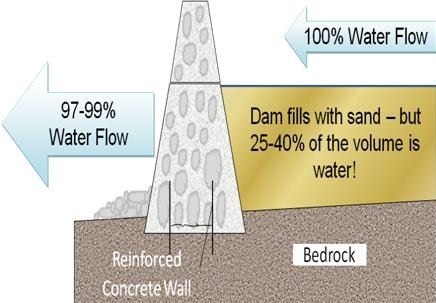

What it is
A sand dam is a low masonry wall across a seasonal sandy river. The wall traps sand, and water is stored in the pores of that sand bank: dryland storage with little evaporation, already used in Kenya and elsewhere. It is not managed aquifer recharge by basins or wells, and it is not rooftop rainwater harvesting. Check dams and gully plugs are a smaller erosion tool, not this structure.
How it works
Seasonal floods drop their sand load behind the wall. The water sits in the pores instead of in an open pond that would evaporate. The right sandy bed and sound siting decide whether the bank holds water. A wall on the wrong geology stores little.
Where it already runs
Practical Action’s sand-dam guidance and IWMI’s note on community sand dams in Kenya describe works already in use. The picture is a diagram of that structure: a low wall, sand, and a well on the bank: not a photograph of one named dam.
Limits: what it does not fix
Needs the right sandy seasonal bed, community labour, and sound siting. A wall on the wrong geology stores little water.
Sources
Links are for verification. The article stays on Fix Planet.