

Rainwater harvesting
Houses and public buildings shed rain into gutters while wells and tankers struggle. WHO treats rooftop collection and covered storage as a household water source that still needs care.
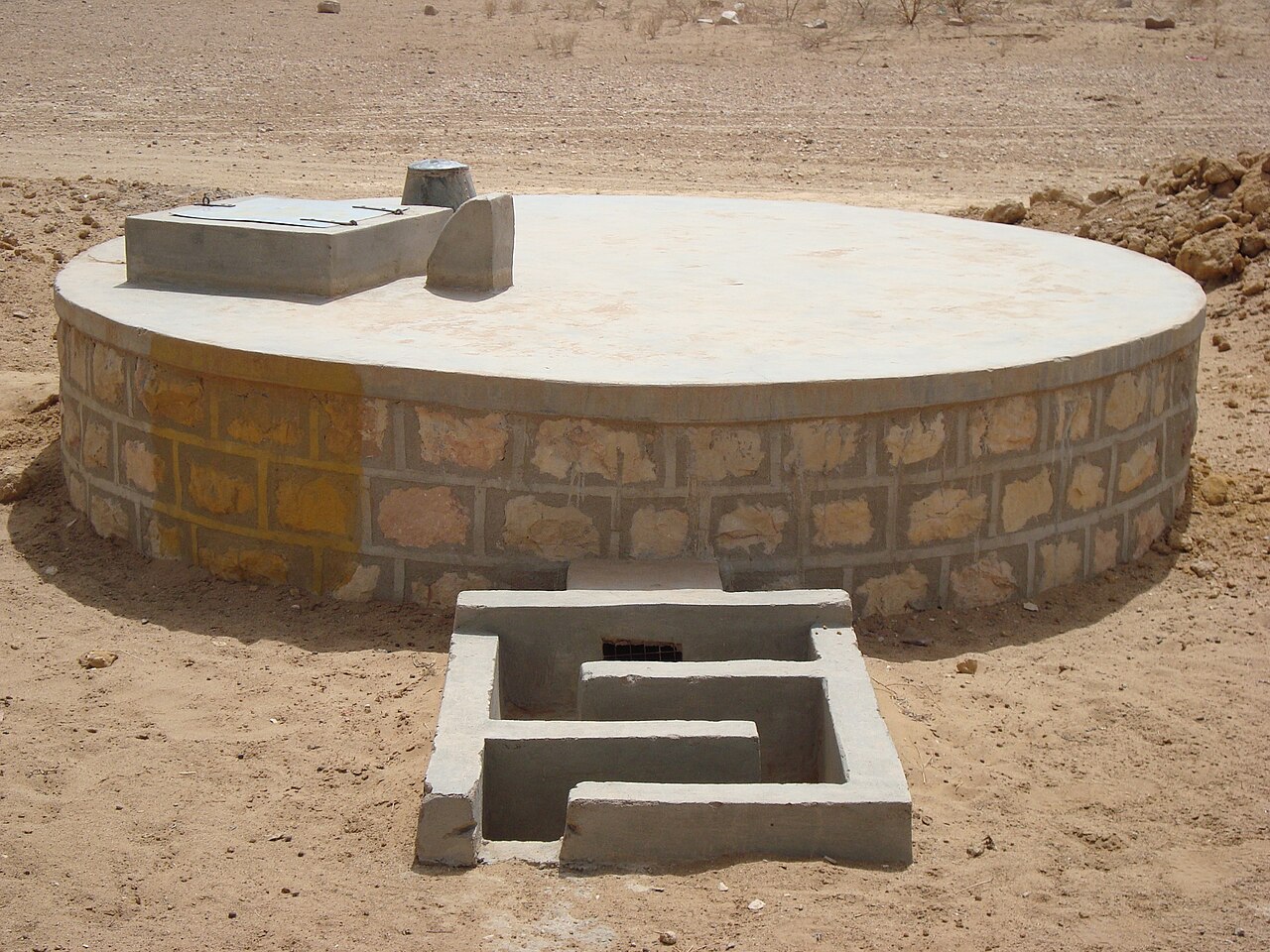

What it is
Rainwater harvesting is the collection of rain from a roof or other catchment into a store that people then use. Houses and public buildings shed rain into gutters while wells and tankers struggle. In many towns the roof is the nearest catchment, but open barrels breed mosquitoes and dirty first-flush water.
WHO’s sanitary-inspection advice treats rooftop collection and covered storage as a household water source. It is ordinary in dry and monsoon climates. The Guidelines for drinking-water quality set the health frame: rain as it falls is relatively clean, but the roof, the gutter, the first flush, and the tank decide what people drink. This page is that method: not a dam and not a new river.
How it works
A roof (metal is easier to keep clean than thatch) sheds to gutters. A first-flush diverter throws away the first dirty minutes: bird droppings, dust, and dissolved material from the roof. A screened inlet keeps mosquitoes and debris out of a closed tank. A tap above the sludge layer draws water. Regular cleaning of gutters and the tank is part of the system, not an optional extra.
WHO’s rainwater advice sheet is a sanitary inspection package: look for cracks, uncovered openings, first-flush neglect, and tanks that share space with animals or waste. The Guidelines treat household rainwater as a drinking-water supply that needs the same honesty as a well: if you cannot keep the store closed and clean, you have built a breeding site, not a tap.
Where it already runs
Rooftop tanks are ordinary household kit across India, Australia, the Caribbean, East Africa, and many monsoon and dryland towns. Public buildings: schools, clinics: use larger cisterns on the same logic. Some cities require new houses to include a tank. The method is old. WHO writes about it because people already drink from it.
Yield follows the roof area and the rain. A 100-square-metre roof in a 600-millimetre year can theoretically catch 60 cubic metres if nothing is lost; real systems lose first flush, overflow, and dirty events. That arithmetic is a ceiling, not a promise. A tanker still comes when the sky does not.
Limits: what it does not fix
It is not a new river: yield follows the roof and the rain, and poorly kept stores can make people sick. A dry season empties the tank. A dirty roof fills it with contamination. Open barrels breed Aedes mosquitoes. First-flush that is never dumped is a slogan.
Rainwater harvesting does not replace a municipal treatment plant for a city, and it does not refill a regional aquifer. WHO’s drinking-water guidelines exist because household stores fail in ordinary ways. Treat the cistern as a local catchment with a lid: not as climate-proof supply.
Sources
Links are for verification. The article stays on Fix Planet.