
Recycled gypsum
Waste plasterboard processed into recycled gypsum for new plasterboard. The European Union project Gypsum to Gypsum produced plasterboard with up to 30 percent recycled gypsum, and the United Kingdom Environment Agency quality protocol sets when recycled gypsum stops being waste.
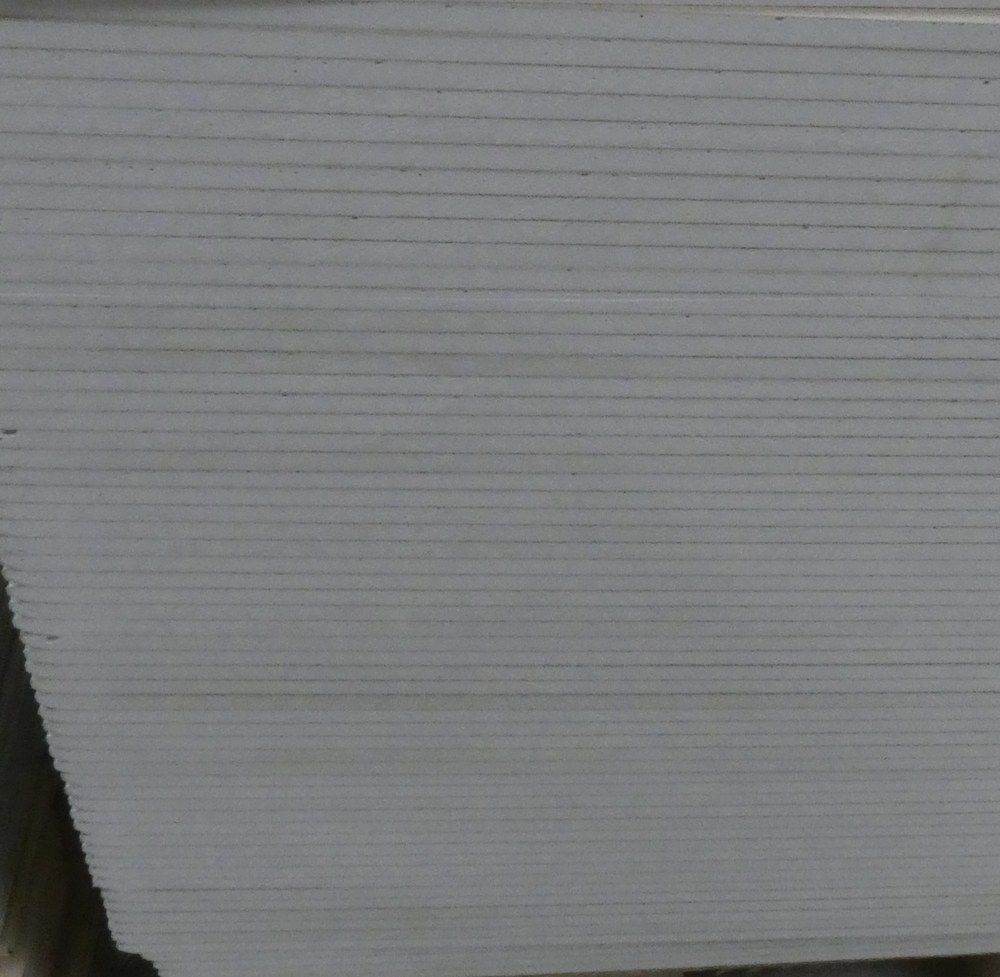
Stack of plasterboard sheets on a wooden pallet in a warehouse.
Photo: RossKur, via Wikimedia Commons, cropped, licence Creative Commons Attribution 4.0 (https://creativecommons.org/licenses/by/4.0/). File page: https://commons.wikimedia.org/wiki/File:Stapel_Gipskartonplatten.jpg

What it is
Recycled gypsum is powder reprocessed from waste plasterboard and used again to make new gypsum products such as plasterboard. Gypsum waste comes from production, construction and demolition, including renovation. The Gypsum to Gypsum project, supported by the European Union programme for the environment and climate action and coordinated by Eurogypsum, the European association of the gypsum industry, tested the full loop: dismantling and collection of plasterboard on sites, recycling of the waste, and reincorporation of the recycled gypsum at plasterboard factories.
Why it matters
Eurogypsum describes gypsum as an eternally recyclable mineral and reports that the project demonstrated plasterboard with 30 percent content of gypsum waste from production, construction and demolition. The project report states that the participating manufacturers produced plasterboard with 20 to 30 percent recycled gypsum (average 25 percent) and reached the 30 percent target in two of the five factories. The results were achieved with the existing processes of the participating factories.
How to read it
In England, Wales and Northern Ireland the quality protocol of the United Kingdom Environment Agency for recycled gypsum from waste plasterboard sets three conditions for the material to stop being waste: the waste was stored and processed to the publicly available specification of the British Standards Institution for recycled gypsum from waste plasterboard; the gypsum is ready to use as a raw material for gypsum-based construction products such as plasterboard and coving, or for making cement; and it meets any extra specification requested by the customer.
Limits
The project report states that raising recycled content from 30 to 50 percent would demand investments in equipment. Gypsum adheres to plaster, paint and screed, which makes demolition waste the most complex of the three waste streams. A small percentage of gypsum waste is recycled in Europe, and the report names demolition as the main barrier, because dismantling is the step that allows gypsum waste to be recovered. Eurogypsum states that the volume of suitable gypsum waste is expected to fall short of the growing needs for buildings and renovation in the short to medium term, so recycling and extraction of primary raw material are equally necessary, and synthetic gypsum from coal-fired power stations is declining.
Sources
Links are for verification. The article stays on Fix Planet.
- Eurogypsum: Circularity : https://eurogypsum.org/circularity-2923/
- European Commission LIFE Public Database: GtoG: From Production to Recycling, a Circular Economy for the European Gypsum Industry with the Demolition and Recycling Industry (LIFE11 ENV/BE/001039) : https://webgate.ec.europa.eu/life/publicWebsite/project/LIFE11-ENV-BE-001039/gtog-from-production-to-recycling-a-circular-economy-for-the-european-gypsum-industry-with-the-demolition-and-recycling-industry
- Environment Agency, GOV.UK: Recycled gypsum from waste plasterboard: quality protocol : https://www.gov.uk/government/publications/recycled-gypsum-from-waste-plasterboard-quality-protocol/recycled-gypsum-from-waste-plasterboard-quality-protocol