
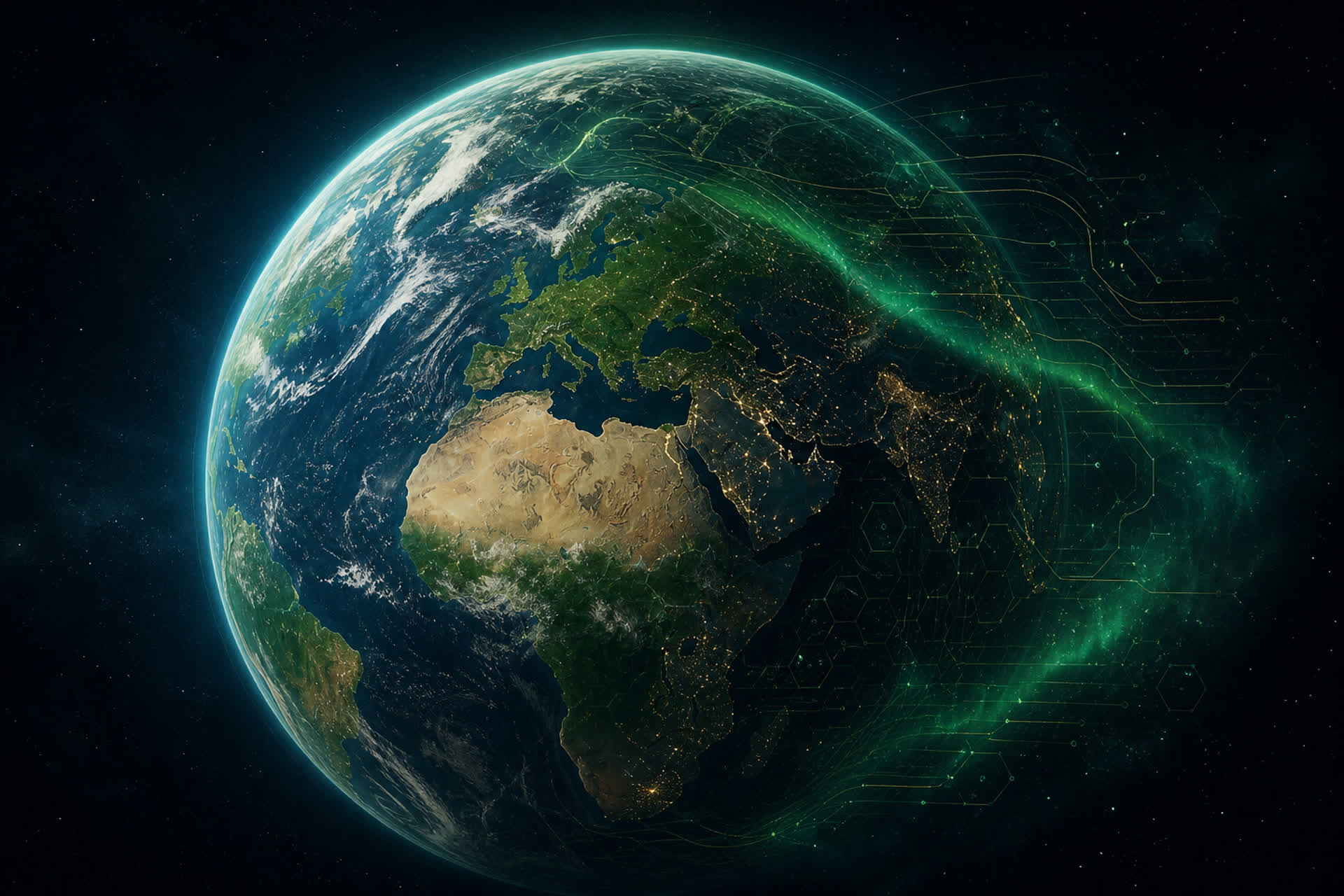
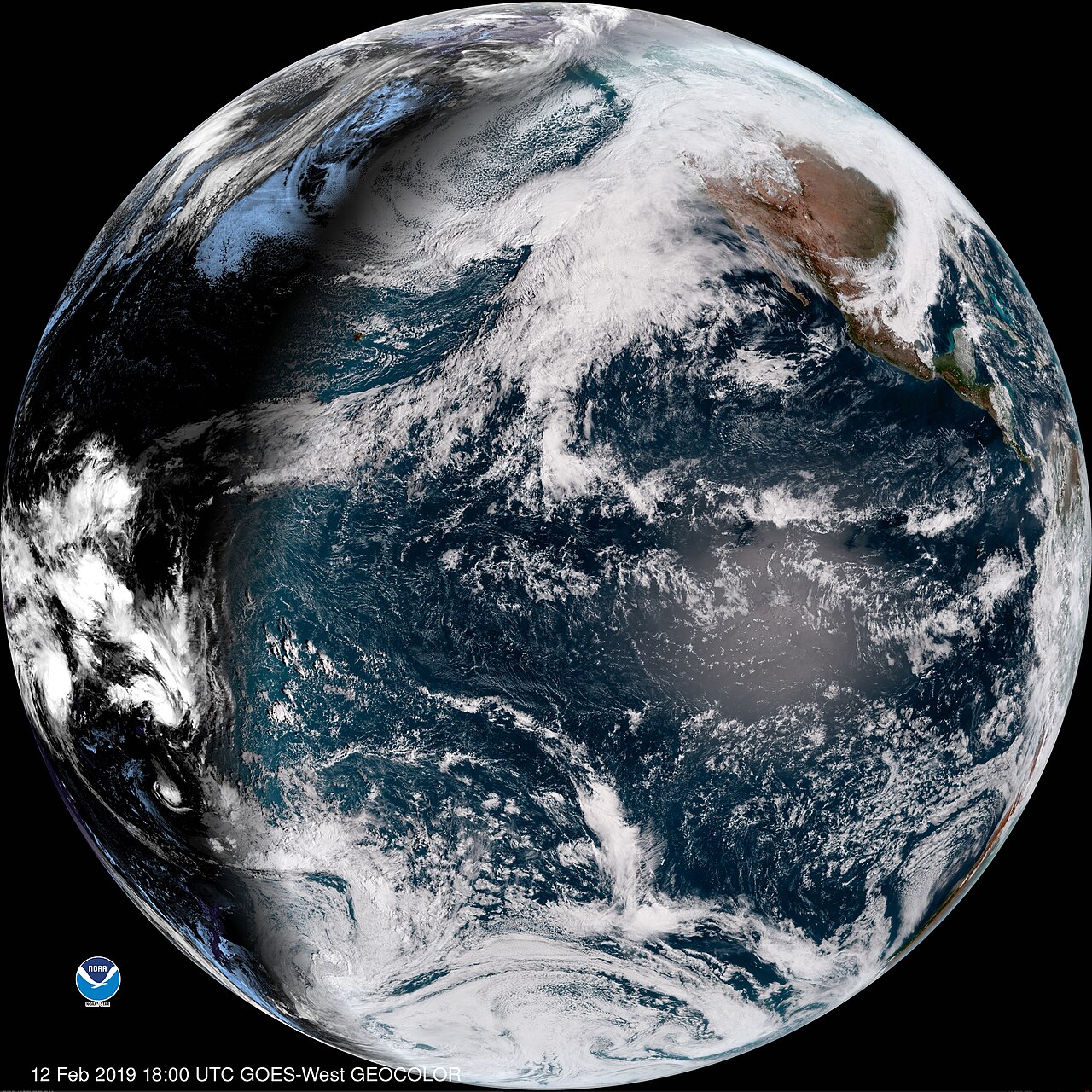
Image: NOAA Satellites ( Public domain )

What it is
On 3 September 2026 Google DeepMind and Google Research introduced WeatherNext 3, their latest global AI weather model. The system ingests live geostationary satellite mosaics and station observations, and Google says it issues hourly forecasts at about 5 km for some surface fields (10 km for other surface variables, 25 km for many atmospheric fields): roughly five times sharper than WeatherNext 2’s 25 km / six-hour grid. Google is folding it into Search, Gemini, Maps, Maps Platform, Earth Engine, and Cloud. Independent live rankings are cited from Brightband. Official severe-weather warnings still belong to national meteorological services.
Problem it targets
Fast local weather: rain bands, coastal and mountain contrasts, turbine-height wind: is what farms, grids, and people actually feel. Older AI weather models trained only on lagged physics analyses smeared those details.
How it works
A Functional Generative Network mesh transformer takes hourly satellite mosaics plus analysis and outputs gridded fields, cyclone tracks, and station-level values. Google also publishes 100-metre wind and radiation fields aimed at wind and solar operators. Precipitation skill claims (CRPS versus IMERG, MRMS, and gauges) are Google’s evaluation numbers.
Status and players
Google DeepMind and Google Research. Neighbor card: GraphCast (Science, 2023), the earlier DeepMind global model. National weather services remain the warning authorities.
Risks and limits
Over-trust, weak extremes, and skipping the observing system. A Maps forecast is not a cyclone warning. Skill on a leaderboard is not skill in your valley on a bad day.
Sources
Google DeepMind WeatherNext 3 post (3 Sep 2026). Use national meteorological services for warnings.