

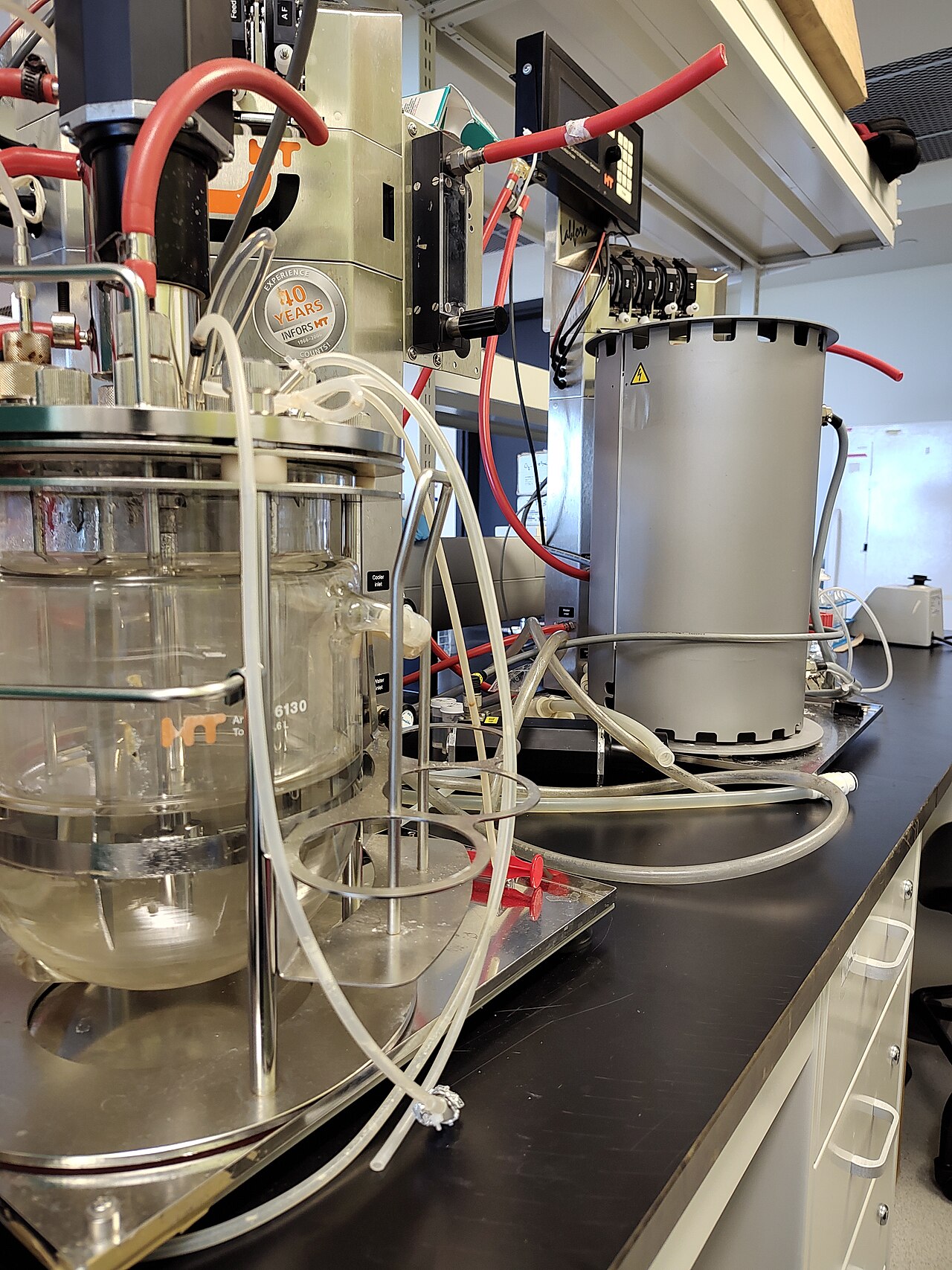
Image: Luis Fernando Flores LAB ( CC BY-SA 4.0 )

What it is
Precision fermentation programs yeasts or bacteria to secrete a specific protein: dairy whey without a cow, or a complete food protein grown on hydrogen and CO₂. Perfect Day’s animal-free whey is in commercial foods. Solar Foods’ Solein is a hydrogen-oxidizing microbial protein that has reached early market approval in some countries, not supermarket scale.
Problem it targets
Cattle and chicken are efficient compared with the past and still land-, water-, and methane-intensive. A protein that does not need a field or a herd could shrink that footprint, or just become another industrial food with its own bill.
How it works
A tank is fed sugar (or hydrogen and air, for Solein), minerals, and oxygen. Microbes make the target molecule; the broth is purified. The climate win depends on the feedstock and the grid. Sugar from cleared land cancels the story. Clean power and waste sugars keep it honest.
Status and players
Perfect Day (U.S.) for dairy proteins; Solar Foods (Finland) for Solein; many other startups in heme, casein, and fats. Regulators (FDA GRAS, novel-food rules in the EU and Singapore) decide what can be sold.
Risks and limits
Cost, consumer acceptance, and hidden land in the sugar supply. This is not a famine solution and not a replacement for every farm. It is a way to make a few high-impact ingredients without an animal.
Sources
Perfect Day and Solar Foods / Solein official sites. Livestock land context is separate literature, not a product claim.