

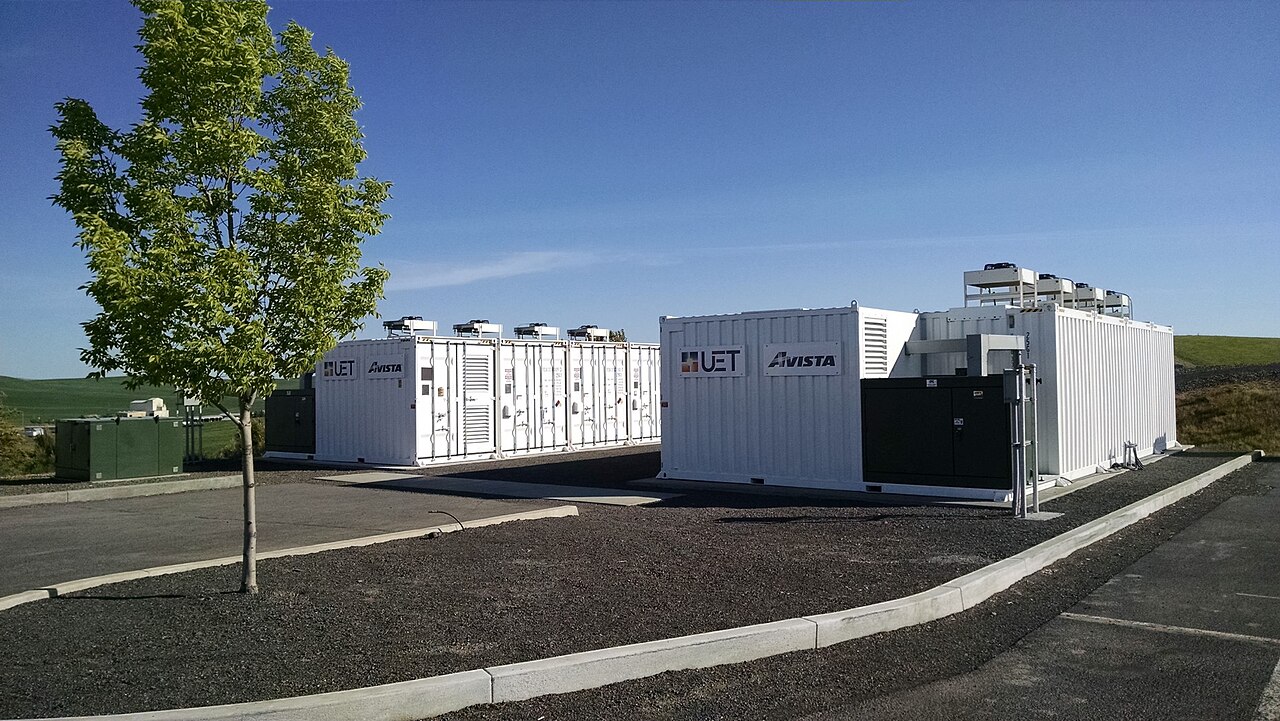
Image: UniEnergy Technologies ( CC BY-SA 4.0 )

What it is
Form Energy’s iron-air battery is designed for about 100 hours. In February 2026 Google and Xcel Energy said they intend to build a 300 MW / 30 GWh Form deployment on Xcel’s Upper Midwest grid as part of a package with 1.4 GW of wind and 200 MW of solar for a Minnesota data center. Xcel called it the largest battery project by gigawatt-hour capacity announced to date. Form’s CEO told Utility Dive the first modules are expected by the end of 2028. That is an agreement and a planned tariff filing, not installed megawatts.
Problem it targets
When the wind drops for several winter days, a four-hour lithium pack is a cushion, not a backbone. Cheap multi-day storage would let grids raise the renewable share without pretending weather is optional.
How it works
Iron-air cells “rust” iron to store energy and un-rust it to discharge: abundant materials, low energy density, large yards. Neither chemistry nor a press rendering is a physics miracle. Lithium remains the workhorse for short duration.
Status and players
Form Energy; Google; Xcel Energy. Related Form projects include a 10 MW / 1 GWh unit approved at Xcel’s Sherco site and a smaller Great River Energy pilot. A separate Ireland card covers the first announced overseas 10 MW / 1 GWh project.
Risks and limits
Round-trip losses, siting, regulator review, and whether hydrogen or more transmission is cheaper. Do not count an announced 30 GWh as delivered megawatt-hours.
Sources
Utility Dive on the Google-Xcel 300 MW / 30 GWh agreement (Feb 2026). Announced capacity is not delivered MWh.