
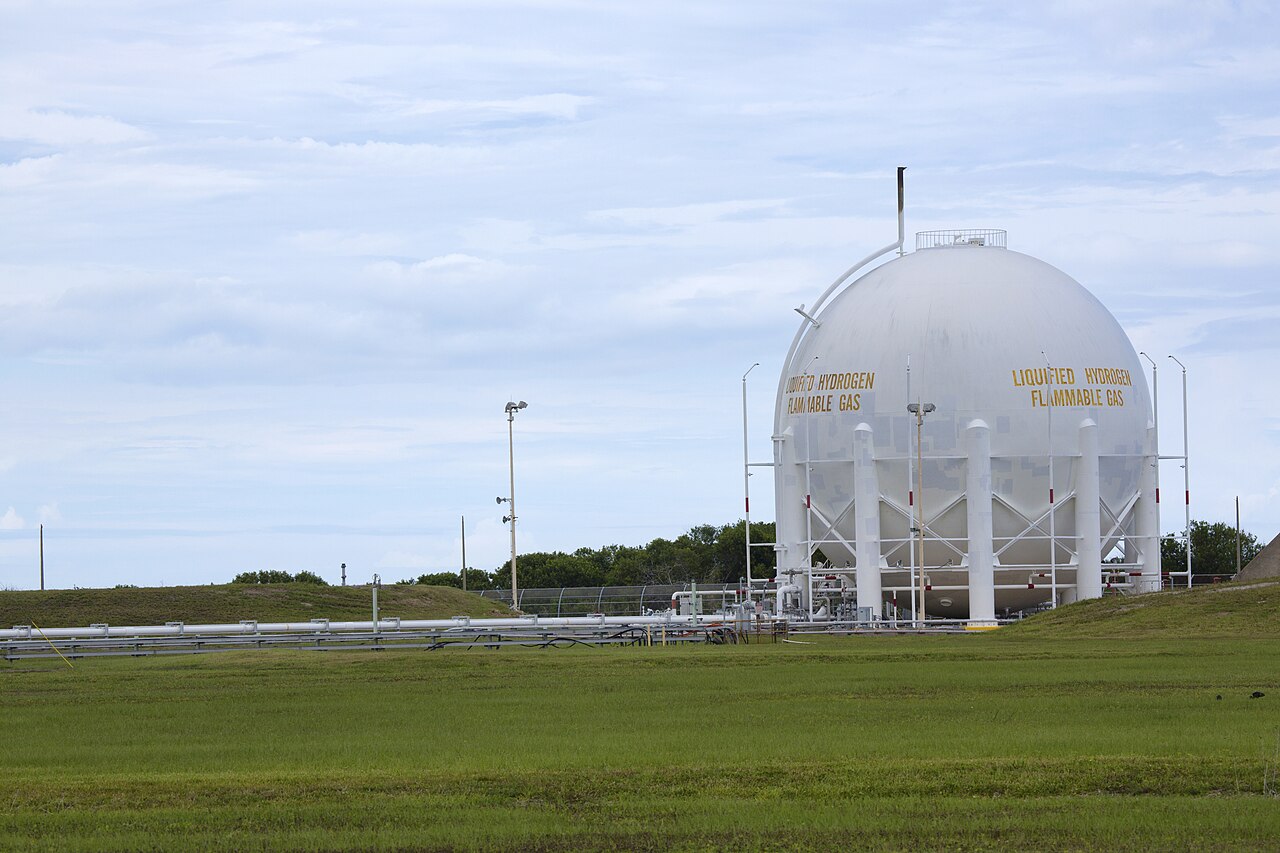
Image: TomFawls ( CC BY-SA 3.0 )

What it is
“Green” hydrogen is H₂ from water electrolysis powered by low-carbon electricity. The molecule is real and already used in oil refining and fertilizer from fossil routes (“grey” hydrogen). The green label is about the power source, not a new physics.
Problem it targets
Some industries need a molecule, not just an electron: ammonia, direct-reduced iron, and some long-haul fuels. Hydrogen can store energy across seasons. It is a poor way to do a job electricity can do directly.
How it works
Electrolyzers split water. Compression, liquefaction, or conversion to ammonia then spends more energy. IEA and academic reviews typically find large losses on the path from renewable electricity to a hydrogen car or boiler: often well over half the original energy. That is why heat pumps and batteries win those uses on physics, not fashion.
Status and players
IEA Hydrogen tracking; electrolyzer makers (Nel, ITM, Thyssenkrupp Nucera, and others); industrial offtakers in steel and ammonia. Many “hydrogen valleys” are still grant-dependent.
Risks and limits
Leakage (hydrogen is an indirect greenhouse gas), blending hype in gas grids, and using dirty electricity to make “green” fuel. Count tonnes produced from additional renewables, not press releases.
Sources
IEA hydrogen topic page and Global Hydrogen Review. Count tonnes from additional low-carbon power, not press releases.