

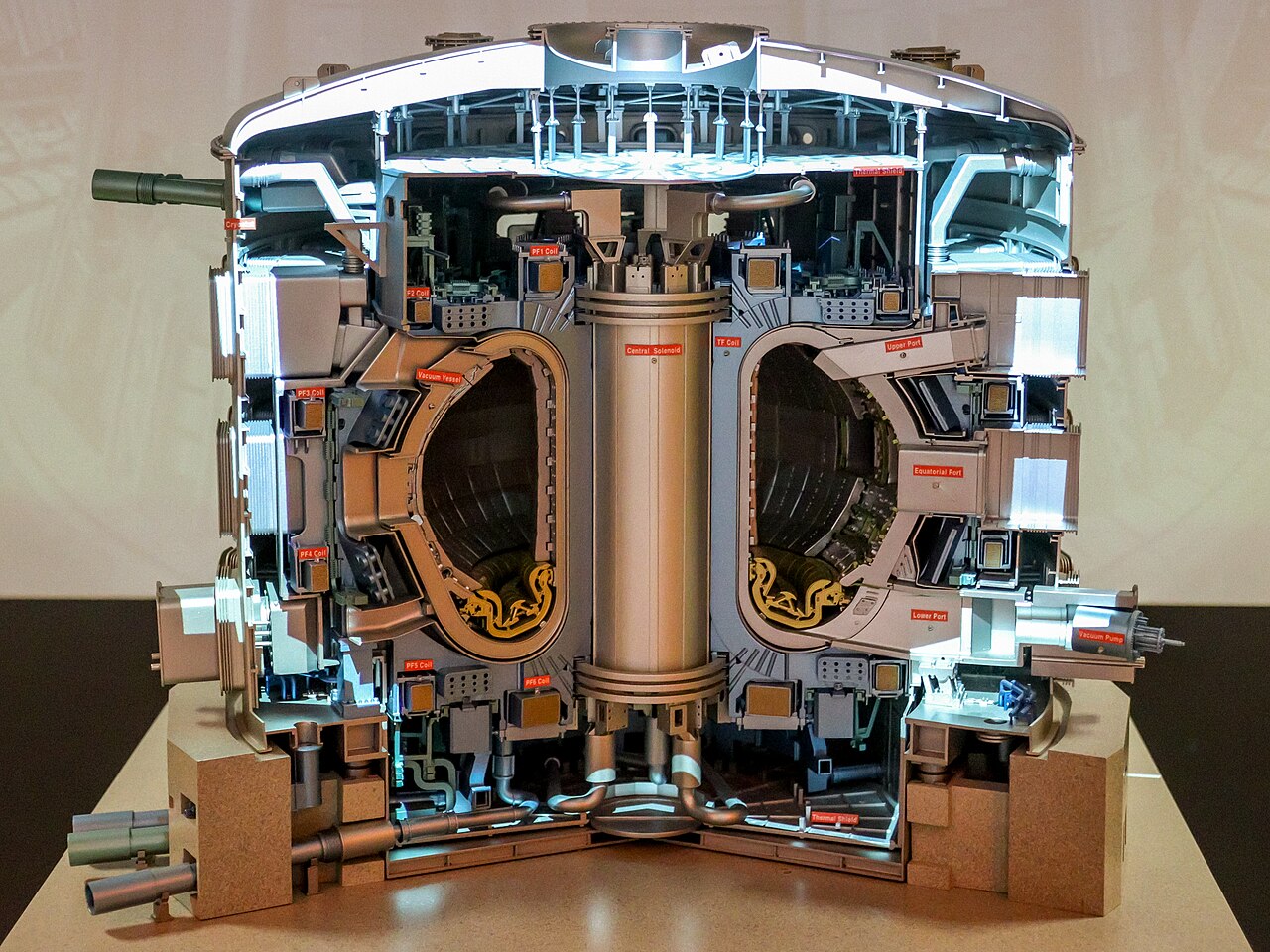
Image: Johannes Reimer ( CC BY 4.0 )

What it is
Commonwealth Fusion Systems is assembling SPARC, a high-field tokamak at Devens, Massachusetts, meant to show net fusion energy (Q>1: more fusion power than the heating power into the plasma). CFS’s August 2026 progress note said SPARC was almost 80 percent complete, with magnets going in and support systems already running. The company’s SPARC page still aims at Q>1 in 2027. SPARC will not sell electricity. The follow-on ARC plant is the grid design; CFS has told DOE reviewers it is aiming at about 400 MW net electric in the early 2030s. Those are company targets.
Problem it targets
Fusion promises dense, low-carbon heat if a plant can run, breed tritium, and survive neutrons. No private or public tokamak has yet put commercial power on a grid.
How it works
High-temperature superconducting magnets make a smaller tokamak than ITER’s. Q>1 is plasma gain, not wall-plug plant gain: magnets, cryogenics, and a turbine are extra. Confusing SPARC with a utility is the usual error.
Status and players
CFS; DOE Milestone-Based Fusion Development Program; MIT lineage. Neighbor cards: ITER (public science) and NIF (inertial ignition). Private fusion is not ITER and not an online utility.
Risks and limits
Schedule, tritium, materials, and cost. An 80 percent assembly claim is not first plasma. Q>1 in 2027 is a target. Even success leaves ARC to build.
Sources
CFS SPARC progress blog (~80% assembled) and SPARC page (Q>1 target 2027). Plasma gain is not a power station.