

What it is
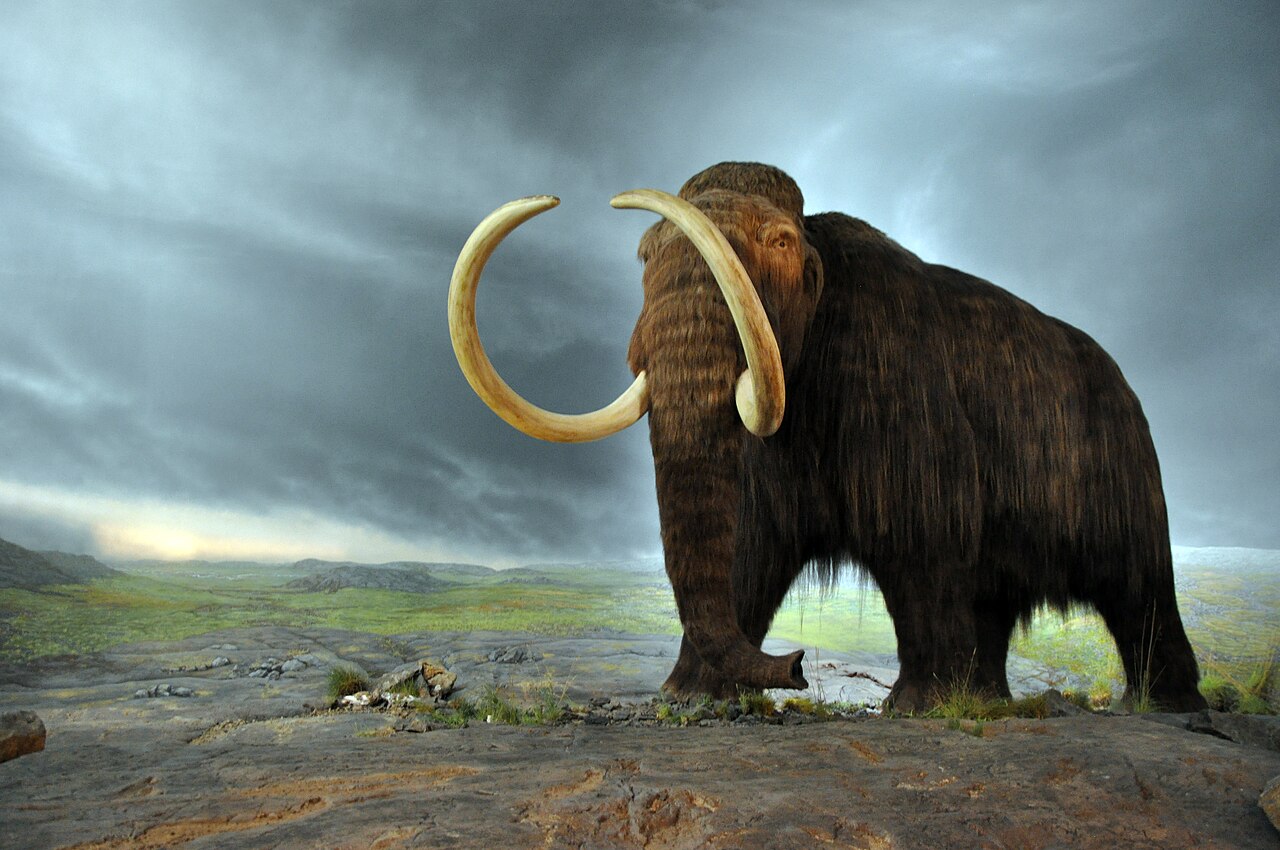
The woolly mammoth was a cold-steppe elephant with long hair and curved tusks. It is extinct. Its closest living relative is the Asian elephant. Ancient DNA and dated bones give a clearer timeline than most Ice Age mammals.
Range
The mammoth steppe of northern Eurasia and North America. As the Ice Age ended, habitable grassland shrank northward and fragmented.
What happened
Mainland populations disappeared around 10,000-12,000 years ago, in the same window as other Holarctic megafauna. A dwarfed population on Wrangel Island survived until about 4,000 years ago (around 1650 BCE). Warming that replaced steppe with wet tundra and forest is a major, well-supported cause. Human hunting is also widely cited, and the mix almost certainly varied by region. Claiming a single cause overstates the evidence.
When / status
Extinct. Mainland: end-Pleistocene. Last island holdouts: mid-Holocene, about 4,000 years ago.
Human role
Hunting is a widely cited contributing cause alongside climate-driven habitat loss: not a proven sole cause.
Sources
Dated Wrangel remains (Vartanyan and later ancient-DNA studies); reviews of Late Pleistocene megafauna extinction.