

What it is
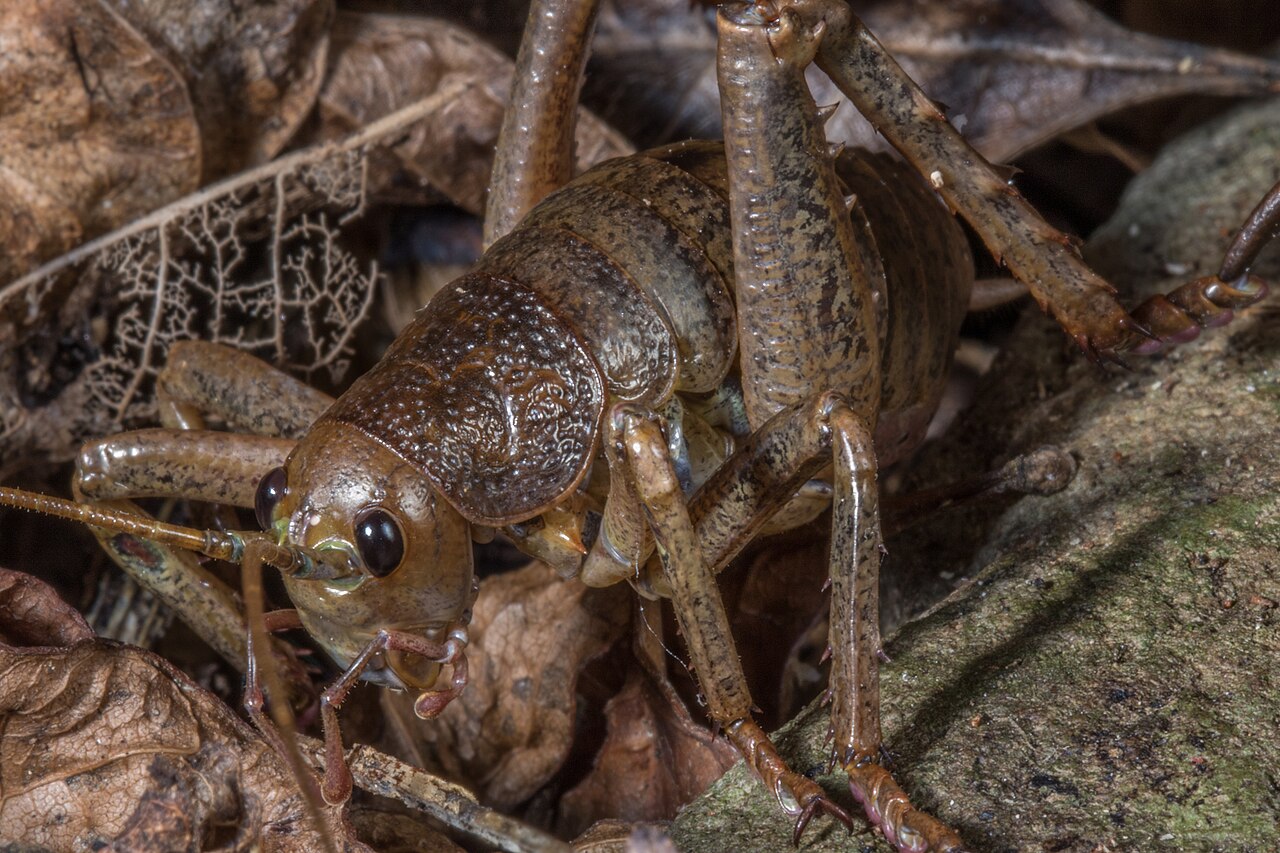
Deinacrida heteracantha: a giant flightless orthopteran, the wētāpunga. Adult females average about 40 g; the heaviest recorded gravid female reached about 71 g. Nocturnal leaf-eaters that also move seeds in nutrient-rich droppings.
Range
Once reduced to Hauturu-o-Toi / Little Barrier Island. Captive-bred animals now also live on other predator-free islands, including Motuora, Tiritiri Matangi, and sites in the Bay of Islands.
What happened
After Pacific rats were cleared from Little Barrier, the Department of Conservation and Auckland Zoo built captive lines and moved animals to Motuora, Tiritiri Matangi, Bay of Islands sites, and other pest-free islands. It is a managed comeback that still depends on predator-free habitat.
When / status
New Zealand Threat Classification System: Nationally Increasing, still under the Threatened umbrella and still conservation-dependent. Population on the order of 1,000-5,000 mature individuals, on multiple predator-free islands; the assessment reads the trend as an increase of more than 10 percent, and notes also record more than 30 percent. Auckland Zoo (2020): more than 5,000 released; the Bay of Islands release opened islands 6-8 in that island set.
Human role
Introduced predators reduced the wētā to one island. Rat clearance, captive breeding, and island releases by the Department of Conservation and Auckland Zoo put animals back: only where predators stay out.
Sources
NZTCS assessment (Deinacrida heteracantha); Department of Conservation Wetapunga page and giant wētā translocation guidance; Auckland Zoo, 2020.