

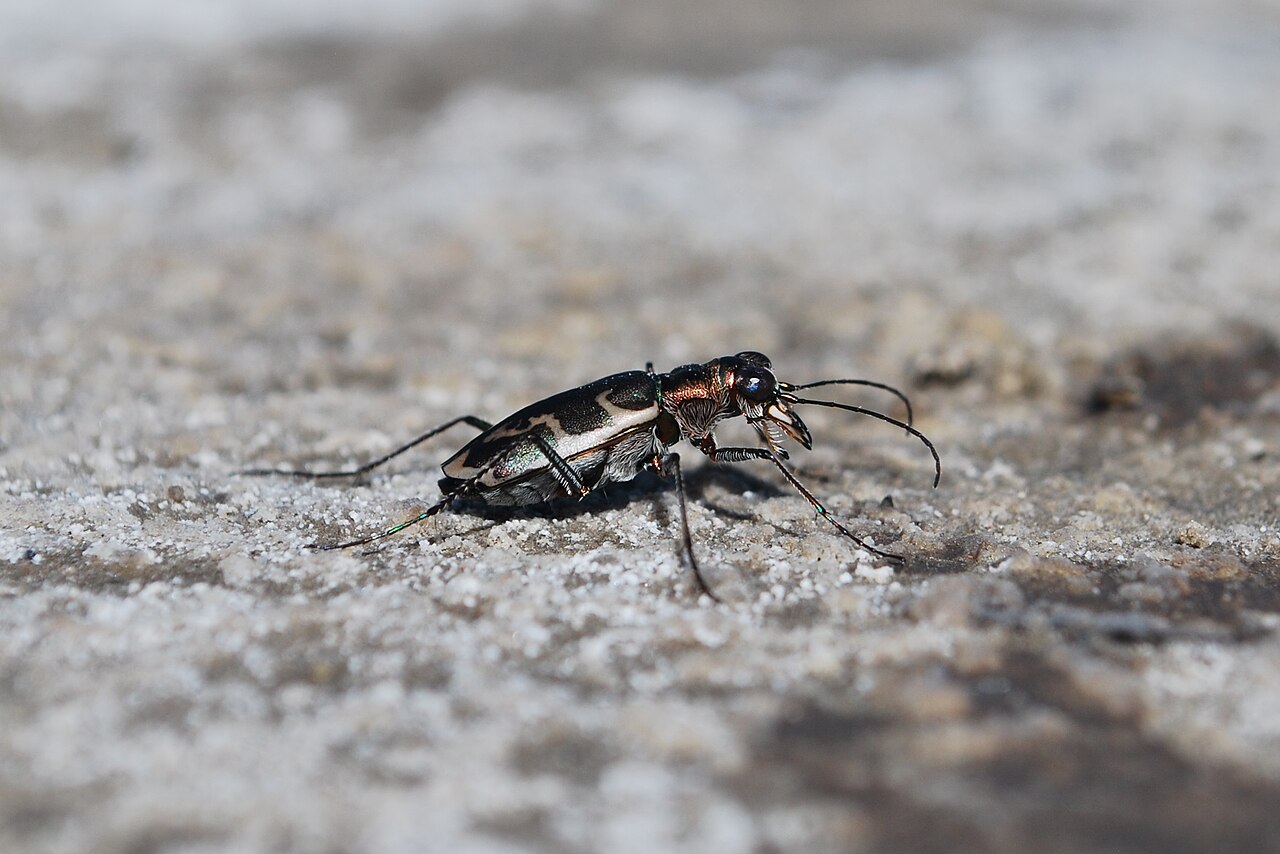

What it is
A small, fast predatory beetle of bare saline mud along Salt Creek and Little Salt Creek. Larvae dig burrows in the salt crust; adults hunt on open flats. Taxonomy sometimes uses Ellipsoptera nevadica lincolniana; the U.S. Fish and Wildlife Service page still leads with Cicindela nevadica lincolniana.
Range
Eastern Nebraska’s saline wetlands, on remnant salt flats along Salt Creek and Little Salt Creek north of Lincoln. It is not a carrion beetle and it is not a widespread tiger beetle.
What happened
Levees, channelization, and the growth of Lincoln erased most of the salt marsh, leaving one fragile metapopulation. Nebraska Game and Parks survey synthesis: six populations in 1991, and three of those later lost. Every recent count is from a handful of remnant sites.
When / status
Endangered under the U.S. Endangered Species Act. Intensive surveys since 1991 include a high of 777 adults (2002), a low of 153 (2005), and 374 counted in 2012. The Service species page and the signed recovery plan document the listing and the recovery outline.
Human role
Drainage, levees, channelization, and city growth around Lincoln removed most of the saline mudflats the beetle hunts and burrows in.
Sources
U.S. Fish and Wildlife Service species page; Nebraska Game and Parks; USFWS Salt Creek tiger beetle recovery plan; University of Nebraska-Lincoln visual population estimates.