

What it is
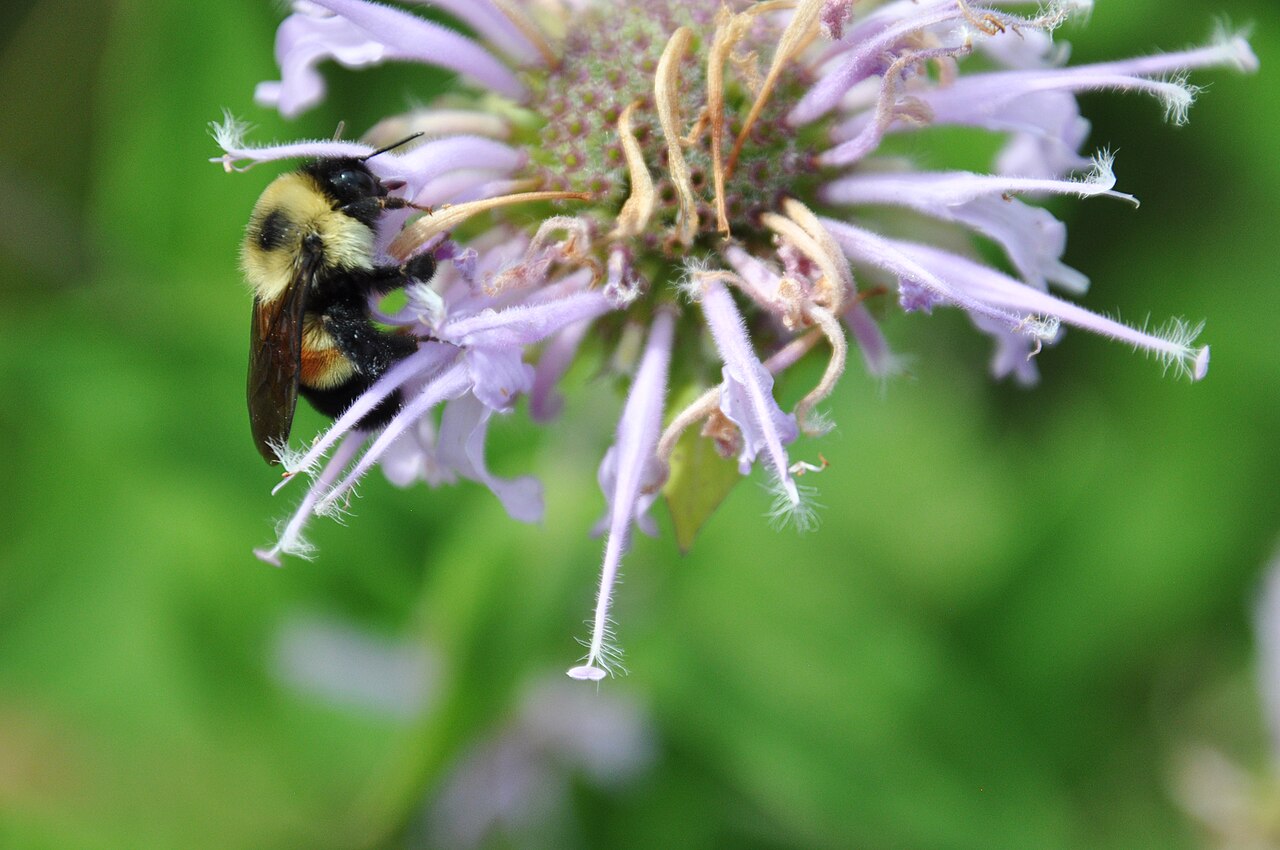
One of roughly 21 eastern U.S. bumble bee species: a pollen-storing social bee whose workers show a distinctive rusty patch on the abdomen (hence the name). It is Bombus affinis, not Franklin’s bumble bee (Bombus franklini).
Range
Historical range from Georgia north into southern Quebec and Ontario and west toward the Dakotas. Since about 2000 the U.S. Fish and Wildlife Service overview confirms it from far fewer jurisdictions: about 13 U.S. states and one Canadian province.
What happened
Pathogens, pesticides, habitat loss, competition with managed bees, and climate stress stacked into a range collapse. Franklin’s bumble bee is a different species with a tiny Oregon-California range. This bee was once common across the eastern half of the continent.
When / status
U.S. Fish and Wildlife Service: federally Endangered (2017); recovery plan finalized 2021. Recent records cover about 13 U.S. states and one Canadian province.
Human role
Pesticides, pathogens from managed bees, lost habitat, and a changed climate cut a once-common eastern bee down to a fraction of its map. The 2017 Endangered Species Act listing and the 2021 recovery plan are the federal response.
Sources
U.S. Fish and Wildlife Service: rusty patched bumble bee (Bombus affinis).