

What it is
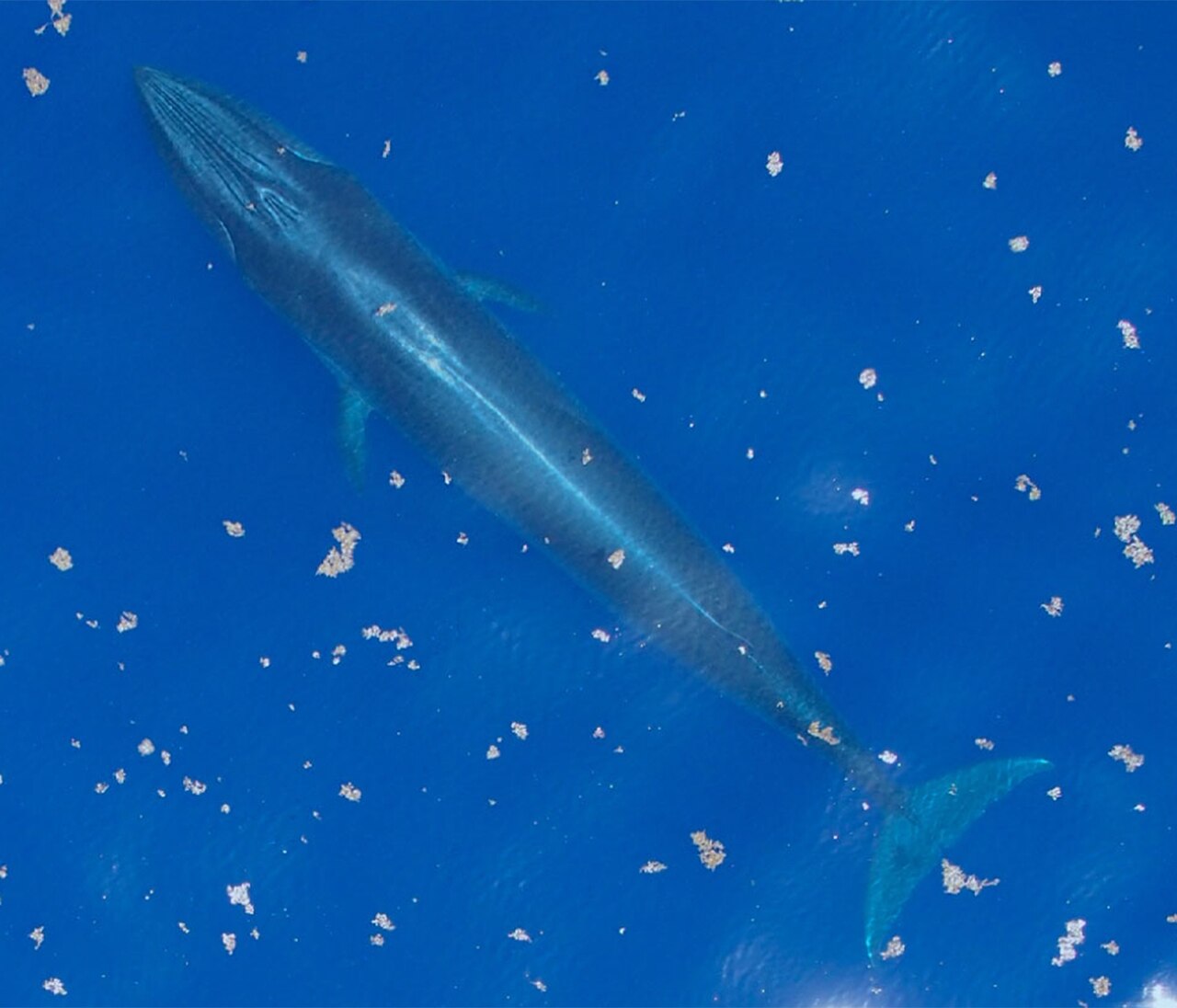
Rice’s whale is a recently described baleen whale (Balaenoptera ricei, 2021), split from Bryde’s whale. IUCN lists it as Critically Endangered. NOAA’s stock assessment still uses summer 2017 and 2018 oceanic surveys: best abundance 51 (CV 0.50), minimum 34. Newer survey data are being analysed; do not invent a higher total.
Range
A narrow strip of the northeastern Gulf of Mexico, mainly off the Florida panhandle between roughly the 100- and 400-metre isobaths. Occasional records farther west do not make a second population.
What happened
Ship strikes, oil-and-gas noise and spills (including Deepwater Horizon), and a tiny gene pool are the documented pressures. The species was hiding in plain sight as “Gulf Bryde’s whales” until genetics and skulls separated it.
When / status
Critically Endangered now. On the order of fifty animals.
Human role
Industrial use of a small, fixed feeding ground.
Sources
NOAA Rice’s whale stock assessment (51, 2017-18 surveys); IUCN Red List (Balaenoptera ricei, CR); Rosel et al. 2021 description.