

What it is
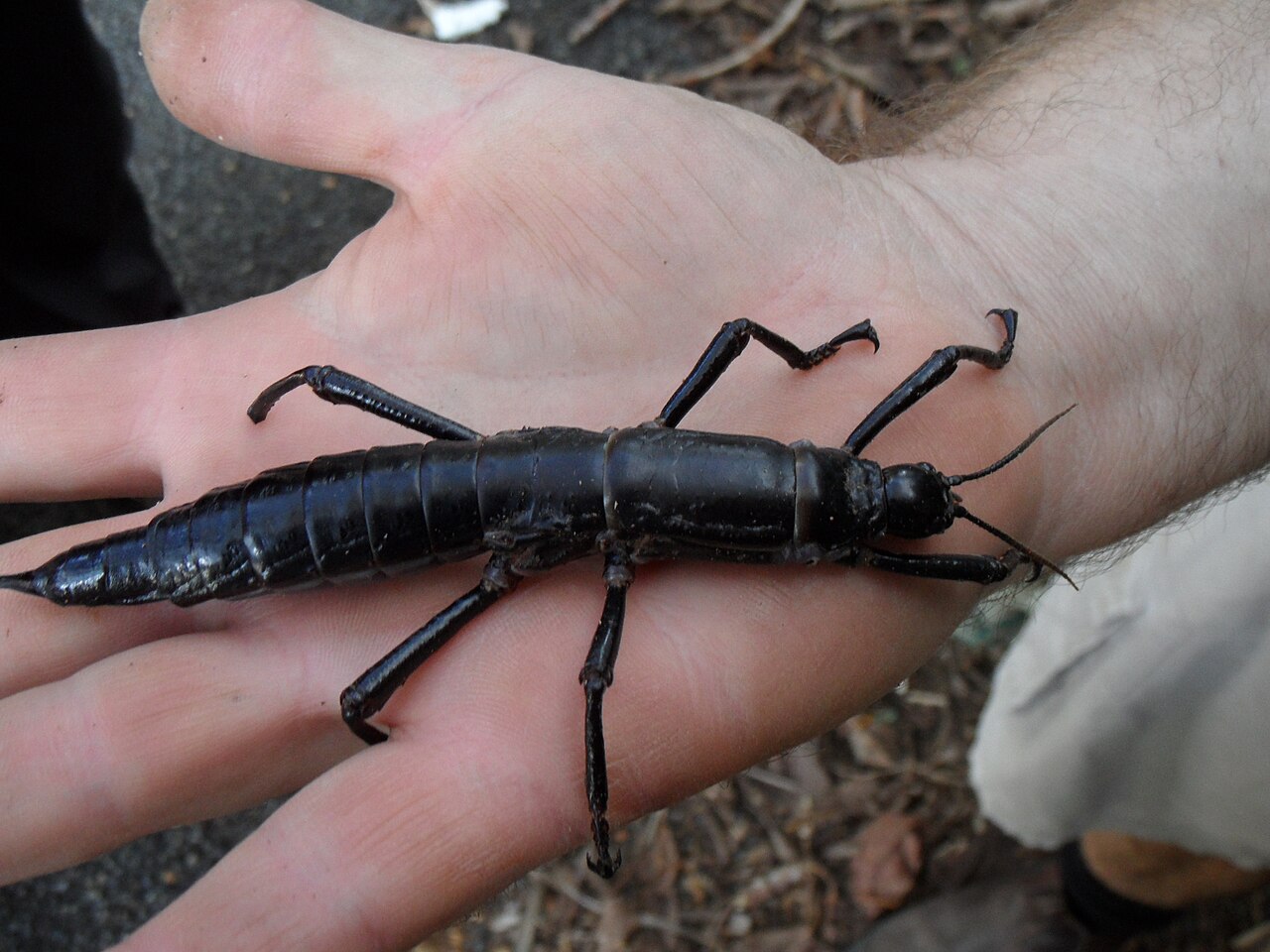
The Lord Howe Island stick insect (Dryococelus australis), also called the tree lobster, is a large, flightless stick insect once common on Lord Howe Island. IUCN lists it as Critically Endangered under criterion D: a very small wild population.
Range
Lord Howe Island until black rats arrived with the wreck of the SS Makambo in 1918. The wild remnant lives on Ball’s Pyramid, a sea stack about 23 km southeast of the island. Captive colonies now also exist for insurance.
What happened
After 1918 the insect disappeared from Lord Howe and was written off as extinct. In 2001 climbers found a few animals under a single shrub on Ball’s Pyramid. Captive breeding followed. The wild count remains tiny; rats, not a changing climate, were the original cause.
When / status
Critically Endangered now (IUCN CR D). Extinct on Lord Howe itself; surviving on Ball’s Pyramid and in captivity.
Human role
An accidental rat invasion erased the island population. People later found the remnant and now keep captive stock.
Sources
IUCN Red List (Dryococelus australis, CR D).