

What it is
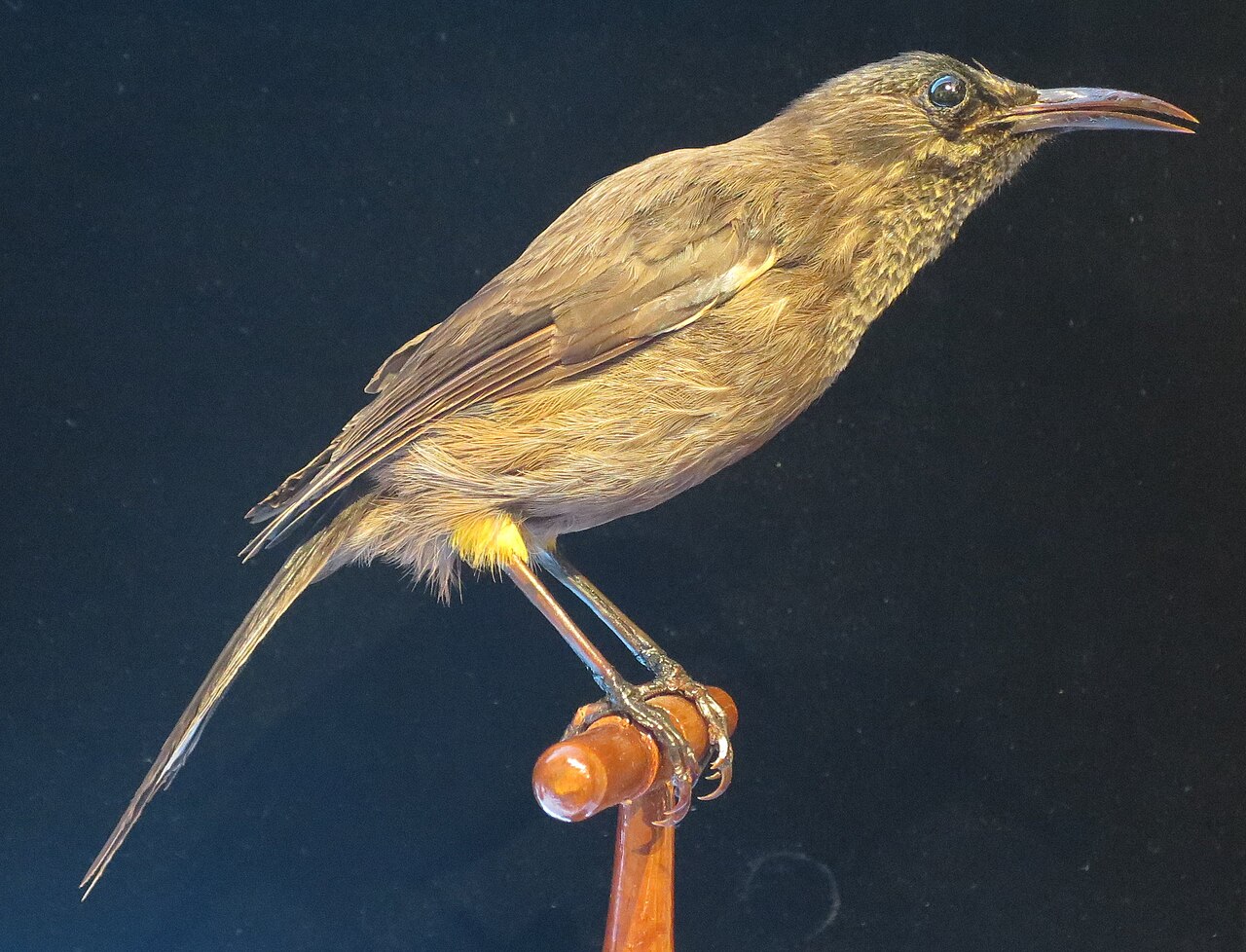
The Kauaʻi ʻōʻō (Moho braccatus) was a forest honeyeater endemic to Kauaʻi, and the last surviving species of Mohoidae: an entire songbird family now gone. IUCN lists it as Extinct. It was not a Hawaiian honeycreeper.
Range
Kauaʻi only, once widespread in native forest, later confined to the Alakaʻi Plateau.
What happened
Polynesian rats, later cats, pigs, and especially mosquitoes carrying avian malaria and pox, plus logging, emptied the lowlands. The last confirmed sighting was in 1985; the last recording, a male in 1987. Surveys through 2000 found none. The U.S. Fish and Wildlife Service declared it extinct and delisted it in 2023.
When / status
Extinct. Last recording 1987; IUCN EX; U.S. ESA delisting 2023.
Human role
Introduced predators and mosquito-borne disease in a forest already cut and fragmented.
Sources
IUCN Red List (Moho braccatus, EX); USFWS 2023 delisting; Alakaʻi survey record, 1987.