

What it is
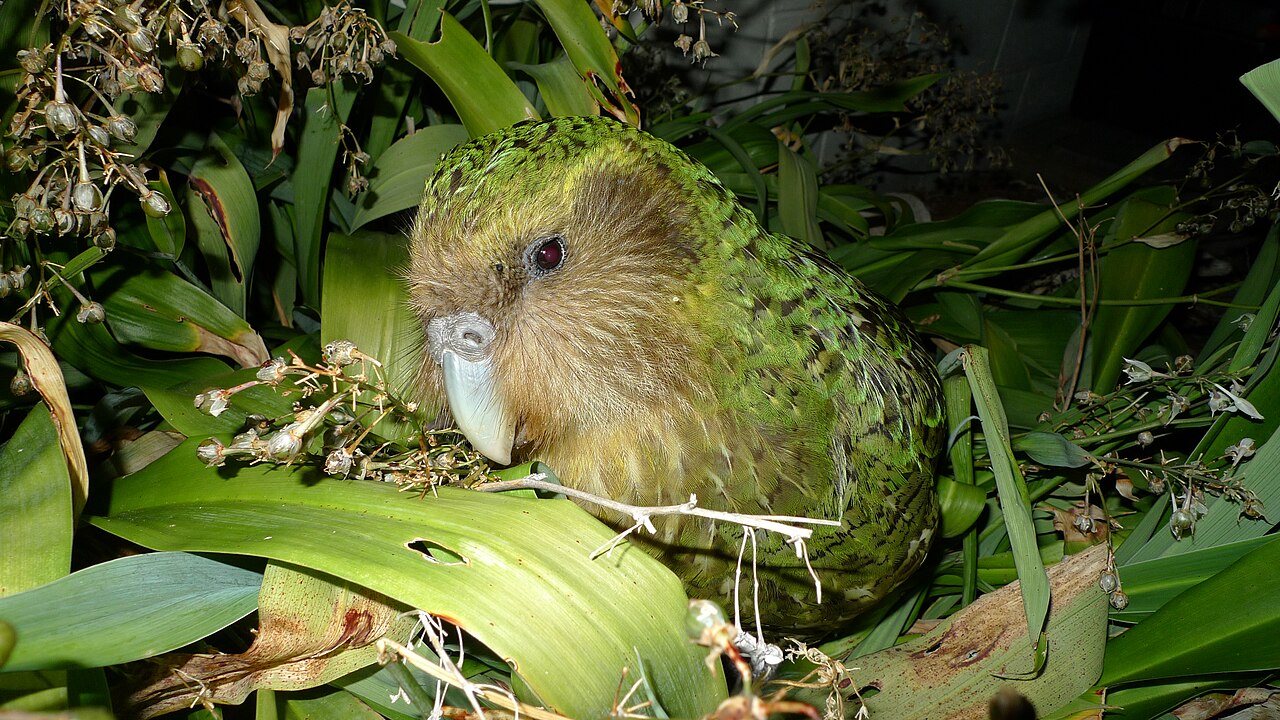
The kākāpō is the world’s heaviest parrot, nocturnal and flightless. The International Union for Conservation of Nature lists it as Critically Endangered. New Zealand’s Department of Conservation added 90 independent 2026 chicks on 1 September 2026, taking the official tally from 235 to 325, a recovery-era high, from 51 birds when the modern programme began in 1995. Every bird is named and tagged. The population is still tiny and island-bound.
Range
Predator-free islands (Whenua Hou, Pukenui, Te Kākahu) plus a fenced mainland trial at Maungatautari. Once widespread on both main islands.
What happened
Māori hunting and, later, cats, stoats, and rats erased the mainland bird. Intensive management, with nest minding, supplementary food, and genetic pairing, produced the 2026 jump. Islands are filling up.
When / status
Critically Endangered now. The birds are counted and managed, and one predator incursion could still undo the work.
Human role
Introduced mammals caused the crash; people now keep every remaining bird alive by hand.
Sources
New Zealand Department of Conservation media release, 1 September 2026 (325 birds); International Union for Conservation of Nature Red List (Strigops habroptilus, Critically Endangered).