

What it is
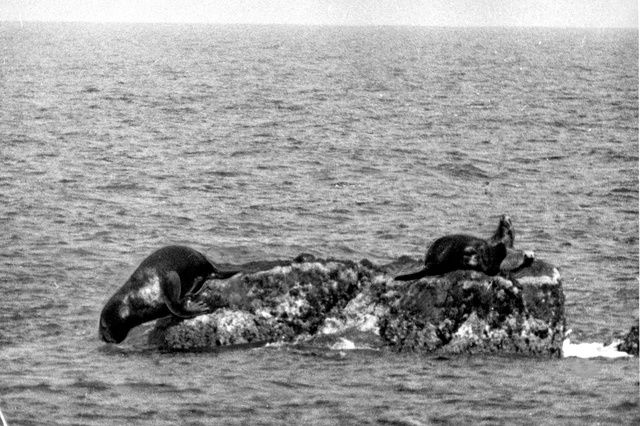
The Japanese sea lion (Zalophus japonicus) was an eared seal of the northwest Pacific, once treated as a subspecies of the California sea lion. IUCN lists it as Extinct. Adult males were large, dark animals of rocky breeding islands.
Range
Coasts of the Japanese archipelago, the Korean Peninsula, and nearby islands, including Takeshima/Dokdo (Liancourt Rocks).
What happened
Commercial hunting for oil, skins, and whiskers cut harvests from thousands a year around 1900 to a few dozen by the 1930s. A survey in the 1950s found only about 50-60 animals on Takeshima. A 1974 capture off Hokkaido is often cited as the last record and is also disputed (possible misidentification). Unconfirmed later sightings were not accepted. IUCN assesses the species as Extinct.
When / status
Extinct. Last widely accepted colony: 1950s. Possible last record 1974.
Human role
Industrial hunting: a twentieth-century marine-mammal extinction.
Sources
IUCN Red List (Zalophus japonicus, EX); Japanese harvest statistics; 1950s Takeshima counts.