

What it is
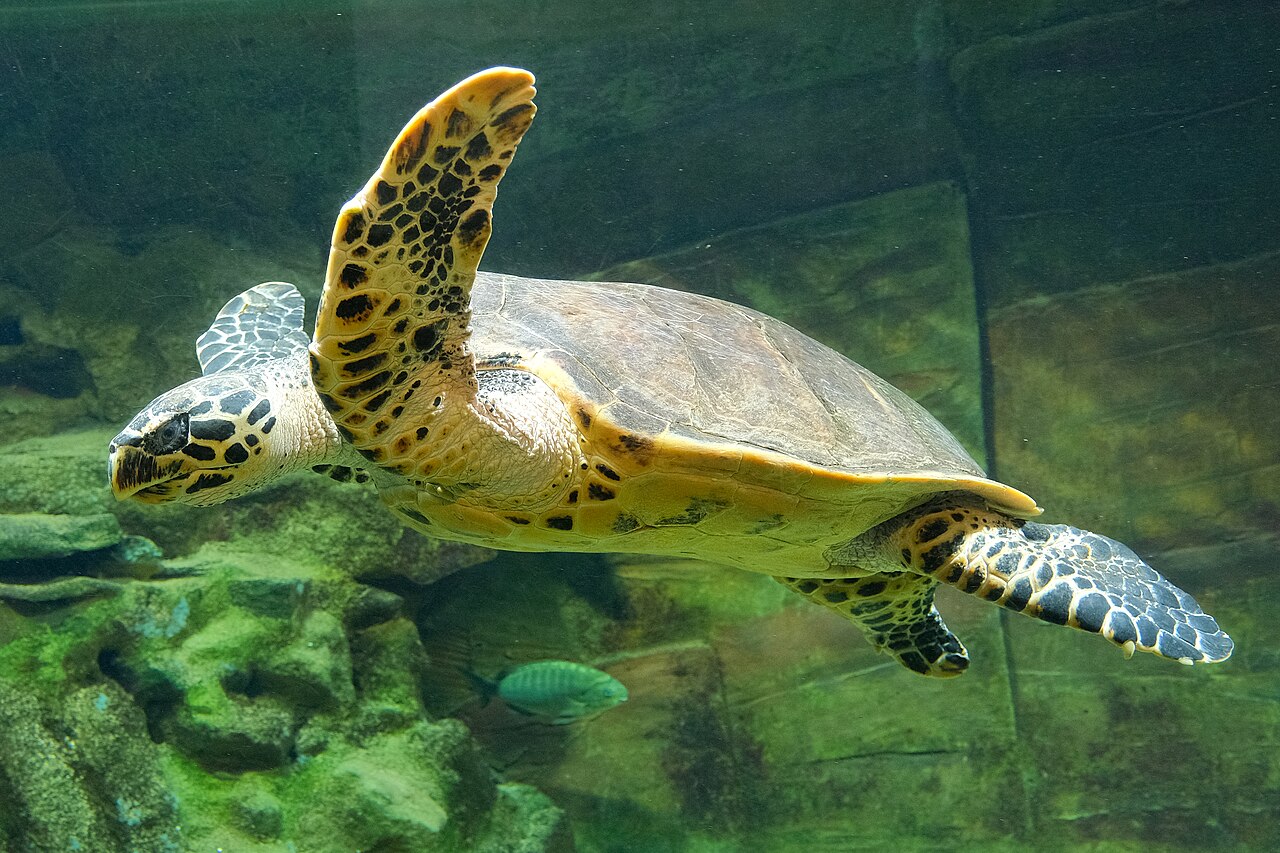
The hawksbill is a tropical sea turtle with a bird-like beak and overlapping shell scutes. Those scutes are the source of traditional tortoiseshell. IUCN lists the species as Critically Endangered. The last full assessment (2008) estimated a decline of more than 80 percent over three generations; the listing has not been relaxed.
Range
Coral reefs and tropical coasts of the Atlantic, Indian, and Pacific Oceans. Nesting is on sandy beaches; feeding is on sponges on reefs.
What happened
People have taken hawksbills for shell, eggs, and meat for centuries. Modern fisheries add bycatch, and damaged reefs remove food. CITES has banned international tortoiseshell trade since 1977 for this species, but illegal trade and local harvest continue.
When / status
Critically Endangered now, primarily because of people.
Human role
The shell trade, egg harvest, and fishing gear are the main causes.
Sources
IUCN Red List (Eretmochelys imbricata, CR, 2008 assessment still current); CITES Appendix I. Russian name: бисса.