

What it is
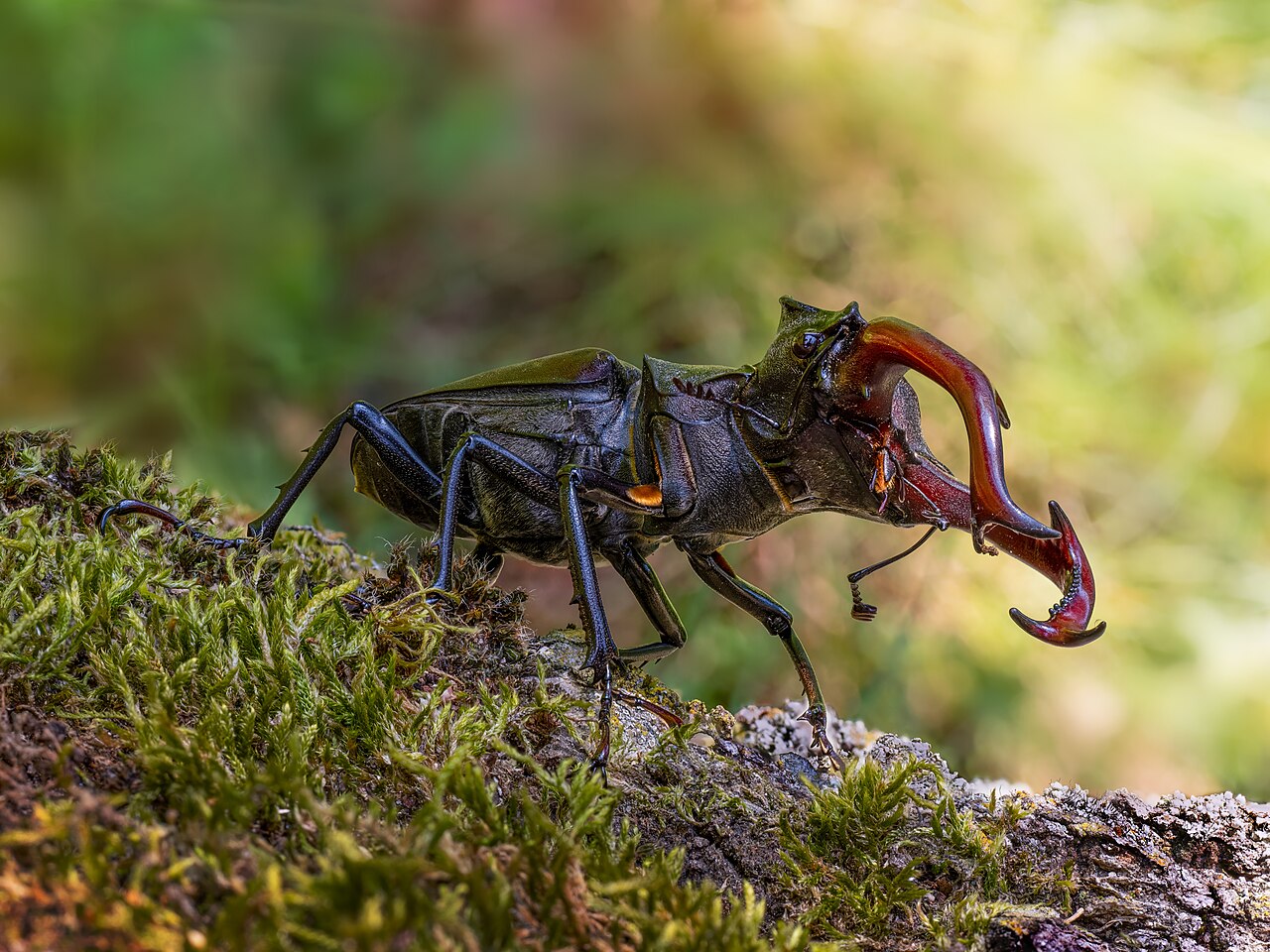
A big lucanid (Lucanus cervus) whose larvae spend years in moist, decaying broadleaf wood: stumps, buried roots, veteran trees. Males carry the famous “antlers”; females lack them. It is a deadwood specialist, not a carrion beetle.
Range
Europe. Breeding needs continuity of moist, decaying broadleaf wood. Adults wander, so a sighting is not the same as a breeding stump.
What happened
Rising records from citizen science do not equal more breeding sites: many sightings are wanderers. The Red List treats continuing loss of deadwood continuity as the real signal. Habitats Directive Article 17 reporting has shown unfavourable status in a substantial share of Member States across successive cycles.
When / status
IUCN Europe / EU27 (2023): Near Threatened under B2b(ii,iii). Larval development typically takes 4-5 years, so a gap in deadwood bites for more than a decade.
Human role
People remove stumps, fell veteran broadleaf trees, and break the continuity of rotting wood the larvae need. The beetle is a Habitats Directive flagship for that wood.
Sources
IUCN Red List (Lucanus cervus, Europe / EU27, Near Threatened, 2023); EUNIS; JNCC UK Habitats Directive Article 17 S1083 (2019).