

What it is
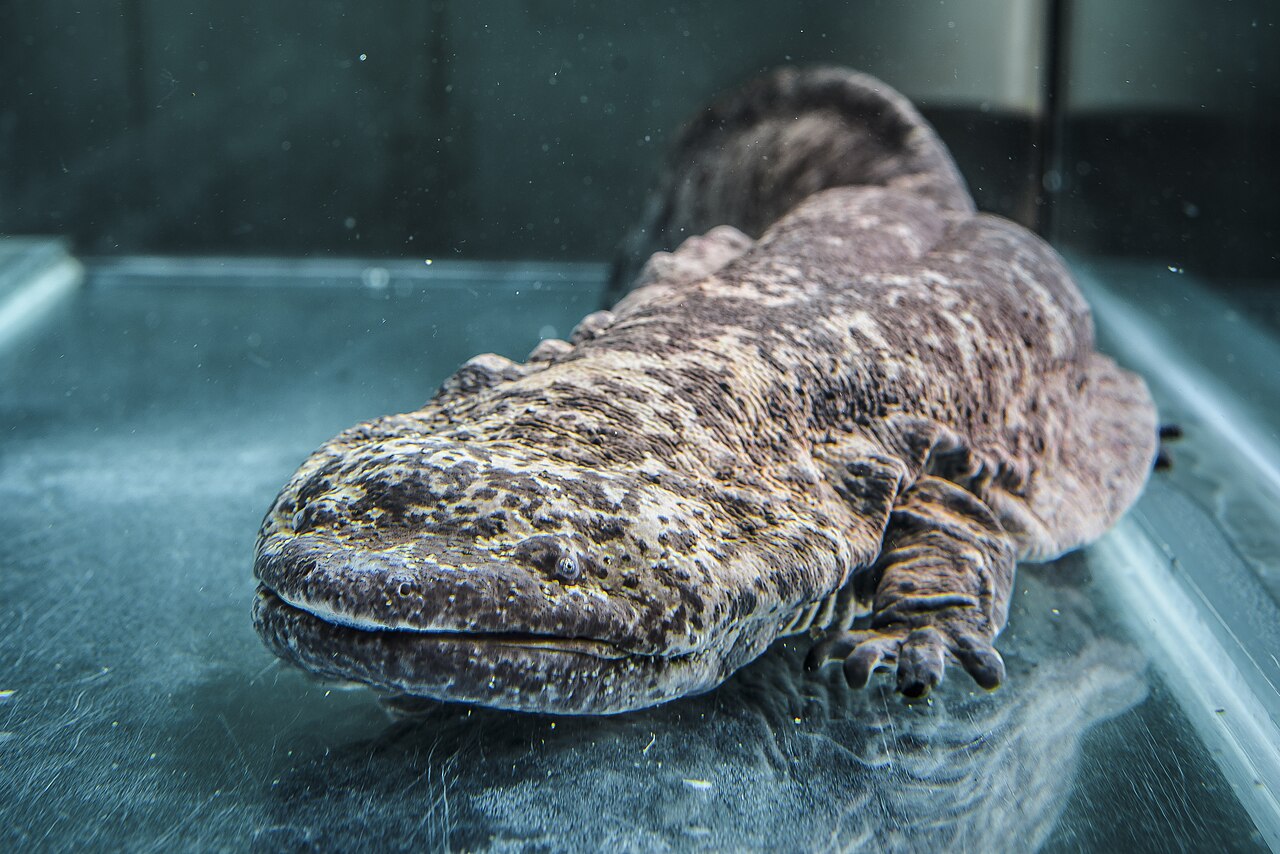
Chinese giant salamanders are the world’s largest living amphibians. They were long treated as one species, Andrias davidianus. Genetics now show a complex: named forms include A. davidianus, A. sligoi (the South China giant salamander), A. jiangxiensis, and A. cheni, plus further unnamed clades (Yan et al. 2018; Turvey and later reviews). IUCN still assesses A. davidianus as Critically Endangered; A. sligoi has a separate CR listing. Wild numbers are not a single honest total.
Range
Hill streams of central, southern, and eastern China, historically in the Yellow, Yangtze, and Pearl basins. Farm stock has been moved far outside native drainages.
What happened
A luxury-food farming boom from the 2000s vacuumed wild animals for brood stock. A 2013-16 survey of 97 likely sites found salamanders at only four, and those may have been farm escapees (Turvey et al. 2018). Mass releases of farmed A. davidianus are homogenising wild gene pools. “Millions on farms” is not wild recovery.
When / status
Critically Endangered in the wild now. Taxonomy is still being split.
Human role
Food markets and restocking with the wrong lineage: overharvest plus genetic pollution.
Sources
IUCN Red List (Andrias davidianus, CR; A. sligoi, CR); Turvey et al. 2018; Yan et al. 2018; ZSL Chinese giant salamander action plan.