
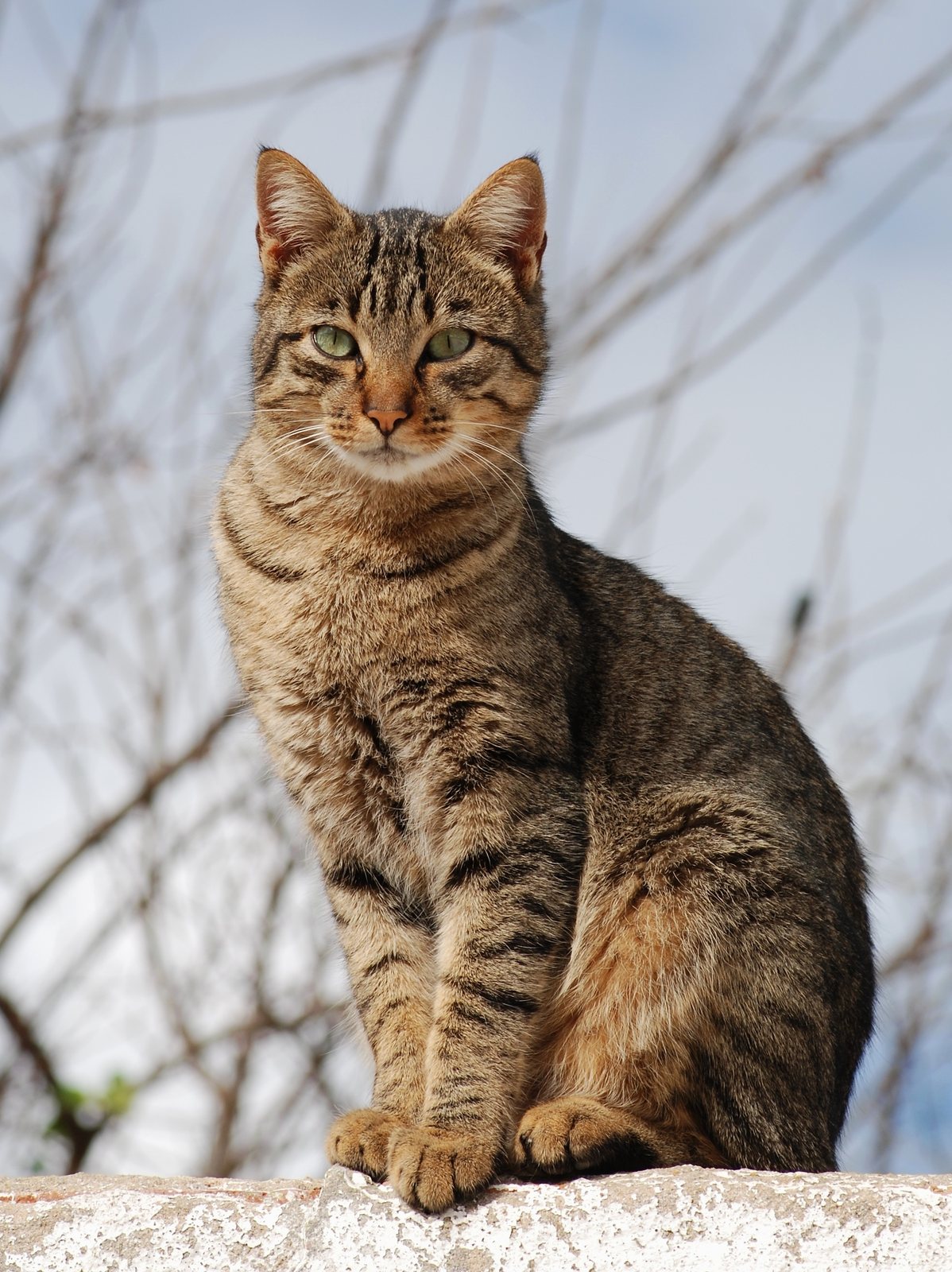
A young tabby cat in Portugal.
Photo: Alvesgaspar, Wikimedia Commons (CC BY-SA 3.0)

What it is
The domestic cat (Felis catus) lives in homes and on farms as a companion and as a guard against pests. It descends from the Near Eastern wildcat (Felis silvestris lybica).
Range
People have carried cats all over the world, and the domestic cat may be the world's most numerous pet. House cats, farm cats, pedigree breeds and free-roaming town cats all descend from the same Near Eastern ancestors.
What happened
A genetic study of 979 domestic cats and wildcats (Driscoll and colleagues, Science, 2007) found that cats were domesticated in the Near East, probably as farming villages grew in the Fertile Crescent, and that they descend from at least five founders. Ancient DNA (Ottoni and colleagues, Nature Ecology & Evolution, 2017) shows that both Near Eastern and Egyptian wildcat populations contributed to the domestic cat: the spread began in the Neolithic in the Near East and gained pace in the Classical period, when Egyptian cats spread throughout the Old World along sea and land trade routes. One coat-colour variant became common only after the Middle Ages, which suggests that people began breeding cats for their looks later than most other domestic animals.
When / status
A living domesticate, kept as a companion animal worldwide.
Human role
Wildcats probably first settled near people by hunting the rodents that infested the grain stores of early farmers. People later carried cats on ships and along trade roads across the Old World.