

What it is
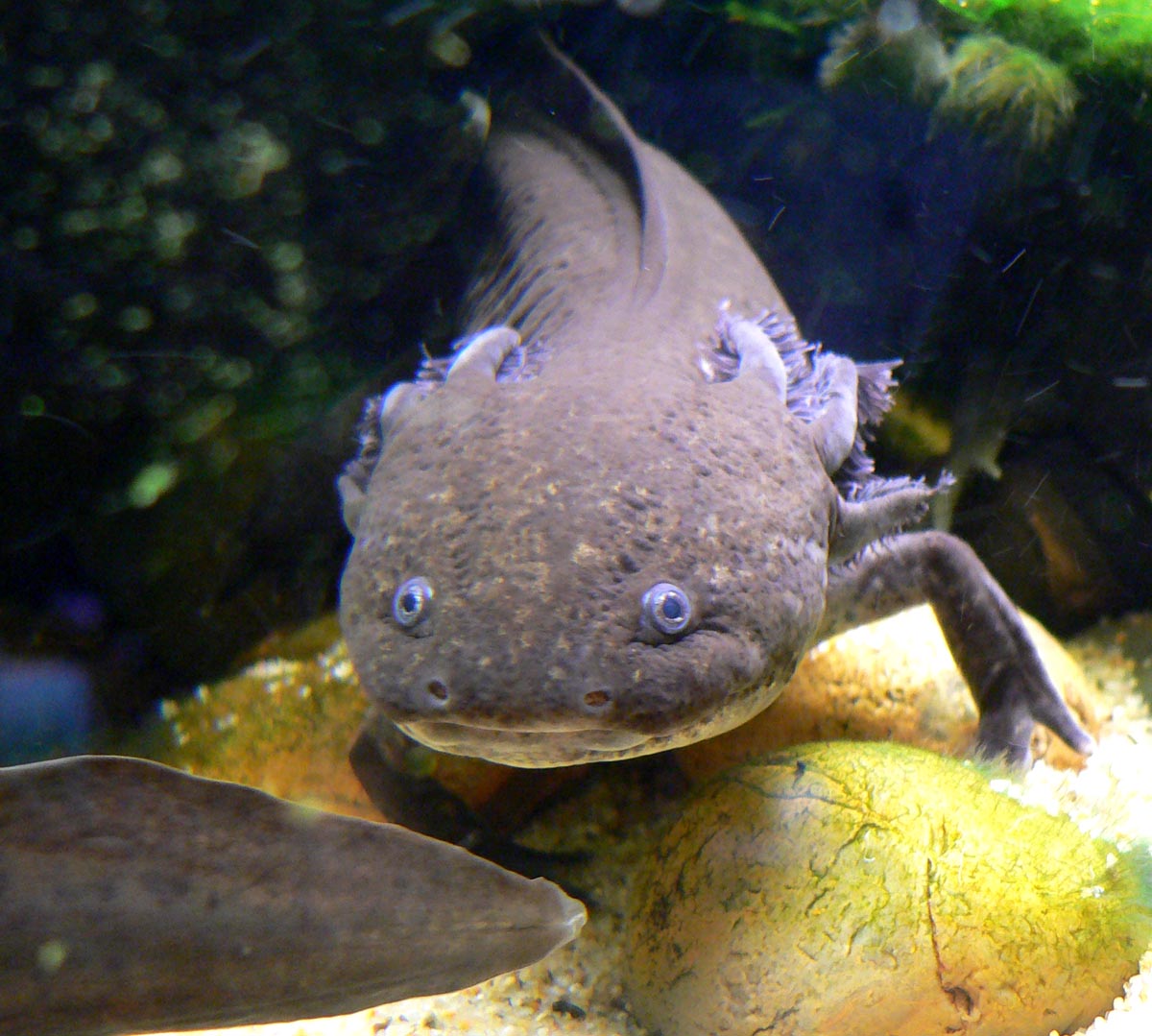
The axolotl is a paedomorphic salamander: it keeps larval gills and lives in water as an adult. IUCN lists it as Critically Endangered. Wild animals survive only in remnant canals of Xochimilco (and unstable scraps of former lakes). Density estimates fell from about 6,000 per km² in 1998 to about 35 per km² by 2014. A UNAM census in 2024-25 caught none in nets; environmental DNA still found the species. IUCN’s assessment band is tens to about a thousand mature wild animals: not a precise count. Captive pet and lab stocks are huge and genetically mixed; they are not the wild population.
Range
High-altitude canals and chinampa waterways on the south edge of Mexico City. The old lake system has been drained.
What happened
Drainage, sewage, pesticides, and introduced carp and tilapia wrecked the canals. Chinampa-refuge projects try to fence out the fish. A pet shop full of pink axolotls is not a recovered species.
When / status
Critically Endangered in the wild now.
Human role
We drained and polluted the only home, then bred the animal as a curiosity.
Sources
IUCN Red List (Ambystoma mexicanum, CR); Zambrano / UNAM density series; UNAM-CI Xochimilco census 2024-25.