

What it is
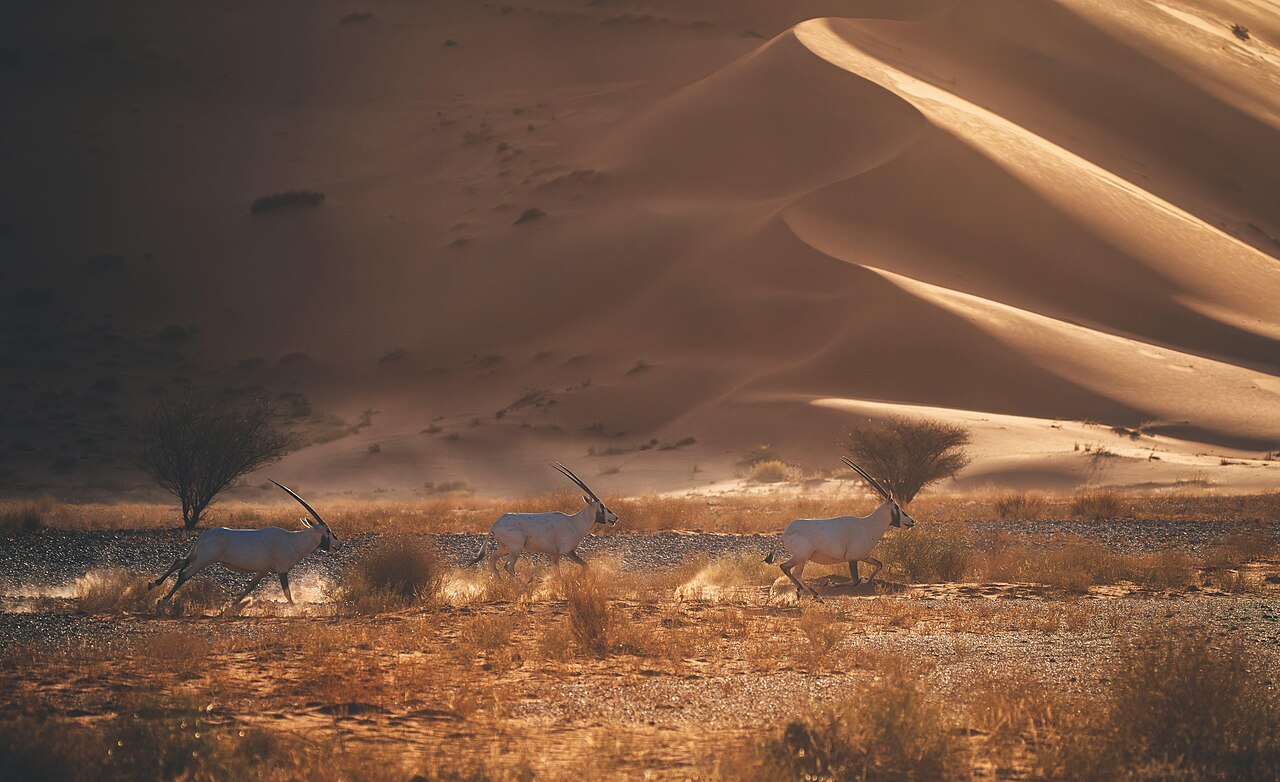
A white desert antelope with long, nearly straight horns: the smallest Oryx, native to Arabian Peninsula deserts and steppes.
Range
Arabian Peninsula deserts and steppes. Releases from 1980 onward put animals back in Oman, Saudi Arabia, Israel, the UAE, Jordan and related sites.
What happened
Motorised hunting emptied the last wild herds. Captive breeding and releases from 1980 onward returned animals from captive “world herds.” It is still threatened (habitat, illegal hunting, small wild totals), but it is a documented return from Extinct in the Wild, not a Critically Endangered leftover with no recovery path.
When / status
Declared extinct in the wild in the early 1970s. IUCN SSC Antelope Specialist Group fact sheet (assessment 2016): about 1,220 in the wild (850 mature) and 6,000-7,000 in captivity. Status: Vulnerable: the first species to move from Extinct in the Wild back to Vulnerable. IUCN news (2011) recorded the step down from a higher threat category. Royal Society Open Science (2021) reviews Oman reintroduction genetics.
Human role
Motorised hunting emptied the last wild herds. Captive breeding and releases from 1980 put the species back.
Sources
IUCN Red List (Oryx leucoryx, Vulnerable); IUCN, “A grain of hope in the desert” (2011); IUCN SSC Antelope Specialist Group fact sheet; Royal Society Open Science, 2021.