

What it is
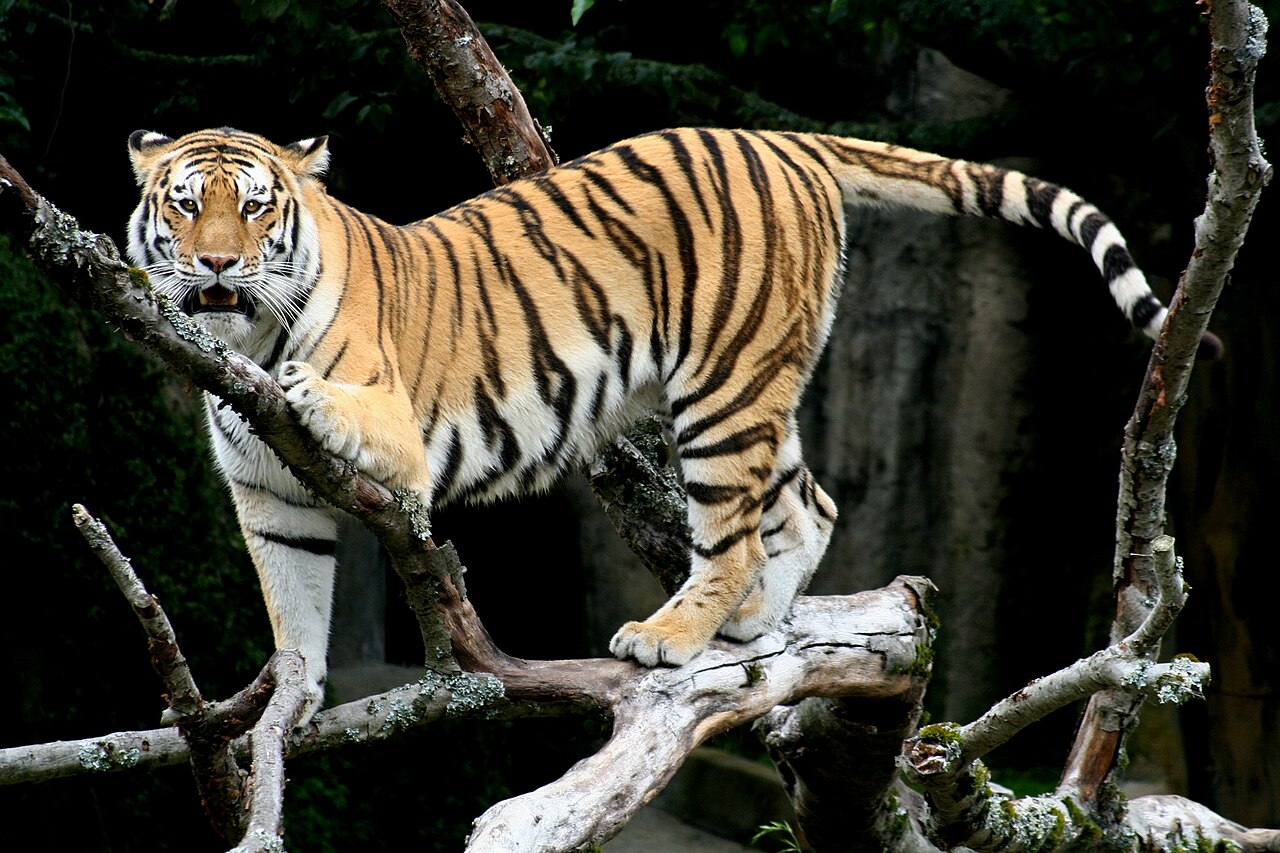
The Amur, or Siberian, tiger is the northern subspecies of Panthera tigris. The International Union for Conservation of Nature assesses the tiger as a whole species. IUCN assesses the tiger species as Endangered (2022). Amur animals live in temperate mixed forest, not jungle, and take deer, wild boar, and occasionally larger prey.
Range
Southwest Primorye and Khabarovsk in Russia, plus a recovering presence in northeast China. The subspecies once ranged into the Korean Peninsula and more of Manchuria.
What happened
Hunting and forest loss erased tigers from most of Northeast Asia. Russian and Chinese protection, plus prey recovery, raised Amur numbers from a few dozen in the mid-twentieth century to the high hundreds in 2010s-2020s surveys (published figures vary; roughly 500-750 is a commonly cited recent range). Roads, poaching, and thin prey still limit them.
When / status
Endangered as a tiger; the Amur population is a small, guarded remnant.
Human role
We hunted the tiger to the edge here; protection, not empty wilderness, explains the partial rebound.
Sources
IUCN Red List (Panthera tigris, Endangered, 2022); Russian and Chinese range-wide counts (estimates).