

What it is
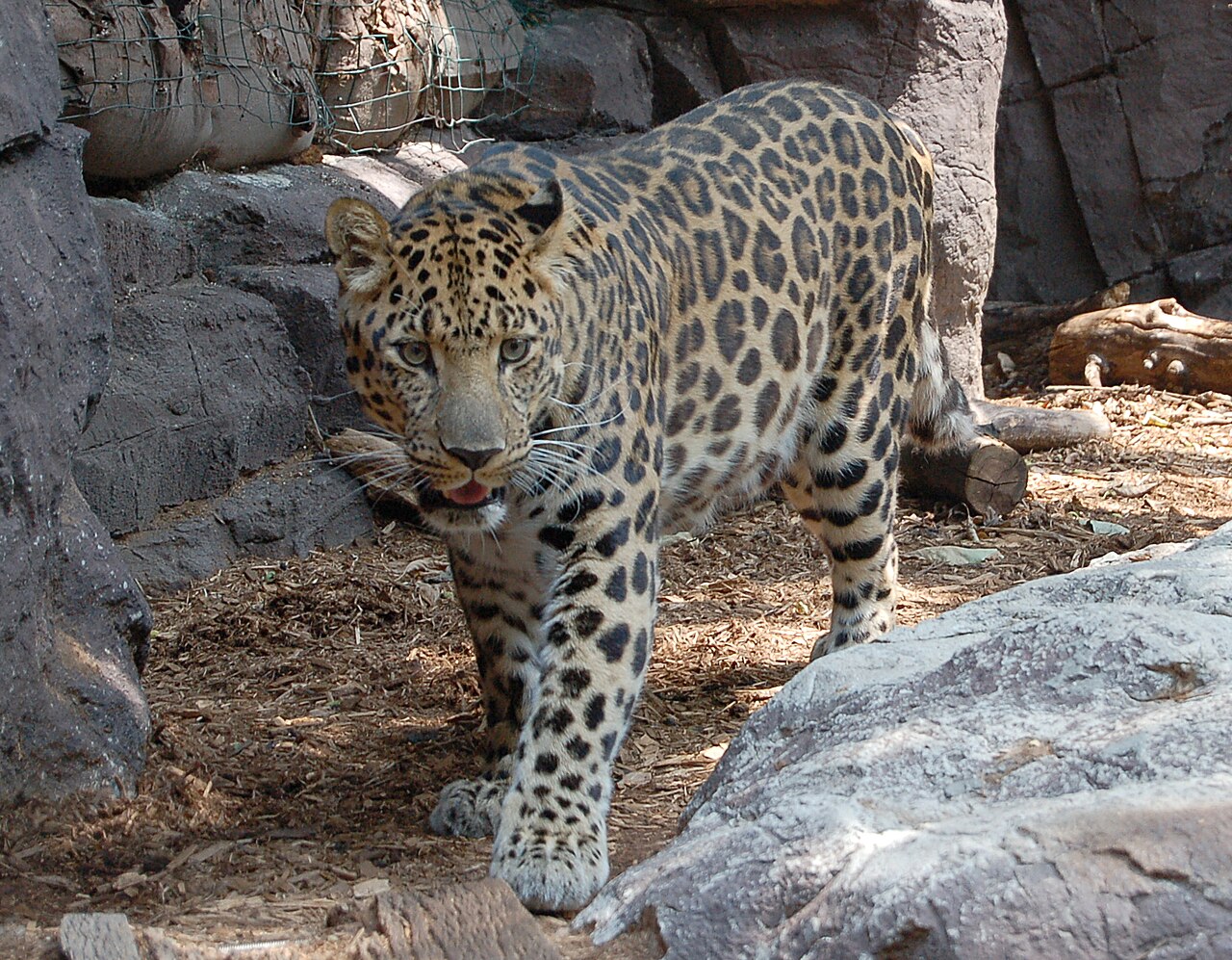
The Amur, or Far Eastern, leopard is the northernmost leopard subspecies, adapted to snowy temperate forest. IUCN lists it as Critically Endangered. Camera-trap studies in the 2020s have produced estimates around 100-130 mature individuals (WWF and IUCN citations around 130 in 2023): more than “several dozen adults,” which was a mid-2000s picture. Every total is still an estimate.
Range
A small area of southwest Primorye in Russia and adjacent Jilin and Heilongjiang in China. The historical range included more of Northeast Asia and the Korean Peninsula.
What happened
Prey hunting, poaching for skins, forest fire, and roads reduced the leopard to one landscape. A national park on the Russian side and camera-trap monitoring on both sides of the border are why a population still exists. It has not recolonised its old map.
When / status
Critically Endangered now, because of people.
Human role
Hunting and habitat loss left a single remnant; protection, not isolation from humans, keeps it alive.
Sources
IUCN Red List (Panthera pardus orientalis, CR); WWF/IUCN camera-trap estimates, early 2020s.